Industrial machinery often demands reliable, compact solutions for transferring power between shafts at right angles. Worm gears provide this capability while delivering high torque and smooth operation in confined spaces. They are widely used in conveyors, hoists, packaging equipment, and other heavy-duty systems where precision and durability are essential.
For engineers, maintenance teams, and procurement specialists, knowing the applications and advantages of worm gears helps ensure equipment performs consistently, reduces downtime, and meets demanding operational requirements. This article highlights key uses and benefits of worm gears, offering actionable insight for selecting the right solution for industrial applications.
Key Takeaways
Worm gears provide right-angle power transmission, high torque, and compact design, making them ideal for industrial machinery.
Applications include conveyors, hoists, pumps, air handling, and material handling systems, supporting OEMs and industrial users.
Advantages include self-locking capability, smooth and quiet operation, and reliable performance under heavy-duty conditions.
Material selection, gear design, and configuration influence efficiency, lifespan, and suitability for specific industrial tasks.
Multiple types and configurations, single-start, multi-start, standard, and custom gearboxes, allow tailored solutions for diverse operational requirements.
What is a Worm Gearbox?
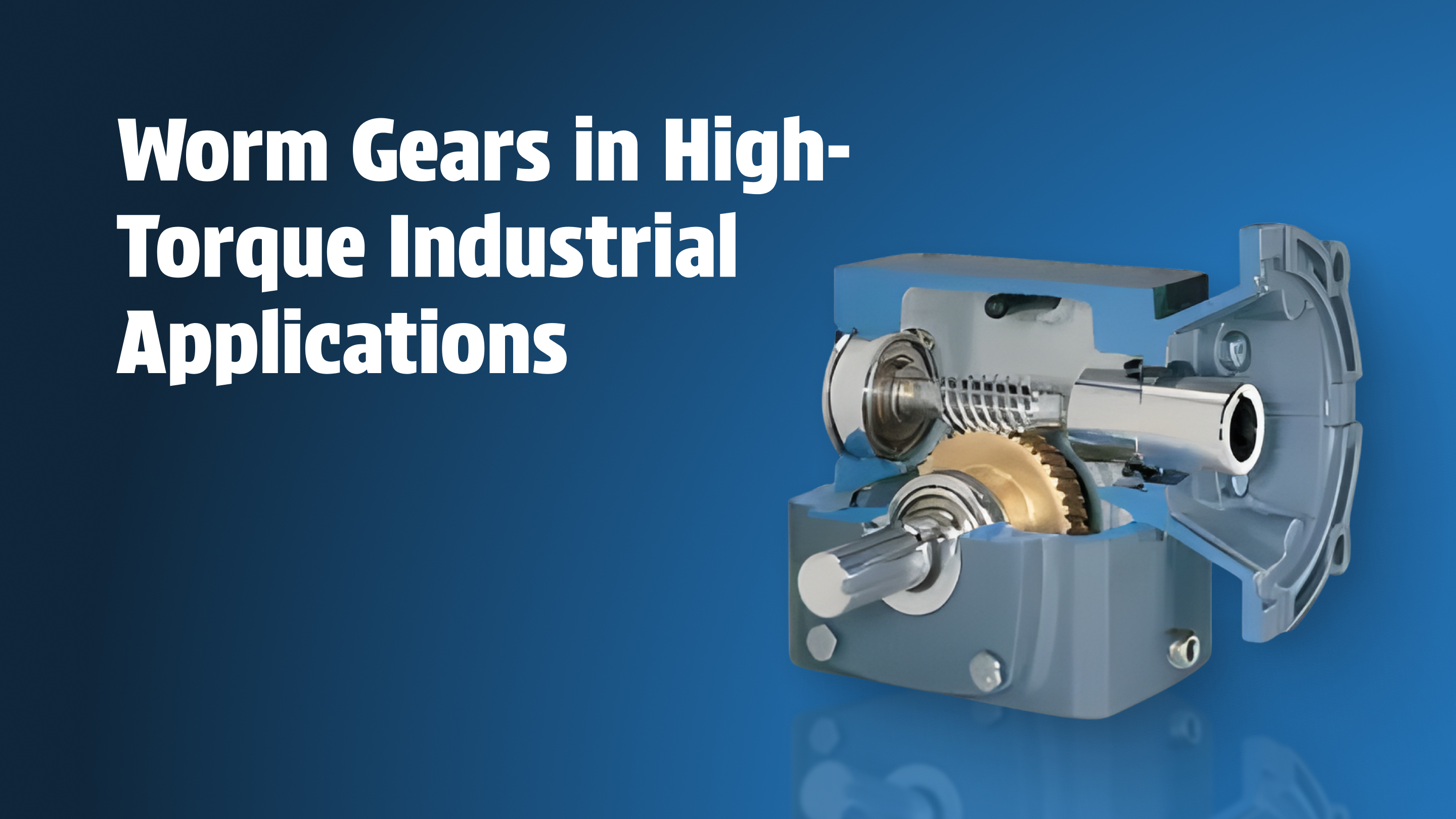
A worm gearbox is a mechanical assembly that transmits power between two shafts at right angles. It comprises a worm, shaped like a threaded screw, and a worm wheel, which functions as the corresponding gear. As the worm rotates, its threads engage the teeth of the worm wheel, producing controlled rotational motion.
This setup allows the gearbox to reduce speed while increasing torque, making it ideal for applications where space is limited and precise, reliable motion is required.
How Worm Gears Work
Worm gears transmit motion and power between shafts that intersect at right angles. The system consists of a worm, which resembles a threaded screw, and a worm wheel, which has teeth designed to mesh with the worm. As the worm rotates, its threads slide along the teeth of the worm wheel, causing the wheel to turn. This sliding action allows for smooth, controlled motion and enables the gearbox to reduce speed while increasing torque.
Key features of worm gear operation include:
Right-angle power transmission: The shafts are perpendicular, making worm gears ideal for compact layouts.
Sliding contact: The worm threads engage the wheel teeth through a sliding motion, which provides quiet and steady operation.
Torque amplification: Worm gears can produce high torque output at low speeds, suitable for heavy-duty industrial equipment.
Self-locking capability: In certain configurations, the worm can drive the wheel, but the wheel cannot drive the worm. This prevents reverse motion, offering safety and stability in lifting or hoisting applications.
This combination of features makes worm gears effective for applications that require controlled motion, high torque, and reliable performance in confined spaces.
Applications of Worm Gears
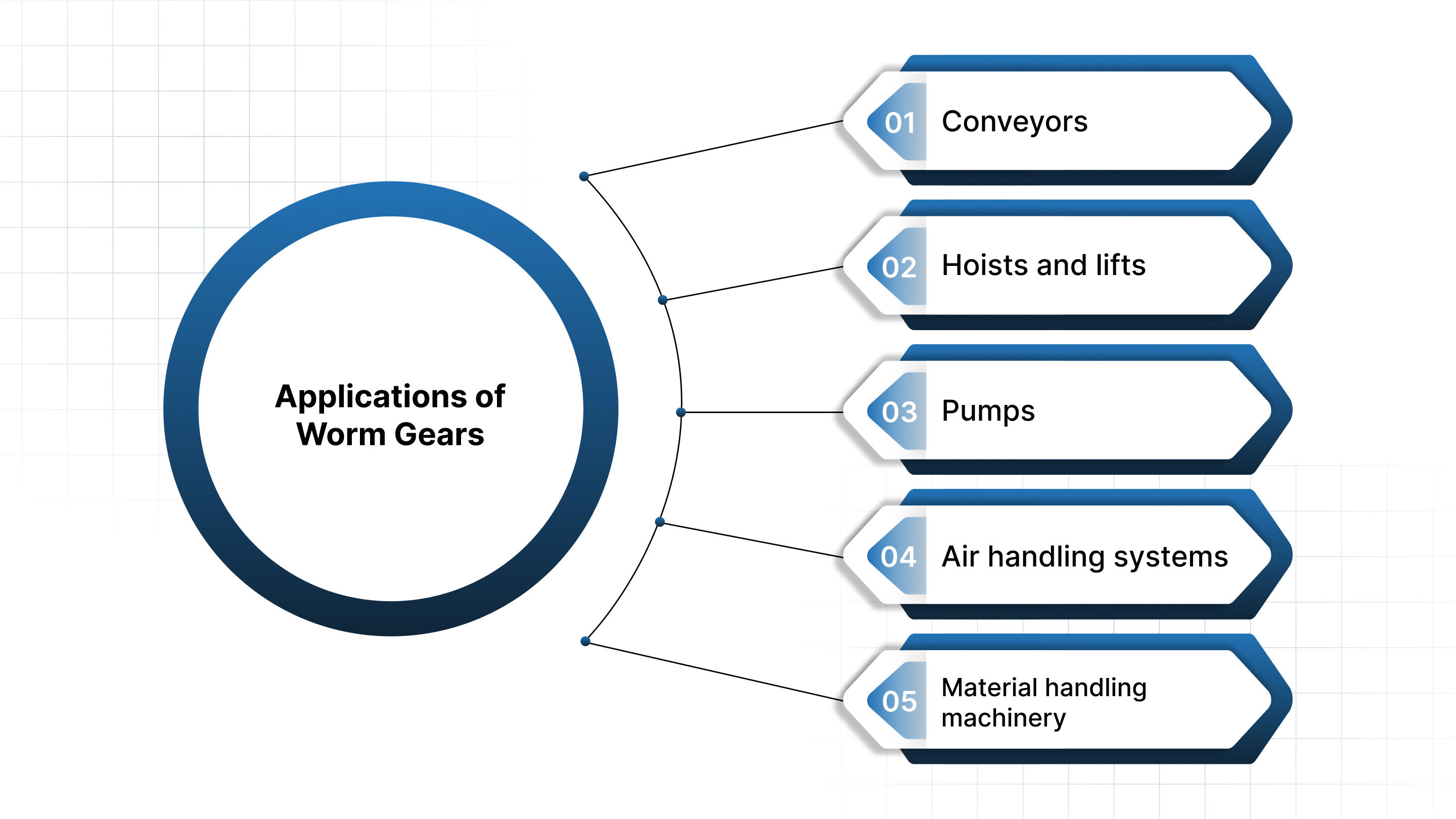
Worm gears are widely used in industrial settings where compact design, high torque, and precise motion control are essential. Common worm gearbox applications include:
Conveyors: Ensuring smooth material flow in food processing, packaging, and manufacturing lines.
Hoists and lifts: Providing safe and controlled vertical motion in industrial lifting equipment.
Pumps: Supporting consistent flow in fluid handling systems.
Air handling systems: Driving fans and blowers with quiet, reliable operation.
Material handling machinery: Enabling precise, durable performance in conveyors, sorters, and automated systems.
The versatility of worm drive gearbox applications makes them a preferred choice for OEMs and industrial users seeking dependable power transmission solutions across diverse sectors.
For industrial applications requiring reliable, high-performance worm gear solutions, Midwest Power Products offers premium worm gearboxes, gear reducers, and variable speed drives from leading manufacturers. You can contact our experts today to select the right solution for your operation.
Advantages of Using Worm Gears
Worm gears offer several benefits that make them ideal for industrial applications:
High torque in compact design: They deliver significant torque while occupying minimal space, suitable for machinery with tight layouts.
Self-locking capability: Certain configurations prevent reverse motion, enhancing safety in lifting and hoisting systems.
Quiet operation and smooth motion: The sliding contact between worm and wheel provides stable, low-noise performance.
Reliability in heavy-duty setups: Robust design and durable materials ensure consistent operation under demanding industrial conditions.
To evaluate performance more accurately, it helps to review how materials and design choices affect efficiency and service life.
Material and Efficiency Considerations
The performance and durability of a worm gearbox depend heavily on the materials used and the design of its components. The worm is typically made from hardened steel to handle high torque and resist wear, while the worm wheel is often constructed from bronze or cast iron to reduce friction and maintain smooth motion.
Key factors that influence efficiency and suitability include:
Material combination and hardness of the worm and wheel
Tooth geometry and design for optimized power transmission
Lubrication quality to minimize friction and heat generation
Gear ratio and load conditions affecting torque and speed
Proper material selection and design ensure reliable performance, longer lifespan, and effective operation in industrial applications such as conveyors, pumps, hoists, and material handling equipment. With these factors in mind, the next step is to look at the main types of worm gears used across industrial systems.
Worm Gear Types Used in Industrial Equipment
Worm gears can be categorized by worm design, gearbox configuration, and application requirements.
Based on worm threads:
Single-start worms: Feature a single thread on the worm. They offer higher speed-reduction ratios but operate at lower efficiency than multi-start worms.
Multi-start worms: Contain multiple threads, allowing for smoother operation and higher efficiency. They are preferred in applications requiring higher speed and reduced friction.
Based on gearbox configuration:
Standard worm gearboxes: Pre-engineered solutions suitable for common industrial applications, offering reliability and proven performance.
Custom worm gearboxes: Designed to meet specific requirements, including unique gear ratios, mounting styles, or environmental conditions.
Based on application needs:
Worm gears can vary in size, torque capacity, and housing design to suit conveyors, hoists, pumps, air handling systems, and material handling equipment.
Here’s a quick table to help you find the right type of worm gear:
Type | Description | Key Benefits | Typical Applications |
Single-Start Worm | Worm with a single thread | High-speed reduction, simple design | Hoists, conveyors, and pumps - where a high reduction ratio is needed. |
Multi-Start Worm | Worm with multiple threads | Higher efficiency, smoother operation, less friction | Packaging machinery, material handling, applications that need higher speed |
Standard Worm Gearbox | Pre-engineered gearbox solution | Reliable, cost-effective, and readily available | Common industrial applications include conveyors, pumps, and fans |
Custom Worm Gearbox | Tailored gearbox design | Meets unique requirements, adjustable gear ratios, and specialized mounting | Specialized machinery, custom OEM systems, and harsh environments |
Knowing the various worm gear types helps guide the discussion of their critical design elements and engineering considerations.
Key Design Elements of Worm Gears
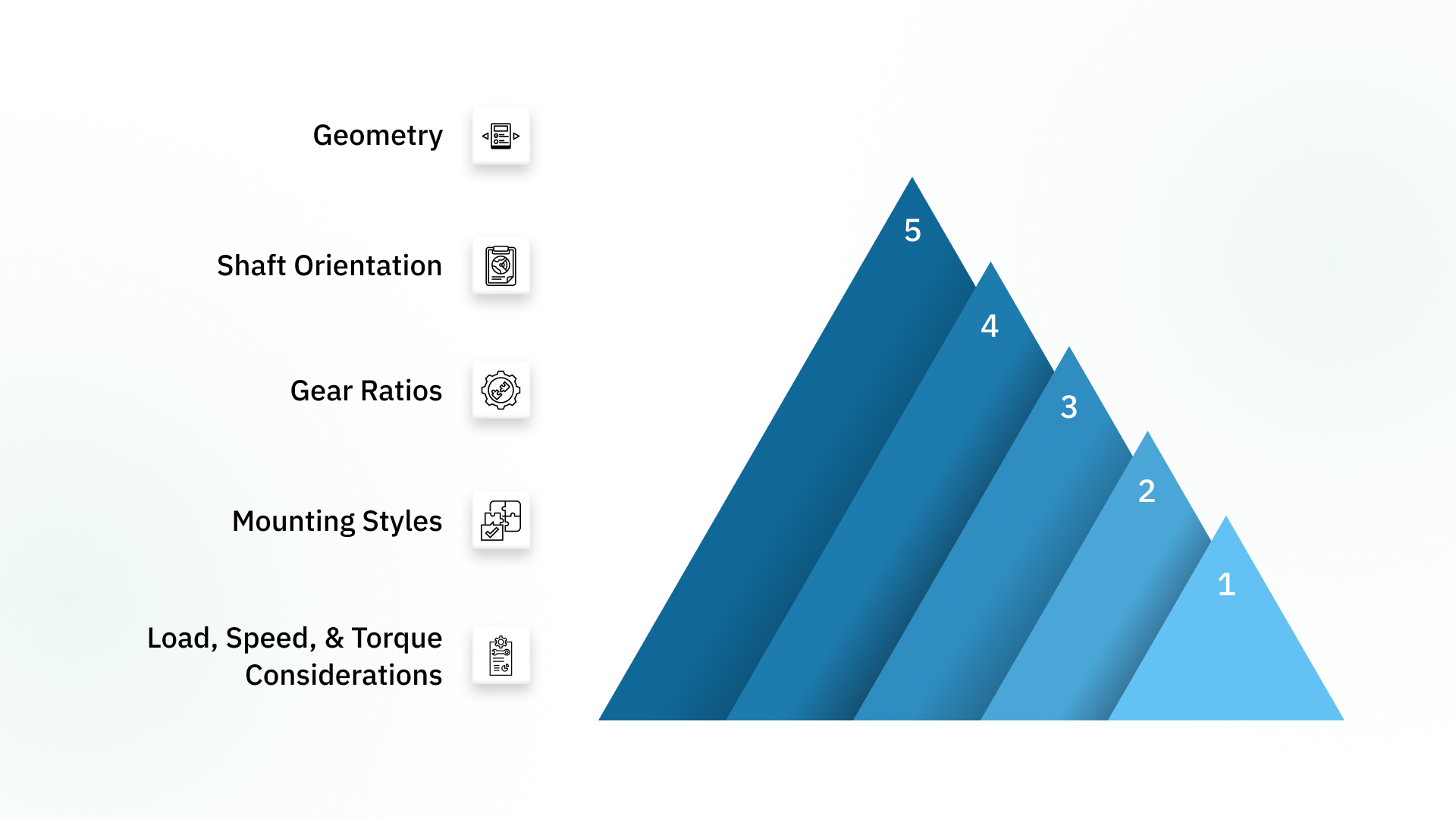
Worm gearboxes are designed to meet specific performance requirements, and several key features influence their effectiveness in industrial applications.
Geometry
The shape and size of the worm and worm wheel determine the gear’s reduction ratio, load capacity, and overall efficiency. Proper geometry ensures smooth motion and minimal wear.
Shaft Orientation
Worm gearboxes typically operate with shafts at right angles, allowing compact installation and flexible integration into machinery layouts.
Gear Ratios
Gear ratio selection affects torque amplification and speed reduction. Higher ratios increase torque output but reduce rotational speed, while lower ratios allow faster output motion.
Mounting Styles
Multiple mounting options, such as foot-mounted, flange-mounted, or custom configurations, provide versatility for different industrial setups.
Load, Speed, and Torque Considerations
Design must account for expected operational load, rotational speed, and torque requirements to prevent premature wear and ensure consistent performance.
Even with careful design, certain limitations and considerations should be evaluated to ensure reliable operation.
Limitations and Factors Affecting Worm Gear Performance
While worm gears provide high torque and compact design, they come with specific limitations that should be addressed during selection.
Efficiency Limitations: The sliding contact between the worm and worm wheel generates friction, which can result in lower efficiency compared to other gear types. High-speed applications may require careful consideration of energy loss and heat generation.
Design Trade-Offs: Selecting the right gear ratio, load capacity, and size involves balancing torque output and efficiency. Material choice, lubrication, and shaft alignment are critical to achieving reliable, long-lasting performance.
Selecting the right worm gearbox requires balancing torque, efficiency, and design constraints. Midwest Power Products provides expert support to help you choose gearboxes that meet demanding application requirements and deliver reliable, long-term performance.
Conclusion
Worm gears remain a cornerstone in industrial machinery where compact design, high torque, and controlled motion are essential. Their efficiency, material selection, and configuration influence performance and reliability, making proper specification critical for continuous operations.
Midwest Power Products combines extensive experience with a wide range of worm gearboxes, gear reducers, and variable speed drives to support OEMs and industrial operators. Their expertise ensures the right solution is matched to each application, minimizing downtime and maximizing equipment longevity.
Reach out to our team to discuss your specific requirements and secure a gearbox solution designed for your needs.
FAQ’s
1. How do I determine the correct worm gearbox for my machinery?
Selection depends on load requirements, shaft orientation, gear ratio, and environmental conditions. Consulting with an experienced supplier can ensure the gearbox meets operational demands.
2. Can worm gearboxes be used in continuous-duty applications?
Yes, but factors such as lubrication, material combination, and efficiency must be considered to maintain reliable long-term performance.
3. Are worm gearboxes suitable for high-temperature environments?
Special materials, coatings, and lubricants can be applied to support worm gear operation in elevated temperature conditions.
4. What maintenance is required for worm gearboxes?
Periodic inspection of lubrication levels, checking for wear, and ensuring proper alignment help extend gearbox lifespan without major downtime.
5. Do you provide custom worm gear solutions for unique industrial requirements?
Midwest Power Products offers tailored gearboxes, adjusting ratios, mounting, and configurations to fit specialized machinery and operational needs.