Gearbox trouble is one of the fastest ways to lose uptime. When a unit fails, everything stalls: crane waits, crew delays, long lead times, and pressure on your maintenance budget.
If you manage procurement, operations, or engineering, you already deal with the stress of sourcing reliability, controlling downtime, and avoiding repeat failures across your fleet. You need clear guidance, not textbook theory.
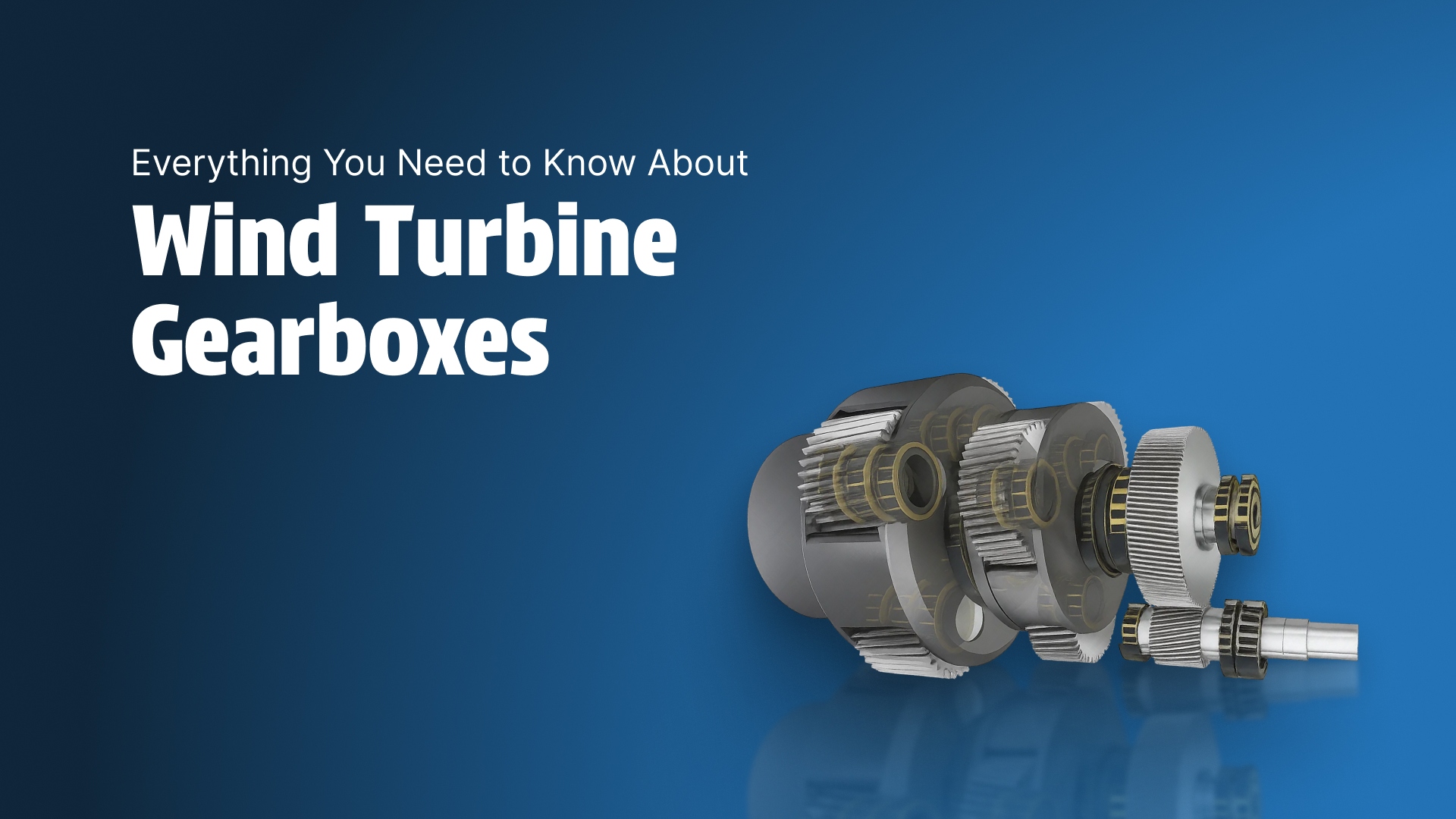
In this blog, we’ll explore where gearboxes fit in turbine setups, what drives lifetime, why failures occur, how sourcing choices affect risk, and the practices that support stable performance across wind assets.
Key Takeaways:
Gearbox reliability is crucial for turbine uptime, reducing maintenance costs, and avoiding long downtimes.
Geared, direct-drive, and hybrid systems each have distinct maintenance needs and sourcing requirements.
Planetary, helical, bevel, spur, and worm gearboxes offer different benefits and limitations based on turbine design and operational conditions.
Lubrication quality, load patterns, and installation accuracy are key factors affecting gearbox lifespan.
Proactive monitoring and choosing the right supplier with strong support and reliable parts availability help minimize gearbox failures and extend turbine performance.
Why Wind Turbine Gearboxes Matter to Uptime and O&M Costs
Gearboxes influence how long turbines remain available, how predictable maintenance cycles are, and how well teams manage repair exposure during demanding operating conditions.
Here are the core reasons they demand close attention:
Downtime Impact: Gearbox issues create long outages that increase planned and unplanned crew-hours while pushing maintenance budgets into unpredictable territory for most operators.
Lead-Time Pressure: Lead times for replacement units affect turbine availability, spare-parts planning, and the ability to maintain stable production targets across the fleet.
Repair Complexity: Repair decisions influence crane scheduling, contractor coordination, and total downtime, which can disrupt annual generation commitments and operational targets.
Maintenance Load: Poor gearbox performance increases the load on service teams, raising inspection frequency and creating pressure across lubrication, monitoring, and parts inventory planning.
Fleet Stability: Reliable gearbox support helps operators maintain consistent asset performance, reduce production losses, and keep O&M decisions grounded in clear operational priorities.
To ensure reliable turbine performance, understanding gearbox configurations is essential for selecting the right system for your specific needs.
Key Wind Turbine Gearbox Configurations and Their Benefits
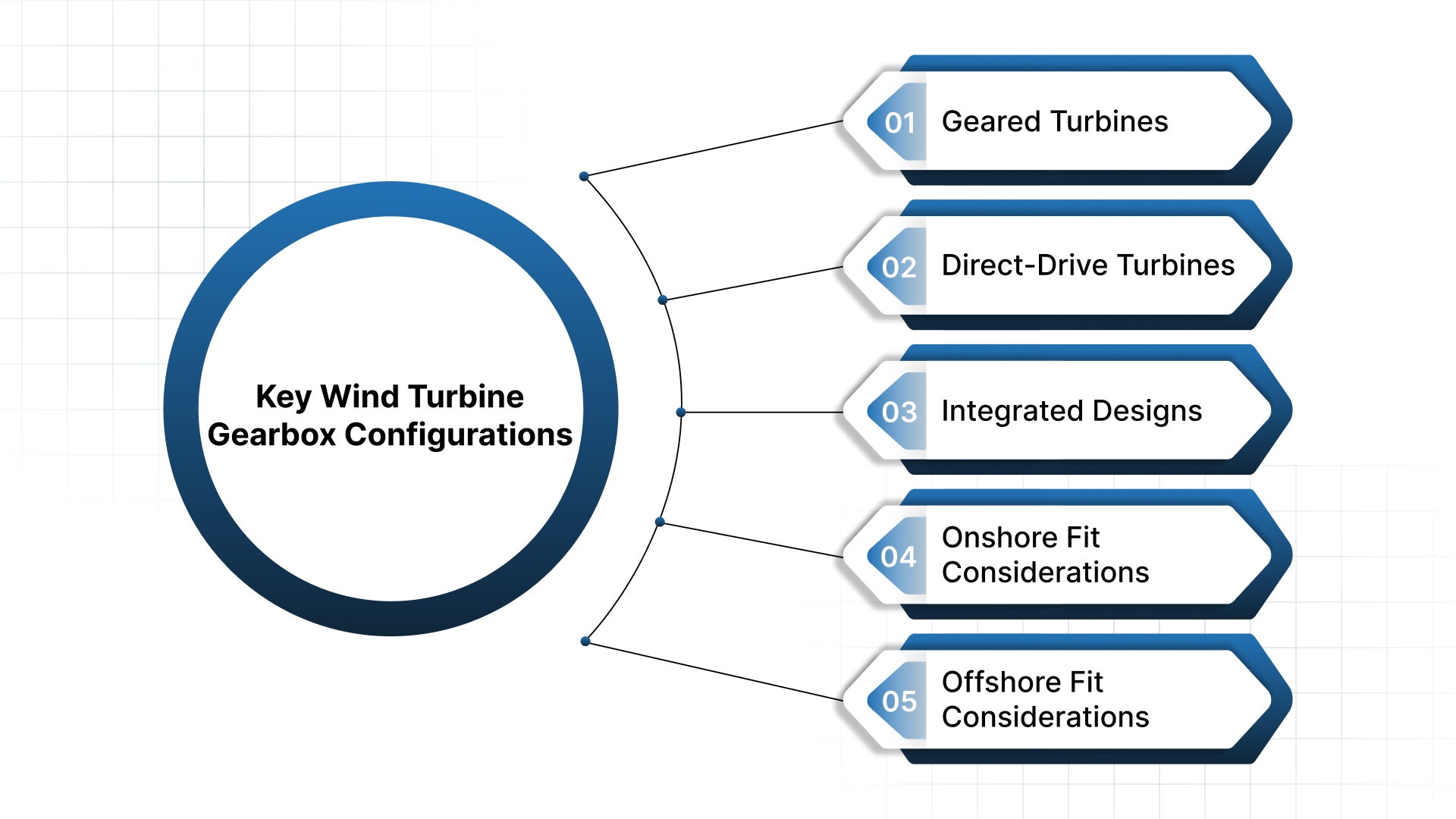
Gearboxes influence how mechanical power moves through the drivetrain, and their presence or absence shapes maintenance demands, sourcing choices, and long-term planning across different turbine setups.
Here are the main configurations operators evaluate:
Geared Turbines
Geared turbines use multi-stage gear systems that raise rotational speed for the generator, bringing clear maintenance commitments and specific sourcing requirements for long-term reliability planning.
Direct-Drive Turbines
Direct-drive turbines remove the gearbox entirely, replacing mechanical stages with larger generators, which shifts maintenance activity toward electrical components rather than mechanical assemblies.
Hybrid or Integrated Designs
Some models combine mechanical gearing with generator integration to reduce torque stress, creating drivetrain setups that require careful sourcing attention based on manufacturer design choices.
Onshore Fit Considerations
Onshore fleets often rely on geared systems due to established service networks, predictable maintenance access, and clearer sourcing paths for replacement units during extended outages.
Offshore Fit Considerations
Offshore projects place stronger focus on drivetrain reliability because access constraints increase the impact of each failure, raising the need for dependable components and informed supplier selection.
After exploring the key configurations, it's time to focus on the specific gearbox types that align with each setup.
5 Common Wind Turbine Gearbox Types and Their Operational Use-Cases
Different gearbox designs influence service needs, load behavior, inspection patterns, and sourcing decisions across wind projects, which makes understanding each type useful for planning reliable operations.
Here are the primary gearbox types seen across wind turbine fleets:
Planetary Gearboxes
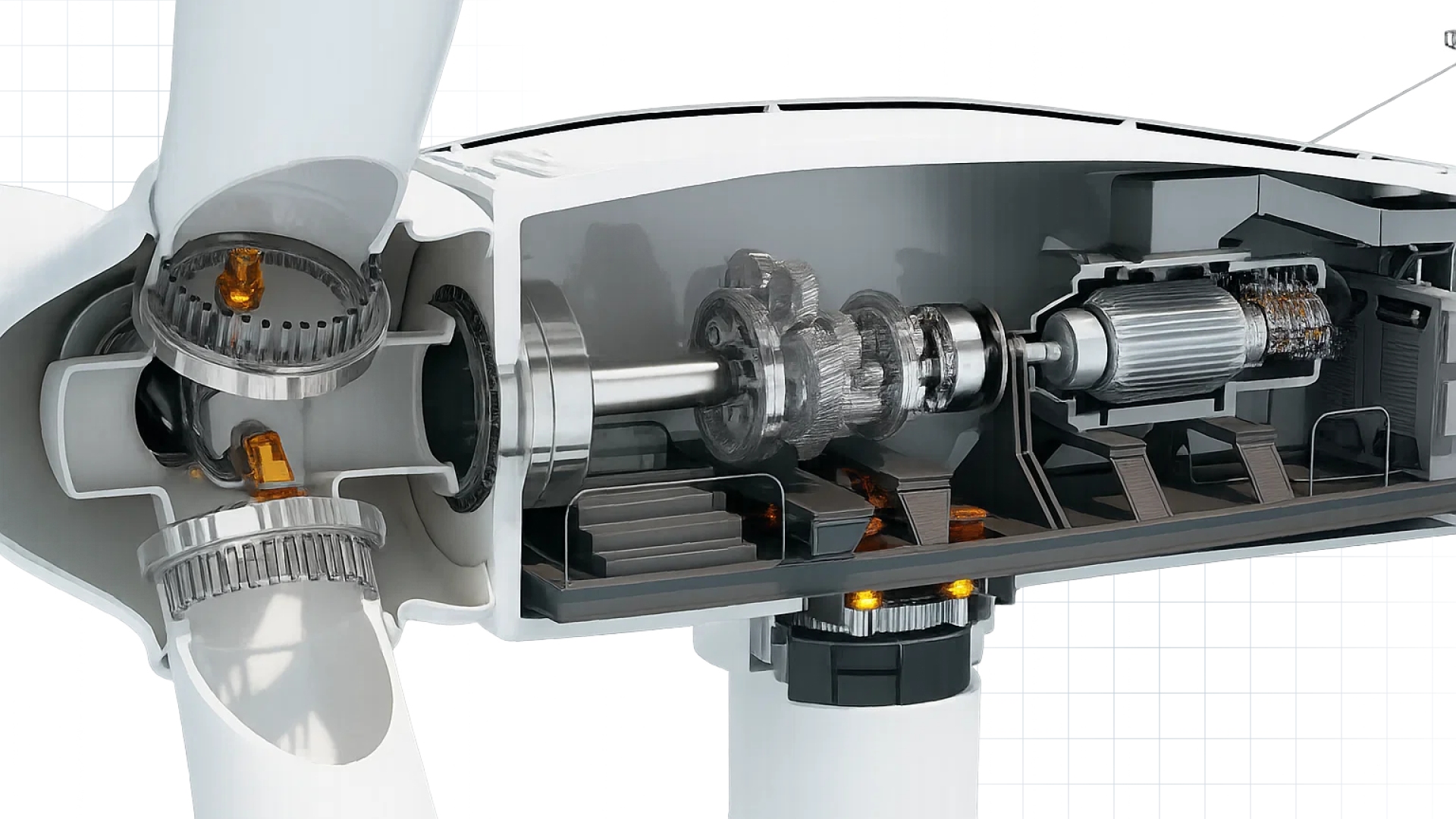
Planetary gearboxes distribute torque across multiple gear paths, creating stable load handling for turbines that deal with variable wind conditions and frequent start-stop cycles.
Advantages
Strong load-sharing across gears supports stable drivetrain behavior during unpredictable wind events that place irregular stress on mechanical components.
Compact layouts help operators reduce nacelle space concerns, which supports easier planning for certain replacement or retrofit activities.
Limitations
Multiple contact points increase wear sensitivity, raising inspection needs when lubrication conditions drift from expected service targets.
Complex internal structures can extend repair durations, making planned maintenance windows harder to control during peak production months.
Helical Gearboxes
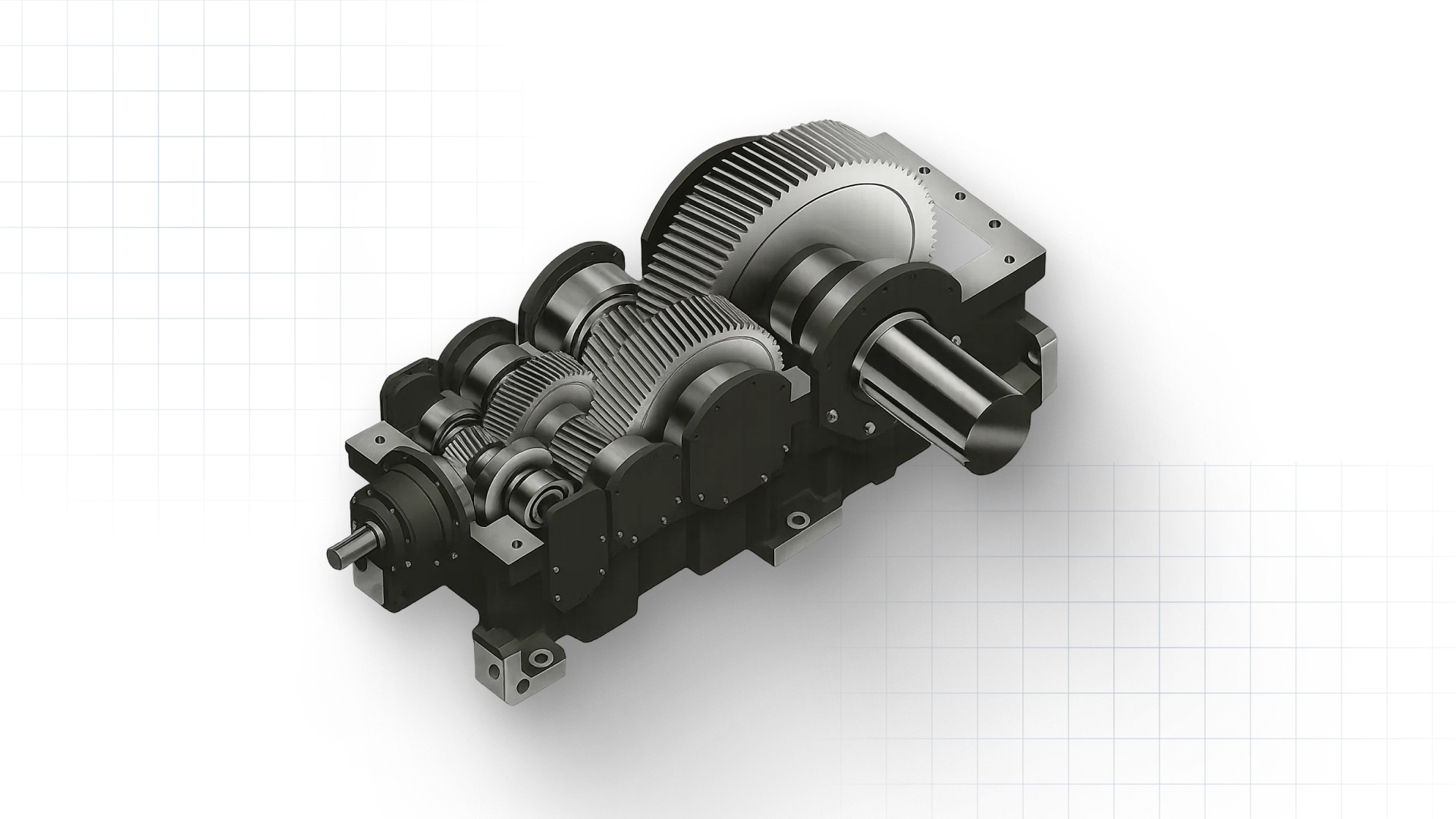
Helical gearboxes use angled teeth that manage torque transfer with smoother engagement, making them suitable for turbines requiring consistent rotational performance under varied wind loads.
Advantages
Angled teeth provide smoother contact between surfaces, reducing vibration levels and supporting predictable drivetrain behavior during extended operation periods.
Their load-handling characteristics make them suitable for large turbines that require stable torque transfer during continuous production cycles.
Limitations
Axial forces produced by angled teeth increase bearing demands, which can raise maintenance needs when operating conditions become inconsistent.
Longer shafts and added structural needs can complicate sourcing decisions for replacement units during urgent maintenance events.
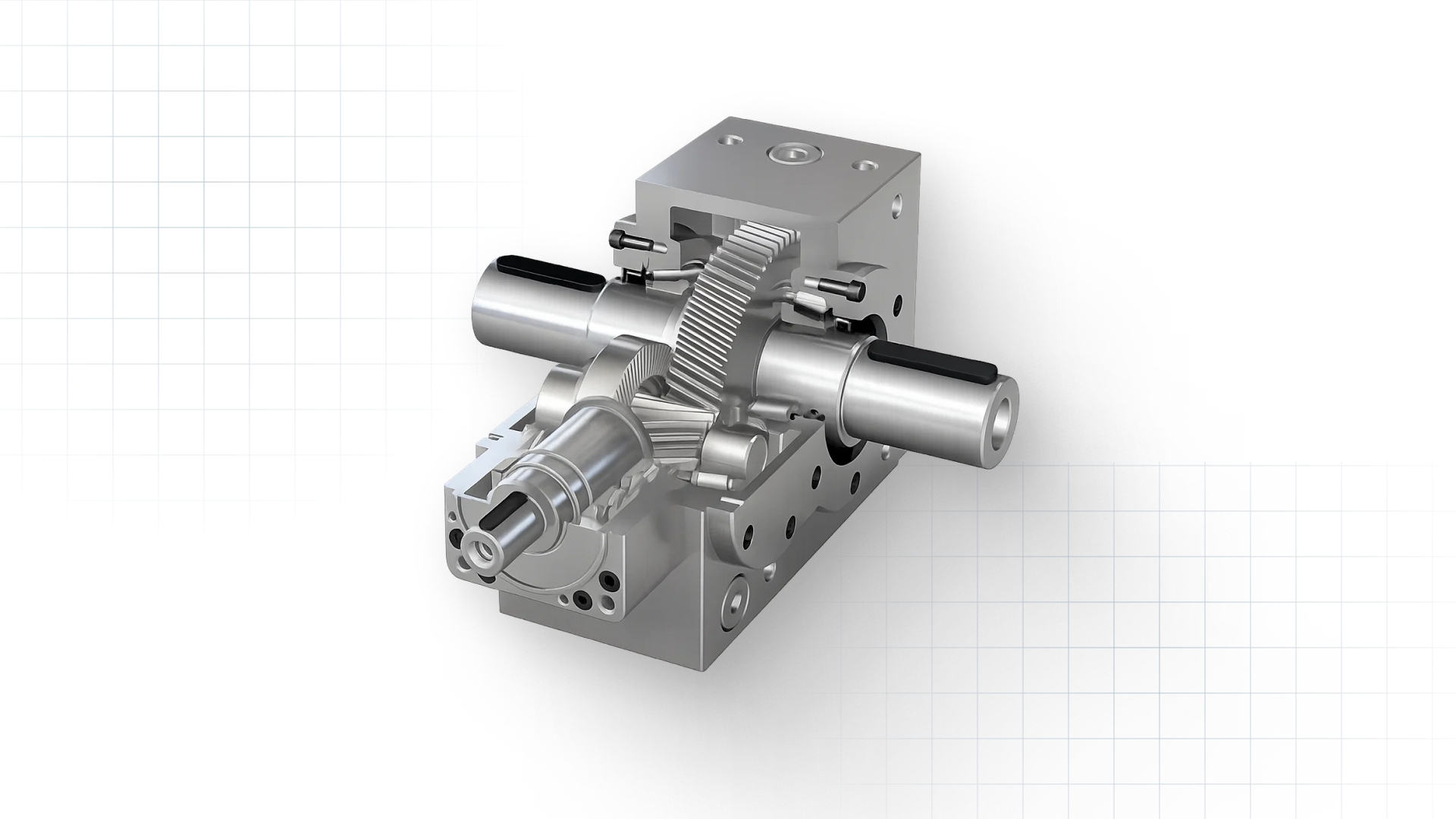
Bevel gearboxes transfer power between intersecting shafts, making them useful in turbine designs requiring directional changes within the drivetrain structure.
Advantages
Their angled gear arrangement supports turbines with right-angle drivetrain layouts, giving designers flexibility across varied nacelle configurations.
Compact directional transfer helps operators maintain simpler drivetrain paths in specific turbine models with unique mechanical requirements.
Limitations
Sensitivity to machining quality raises noise and vibration risk, which can increase inspections when turbines operate under harsher wind conditions.
Misalignment issues may accelerate wear, creating sourcing pressure for replacement gear sets during unexpected service downtime.
Spur Gearboxes
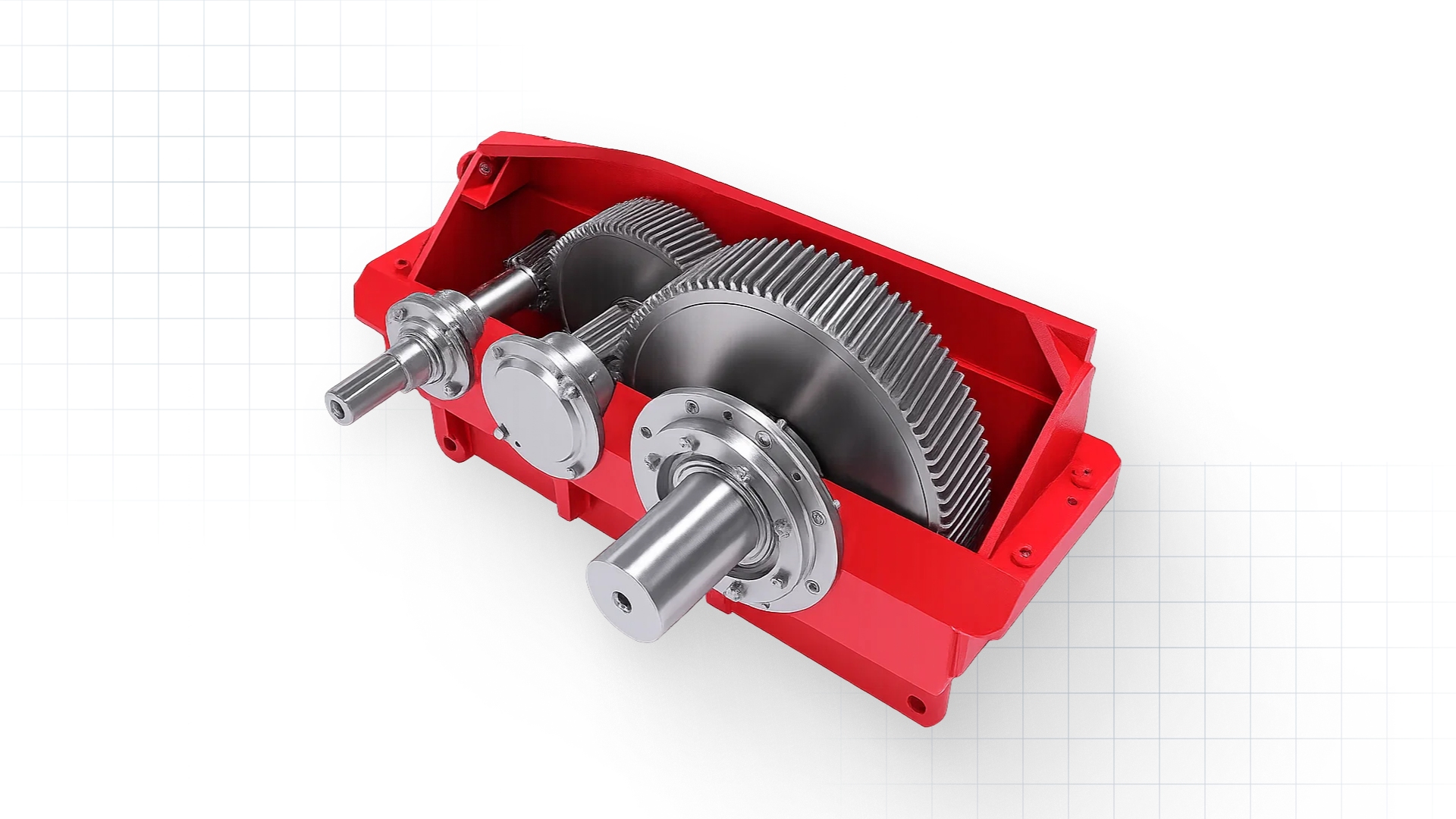
Spur gearboxes use straight teeth that create direct torque transfer, supporting turbines requiring predictable gear engagement under moderate mechanical loads.
Advantages
Straight-tooth contact allows clear torque transmission, which helps maintain predictable mechanical behavior for turbines with stable wind conditions.
The simpler tooth geometry supports faster repair planning and easier parts sourcing when compared with more complex gearbox designs.
Limitations
Direct tooth contact increases noise levels, which may affect drivetrains operated near sensitive vibration thresholds.
Higher surface stress can raise wear rates, making lubrication control more critical to avoid avoidable downtime events.
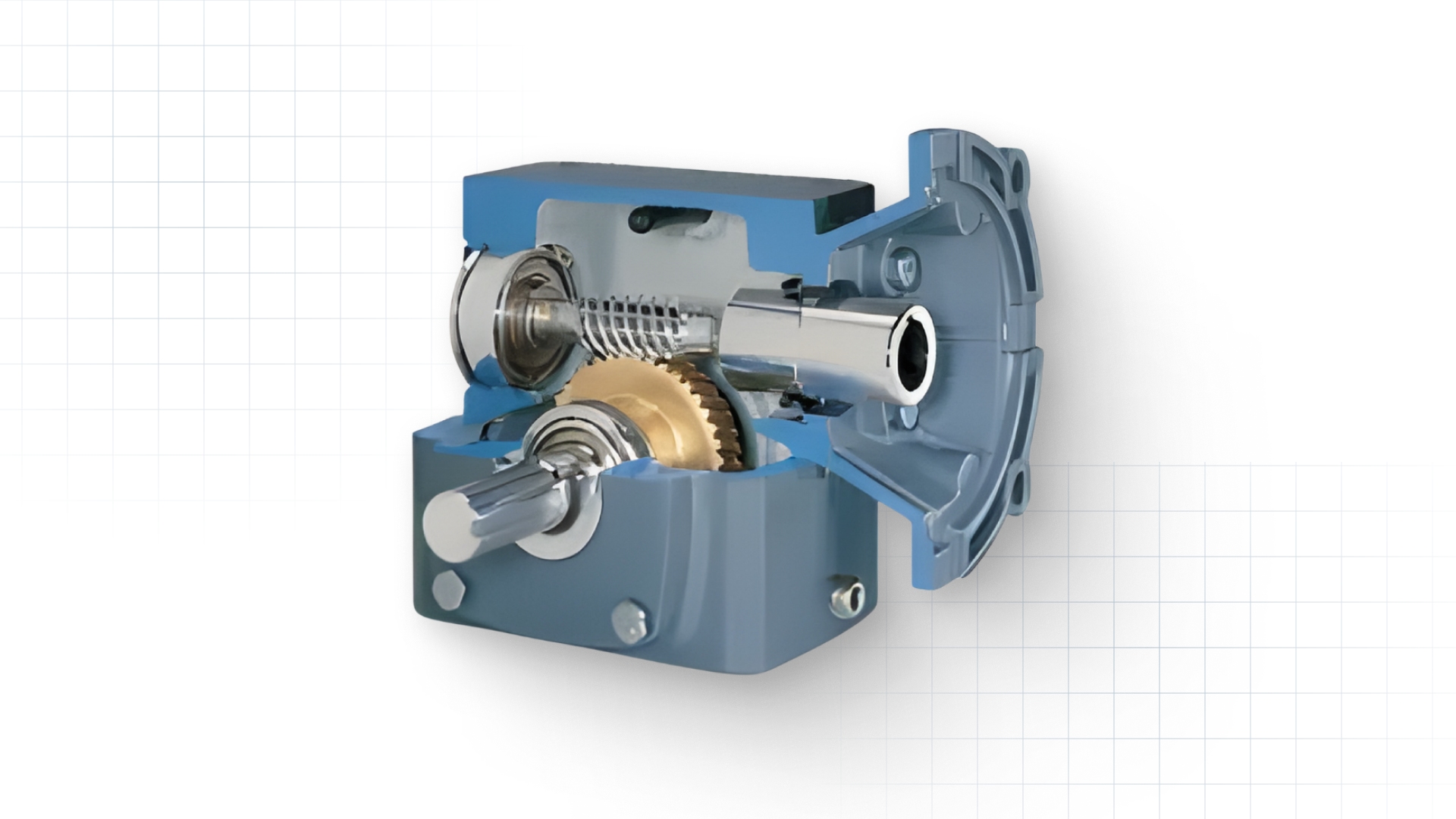
Worm gearboxes create rotational speed changes through a worm-and-wheel design, supporting certain small turbines or auxiliary systems within broader wind installations.
Advantages
Their sliding contact design offers quiet gear movement, helping operators manage acoustic concerns within specific project settings.
Simple layouts allow easier maintenance access, which supports predictable service planning during routine mechanical checks.
Limitations
Lower mechanical output rates make them unsuitable for most utility-scale turbines that require higher torque transfer capabilities.
Heat generation during extended operation increases lubrication sensitivity, creating a performance risk when service intervals drift.
Once you’ve chosen the best gearbox type, it’s essential to consider the factors that influence its longevity in the field.
Also Read: Gear Reducer Use Cases & Applications
Key Factors Affecting Wind Turbine Gearbox Lifespan
The lifetime of a wind turbine gearbox depends on how consistently the drivetrain experiences controlled loads, stable lubrication conditions, and predictable service cycles throughout its operating period.
Here are the primary factors that shape lifetime expectations:
Load Patterns: Load variations influence how gears and bearings carry stress over time, affecting reliability when turbines operate under frequent gusts or irregular wind conditions.
Lubrication Quality: Lubrication quality affects surface wear and component stability, creating performance risk when contamination or degraded oil reduces protective film strength.
Component Tolerances: Manufacturing precision influences internal contact behavior, shaping outcomes when gears or bearings experience uneven pressure during extended operation.
Thermal Conditions: Temperature swings impact oil performance and material behavior, raising service needs when turbines operate in environments with frequent heat changes.
Installation Accuracy: Alignment during installation affects load distribution and wear patterns, creating gradual reliability issues when small deviations accumulate across cycles.
Monitoring Practices: Monitoring quality influences failure detection speed, helping teams respond earlier when vibration, oil signals, or temperature readings shift.
Knowing what influences gearbox longevity is key to avoiding failures. Let’s now look at the most common failure modes and their impacts.
Common Wind Turbine Gearbox Failures and Their Operational Impact
Gearbox failures reduce availability, add repair pressure, and disrupt production plans, especially when turbines operate under tight maintenance schedules and limited access windows.
Here are the common failure modes and their operational consequences:
Failure Mode | What Happens | Operational Consequence |
Gear Tooth Wear | Gear surfaces deteriorate from repeated load cycles and weak lubrication support during extended operation periods. | Damaged gears increase outage duration, raising crew-hours and delaying turbine return during key production periods. |
Bearing Damage | Bearings fatigue from misalignment, contamination, or high load, generating heat and unstable rotational behavior. | Sudden stoppages require cranes and extended repair coordination, raising costs and slowing maintenance schedules. |
Lubrication Breakdown | Oil loses protective strength due to contamination, temperature swings, or aging additives during continuous operation. | Wear increases quickly, forcing unplanned downtime for oil flushing, inspections, and replacement part sourcing. |
Misalignment | Structural shifts create uneven pressure across gears and bearings, increasing stress under routine operating conditions. | Turbines need alignment checks that extend outage time and place scheduling pressure on service teams. |
Overheating Events | Heat builds from load spikes, blocked cooling paths, or weak sensor performance inside the drivetrain. | Turbines shut down unexpectedly, affecting production targets and stressing service schedules during peak seasons. |
Contamination Intrusion | Moisture or particles enter the oil system, creating abrasive wear and unstable lubrication behavior. | Operators face extended downtime while flushing contamination sources and replacing affected components. |
While failure risks are inevitable, there are clear strategies to mitigate them and keep turbines running smoothly for longer.
Also Read: Why Choose Electra Gear Aluminum Gear Reducers?
Practical Reliability Measures That Reduce Gearbox Failures
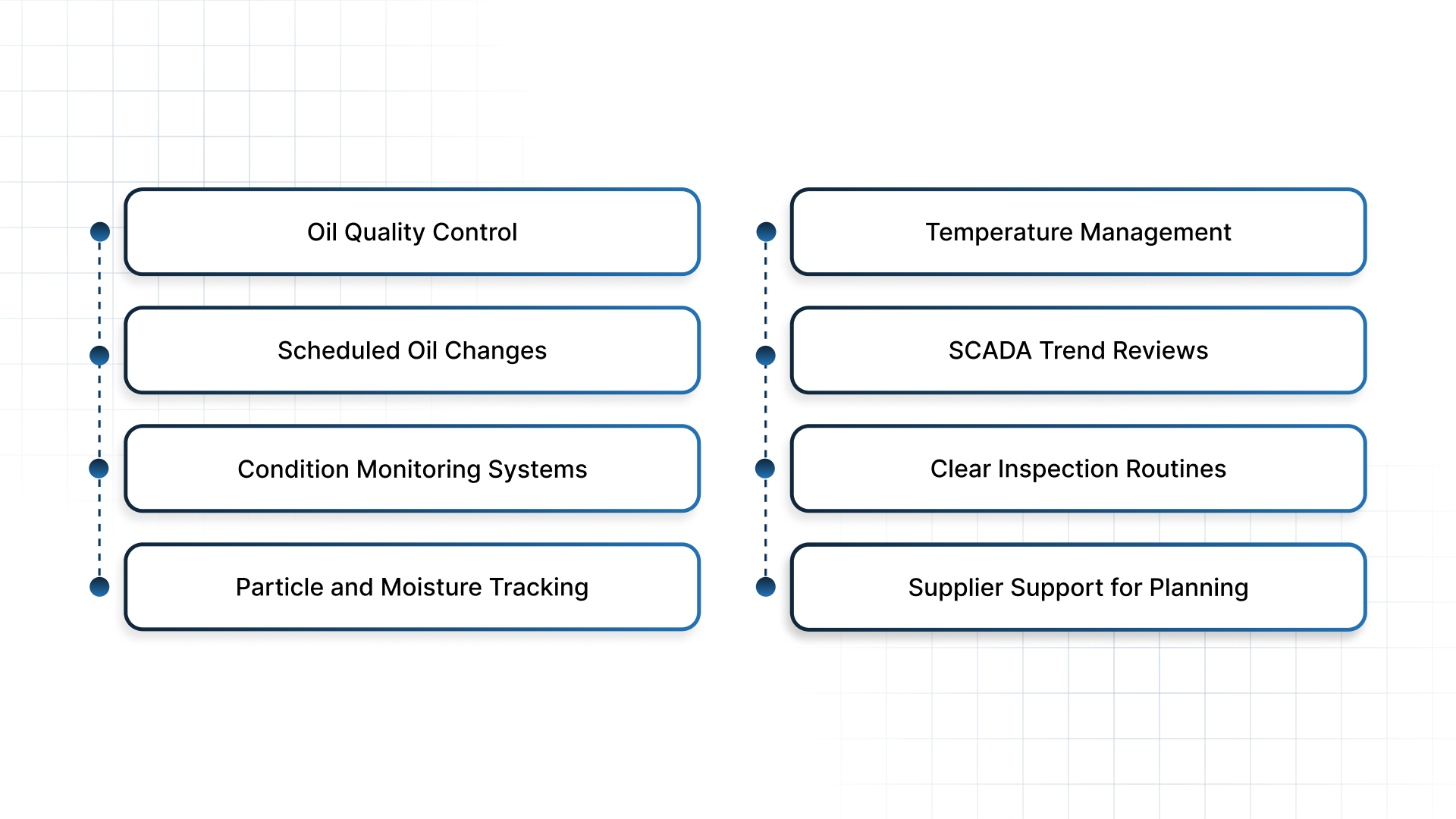
Reliability improves when operators manage lubrication quality, monitor mechanical behavior consistently, and prevent small drivetrain issues from building into longer outages that disrupt production plans.
Here are the measures that support stable gearbox performance:
Oil Quality Control: Regular oil checks help operators detect contamination early, reducing wear and preventing outages that strain maintenance schedules.
Scheduled Oil Changes: Timely oil replacement maintains film strength across gears, lowering wear risk and supporting predictable availability during demanding periods.
Condition Monitoring Systems: Monitoring systems track vibration, temperature, and running patterns, giving teams early visibility when drivetrain behavior drifts from expected norms.
Particle and Moisture Tracking: Particle and moisture readings help identify wear or seal issues, allowing quicker intervention before failures interrupt production.
Temperature Management: Maintaining stable thermal conditions prevents heat-driven material fatigue, reducing the chance of stoppages that require urgent repairs.
SCADA Trend Reviews: SCADA analysis helps operators detect changes in power curves or torque signatures that signal emerging gearbox issues.
Clear Inspection Routines: Structured inspection plans help maintenance teams find misalignment, loose hardware, or early wear indicators before escalation.
Supplier Support for Planning: Experienced drivetrain partners, such as Midwest Power Products, assist teams with sourcing guidance and replacement planning during service cycles.
Reliability practices are crucial, but so is selecting the right supplier. Let’s review the procurement checklist to ensure you make the best choice.
Also Read: What Makes Foote-Jones Gears so Good?
How to Choose the Best Wind Turbine Gearbox Supplier
Procurement teams face pressure to control downtime, secure stable lead times, and reduce sourcing risks, making a structured evaluation framework essential during supplier discussions.
Your Ultimate Wind Turbine Gearbox Procurement Checklist
Here are the key considerations that support stronger procurement decisions:
Area | What to Evaluate | Why It Matters |
Lead-Time Assurance | Confirm production timelines, shipping commitments, and contingency availability. | Reduces exposure to extended outages that disrupt production and maintenance plans. |
Compatibility Review | Check fit, model suitability, and turbine-specific requirements. | Prevents delays caused by alignment or fit adjustments during installation. |
Service Network Strength | Review regional support coverage and response practices. | Strong access shortens repair timelines and supports quicker returns to service. |
Warranty Terms | Examine coverage conditions and claim processes. | Helps teams plan risk exposure when addressing unexpected mechanical issues. |
Spare-Parts Availability | Assess stock levels and replenishment cycles. | Prevents avoidable downtime caused by missing components. |
Failure History Transparency | Request insight into past issues and corrective efforts. | Helps teams understand operational risk before committing to sourcing. |
Quality Assurance Practices | Review testing and inspection steps. | Supports predictable mechanical behavior across supplied gearboxes. |
Post-Delivery Support | Check installation guidance and assistance channels. | Reduces installation errors that can create early performance issues. |
Supplier Stability | Evaluate financial strength and continuity. | Helps maintain service access throughout long asset lifetimes. |
Fleet References | Request references for similar turbines. | Validates suitability under comparable operating conditions. |
If your team is reviewing gearbox replacement needs, planning a fleet refresh, or preparing upcoming service activities, our team can support your evaluation with clear guidance. For pricing, availability, and technical assistance on OEM-compatible gearbox options, contact us today to discuss suitable paths for your operating requirements.
Conclusion
Strong gearbox decisions help operators manage downtime risk, control repair exposure, and maintain stable turbine performance across varied operating conditions and maintenance schedules.
Clear supplier evaluation, consistent monitoring practices, and thoughtful sourcing plans give teams better control over long-term reliability outcomes across their fleets. If your operations team wants guidance on replacements, service planning, or sourcing paths for upcoming work, we can support your assessment with practical information.
For product details and service options, check out our wind turbine gearboxes offerings to review suitable solutions for your project requirements:
FAQs
What are the key challenges of maintaining wind turbine gearboxes?
Maintaining gearboxes involves addressing downtime, sourcing replacement parts, and managing the complexity of repairs, all of which can disrupt production schedules and increase maintenance costs.
How do turbine configurations impact gearbox maintenance?
The choice between geared, direct-drive, and hybrid turbines affects the type of maintenance needed, with geared turbines requiring more mechanical maintenance and direct-drive systems shifting focus to electrical components.
What role does temperature play in gearbox performance?
Fluctuating temperatures can affect lubrication and material integrity, potentially leading to premature wear or failure if not properly managed.
Why is it important to monitor lubrication in turbine gearboxes?
Regular checks on oil quality and lubrication help prevent breakdowns by reducing wear on gears and bearings, and can avoid unplanned downtime caused by lubrication issues.
What factors should be considered when selecting a gearbox supplier?
Key factors include lead times, compatibility with turbine models, availability of spare parts, and the supplier’s service network and failure history to ensure timely support and replacements.