Unexpected gearbox stoppages drain uptime, strain crews, and push maintenance teams into rushed decisions. Every plant head, engineer, and procurement lead has felt the pressure when a line slows or halts because a gearbox isn’t suited to the load or duty cycle.
Choosing the right gearbox shouldn’t feel like guesswork. You deal with tight schedules, downstream effects on throughput, and the risk of rising repair costs. With the global gearbox market set to grow from USD 30.6 billion in 2024 to over USD 47.5 billion by 2034, teams now face more options and more complexity than before.
In this blog, we’ll explore the main types of industrial gearboxes, how each one supports plant performance, what matters when selecting them, and what operations teams should consider for long service life.
Key Takeaways:
Each gearbox type fits specific load, speed, and space conditions, and choosing the wrong one can lead to downtime and rising maintenance costs.
Helical, bevel-helical, spur, worm, hypoid, planetary, and cycloidal units differ in efficiency, noise, torque capacity, and backlash.
Selection requires checking duty cycle, mounting constraints, motor matching, environmental factors, and service accessibility, not just ratio or price.
Rising temperature, new noise, vibration changes, or contaminated oil are early warnings that help prevent major failures.
Retrofits or replacements make sense when failures repeat, load demands increase, spares become hard to source, or overheating continues.
8 Core Industrial Gearbox Types and Their Uses
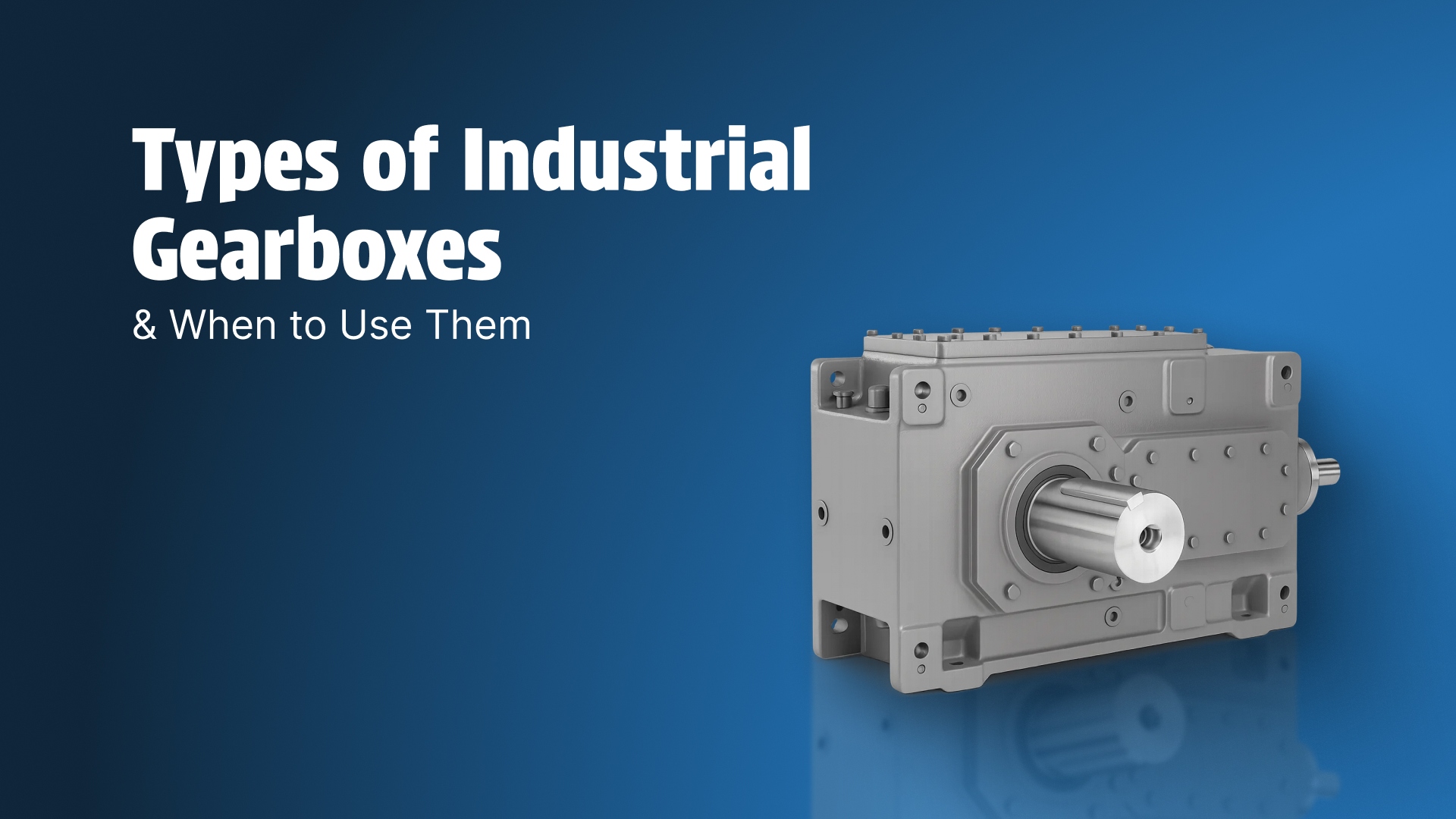
Industrial gearboxes support motion control, torque management, and speed reduction across plants of every size. Each type works differently and fits specific load patterns, layouts, and service expectations.
Here is a clear view of how each gearbox operates and where it fits in plant operations:
Helical Gearbox
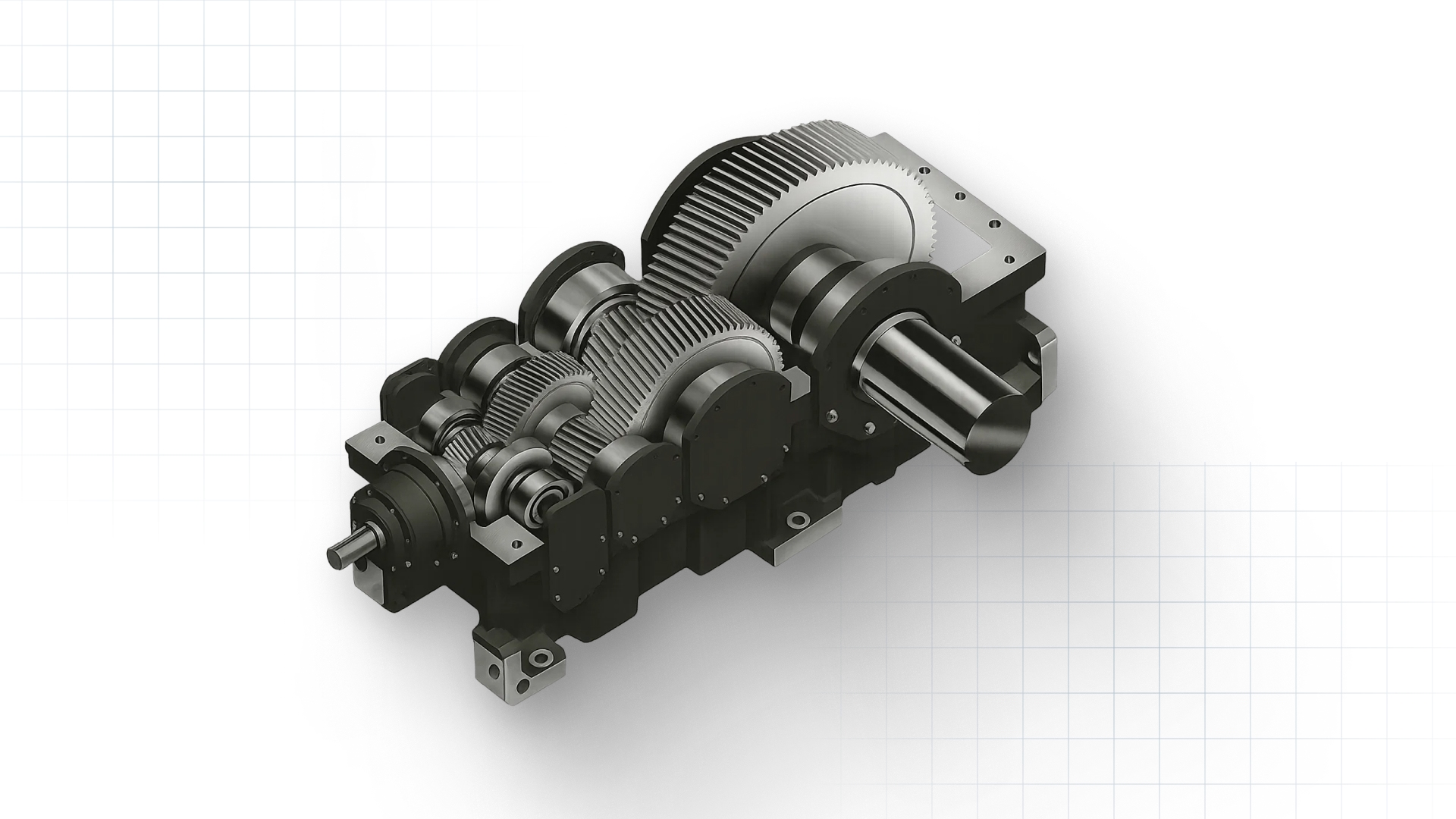
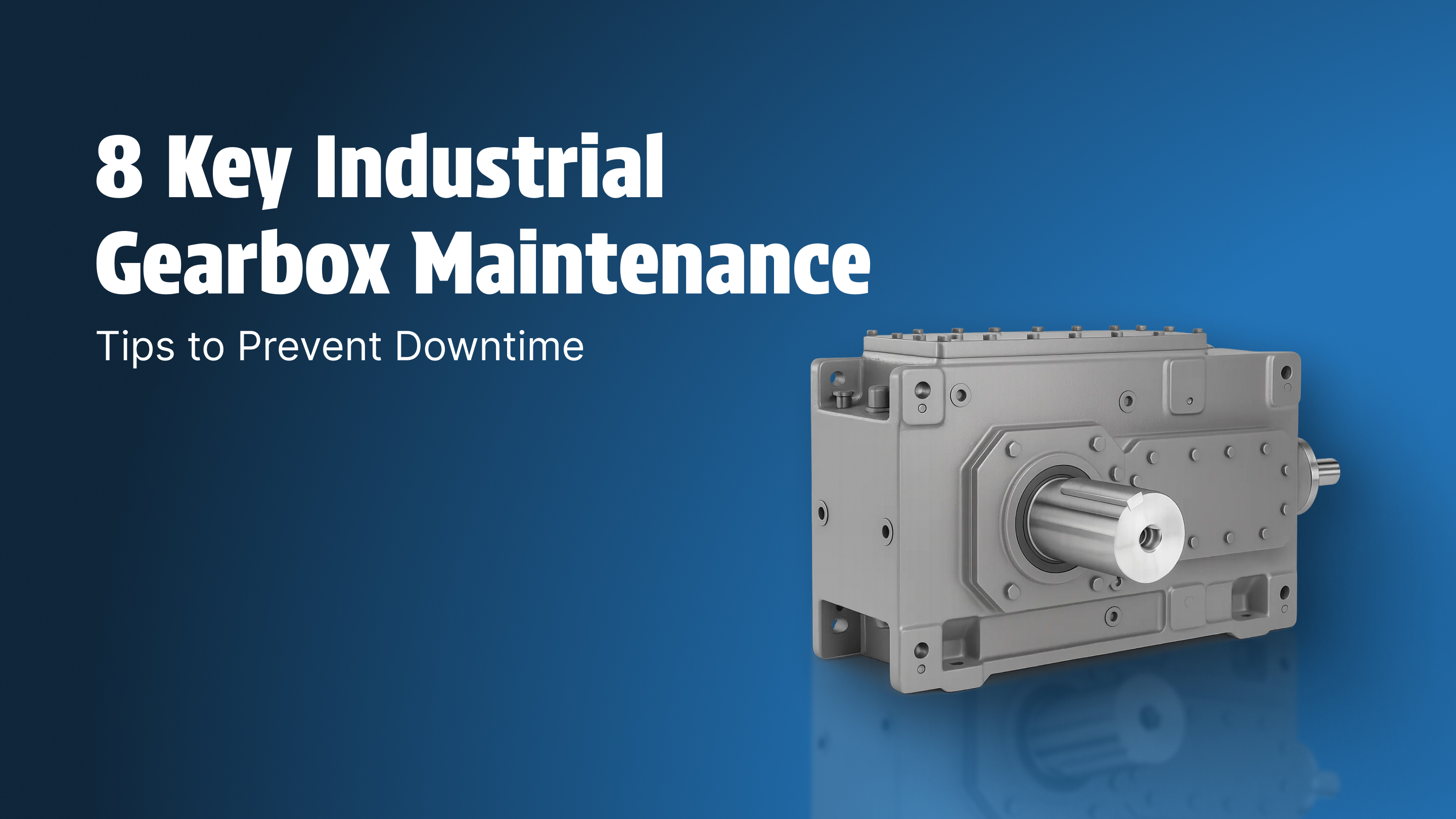
Helical gearboxes use angled teeth that allow smoother meshing and higher efficiency than spur and worm units. They support continuous-duty work across a wide range of industrial equipment and maintain stable torque across long shifts.
Here are the key areas to review for helical gearboxes:
Applications
Conveyors with steady or moderate load variations
Mixers and agitators with controlled torque needs
Packaging lines with controlled start-stop cycles
OEM drive systems needing predictable motion
General industrial machinery
Operational Outcomes
Smooth running with lower noise than spur designs
Higher efficiency compared to worm units
Stable torque for long shifts
Good performance when shock loads are moderate
Better energy transfer than straight-cut alternatives
Procurement and Maintenance Notes
Strong parts availability
Pairs well with standard motors
Match service factor to duty cycle
For high-inertia start-stop tasks, review suitability or consider bevel-helical or planetary
Routine lubrication protects gear surfaces
Bevel / Bevel-Helical Gearbox
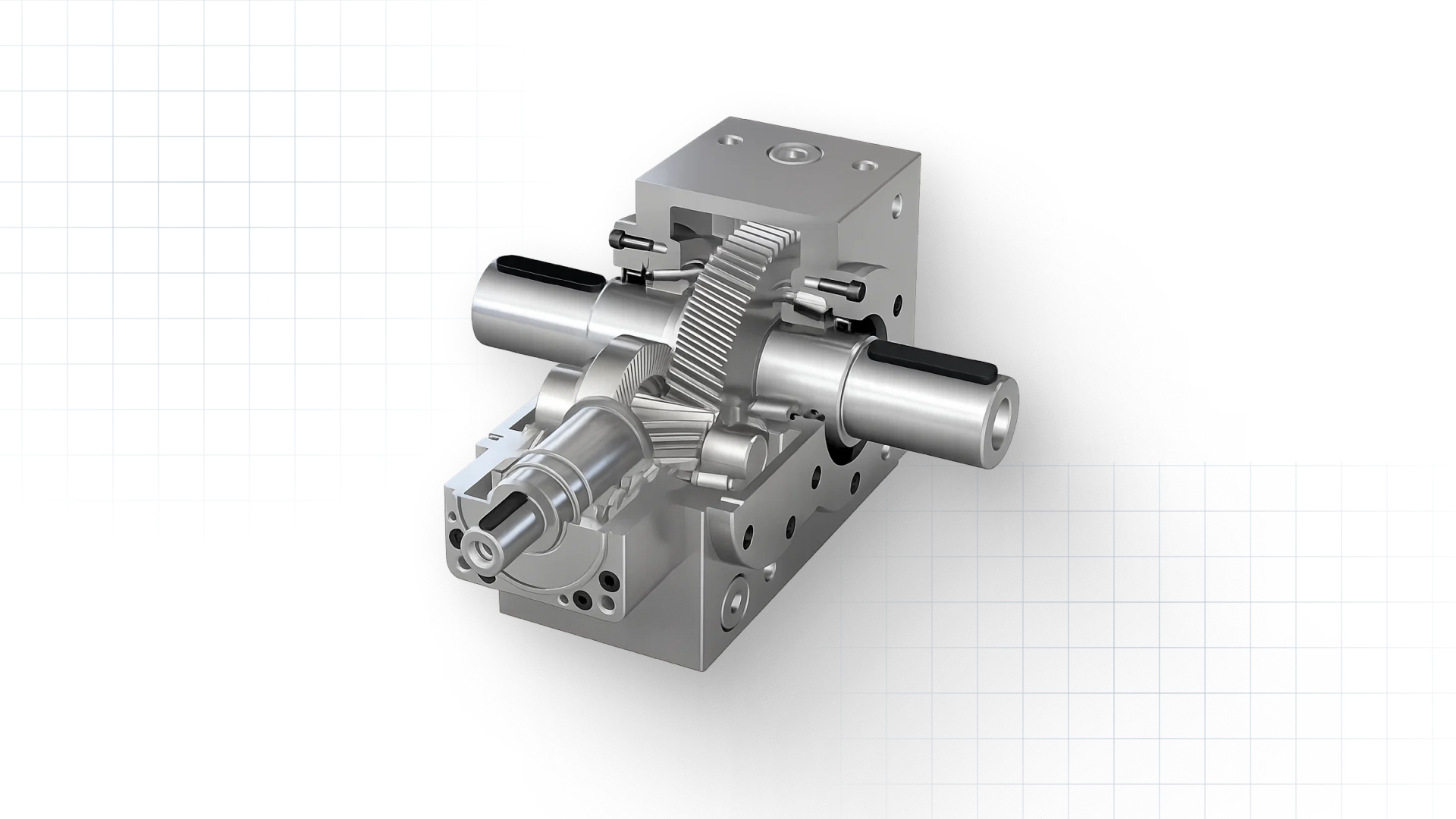
Bevel gearboxes redirect rotation at 90 degrees. Bevel-helical units add helical profiles for improved torque transfer and efficiency, making them suitable for right-angle layouts that still need steady mechanical performance.
Here are the practical points to evaluate for bevel and bevel-helical gearboxes:
Applications
Right-angle conveyor drives
Bucket elevators
Mixers with offset drive positions
Transfer lines with strict layout constraints
Material handling drives need compact geometry
Operational Outcomes
Higher efficiency in bevel-helical designs
Stable torque transfer in right-angle configurations
Smooth operation across moderate to high speeds
Better load capacity than simple bevel units
Procurement and Maintenance Notes
Broad vendor support
Good choice for space-limited installations
Maintain clean lubrication for bearing health
Performs well with coupling-based systems
Monitor bearing temperatures at higher speeds
Spur Gearbox
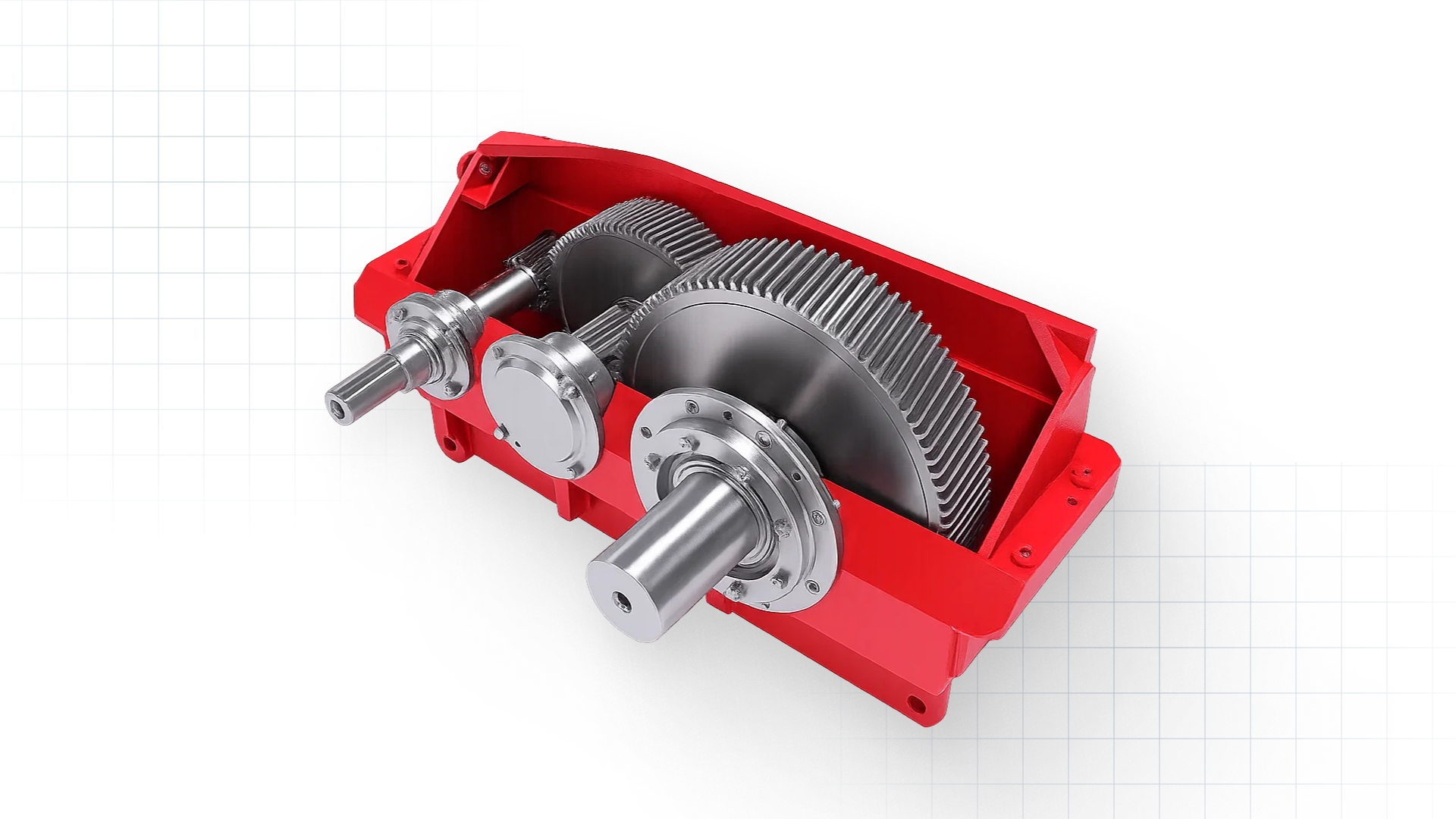
Spur gearboxes use straight-cut teeth and deliver simple torque transfer. They offer high efficiency in single-stage setups but generate more noise and vibration than helical designs. They are best suited for basic machinery with steady loads.
Here are the main evaluation points for spur gearboxes:
Applications
Basic conveyors
Low- to moderate-speed mechanical drives
Simple lifting or turning mechanisms
OEM equipment requiring a straightforward reduction
Operational Outcomes
Predictable torque transfer
High efficiency in simple setups
Higher noise and vibration at increased speeds
Best used in constant-load tasks
Procurement and Maintenance Notes
Simple to source and replace
Backlash typically higher than helical
Not suitable for high-speed or noise-sensitive machinery
Straightforward inspection routines
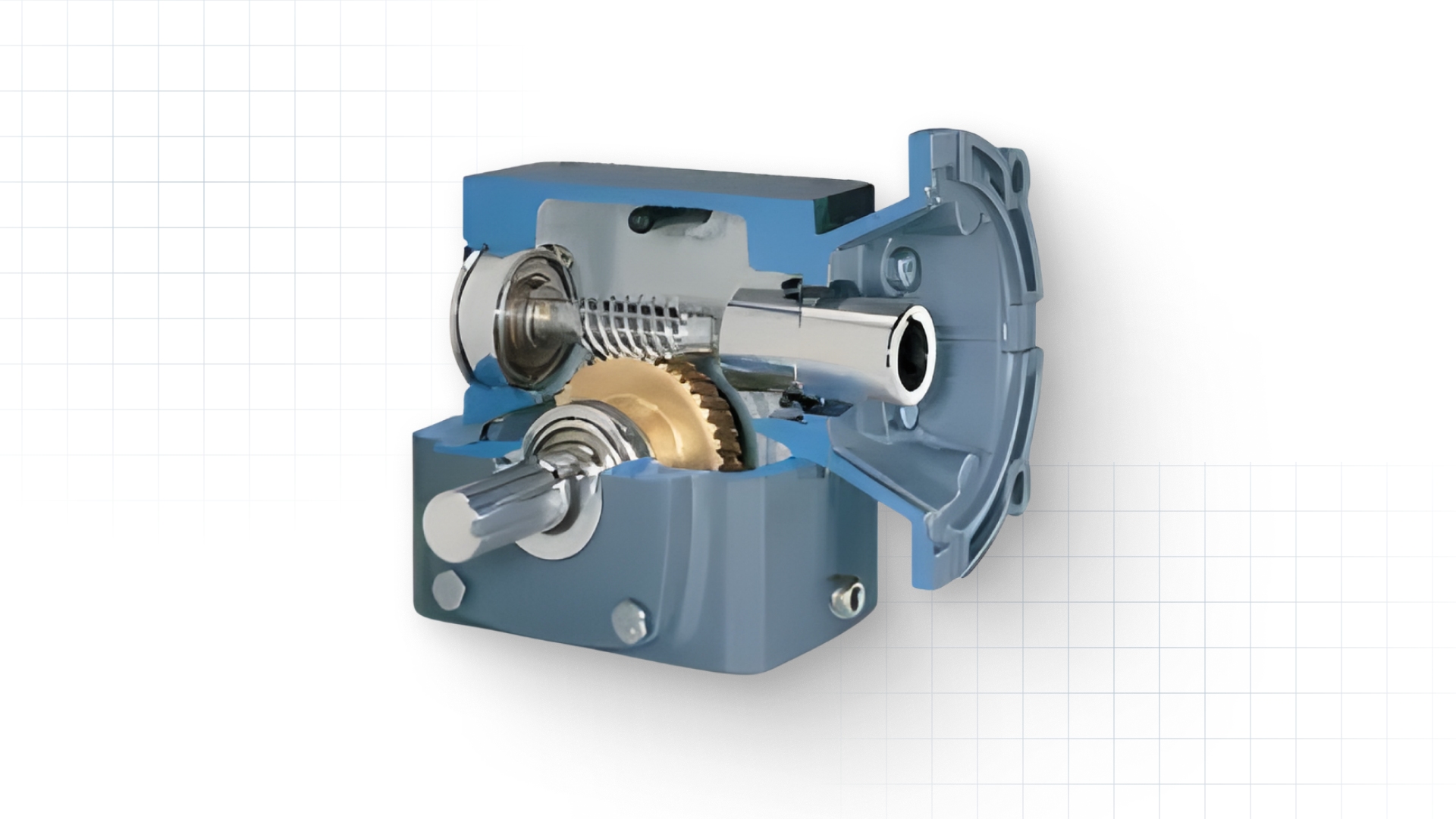
Worm gearboxes use a worm screw and worm wheel to produce high reduction ratios in compact envelopes. Their sliding contact leads to lower efficiency than helical or planetary units, but they offer quiet operation and steady output in moderate-load systems.
Here are the points that matter most when reviewing worm gearboxes:
Applications
Small conveyors and lifts
Entry-level material handling equipment
Mixers with moderate torque needs
Space-limited machinery
Applications requiring compact high-ratio reduction
Operational Outcomes
Quiet running
High ratios in small footprints
Predictable output in low to medium loads
Lower efficiency due to sliding contact
Often resists back driving; confirm self-locking based on lead angle
Procurement and Maintenance Notes
Monitor thermal performance in long-duty cycles
Lubrication quality heavily affects service life
Heat generation increases at higher ratios
Suitable where compactness outweighs efficiency losses
Confirm self-locking based on specific design
Hypoid Gearbox
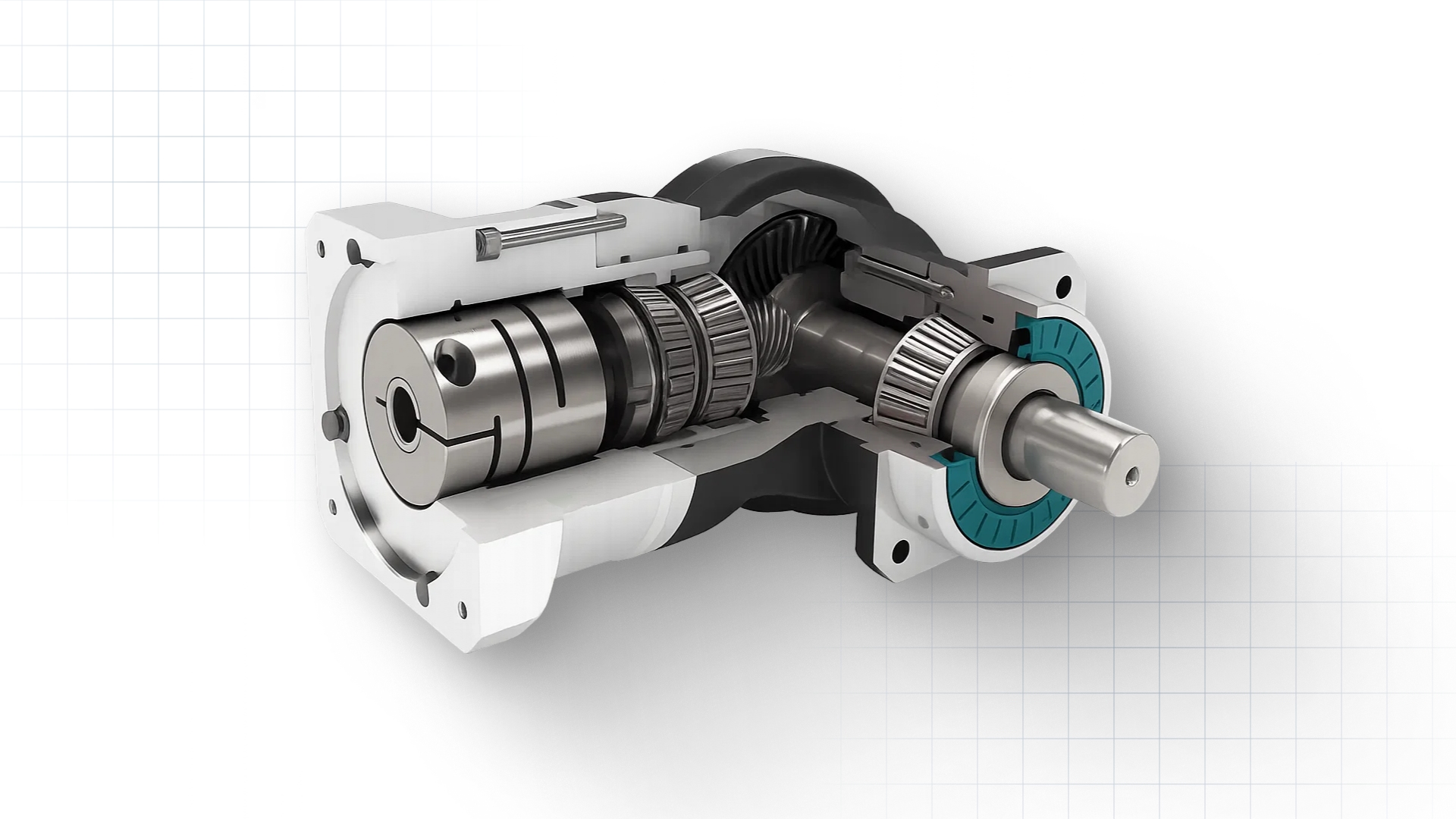
Hypoid gearboxes use offset axes and sliding tooth contact that supports quiet operation in compact right-angle layouts. Their efficiency is higher than worm designs but lower than spiral bevel or bevel-helical gearboxes.
Here are the selection points to consider for hypoid gearboxes:
Applications
Compact right-angle conveyor systems
Packaging machinery where low sound levels matter
Medium-duty material handling equipment
Automation setups with space limits
OEM machinery needing right-angle redirection without large housings
Operational Outcomes
Quieter output than bevel or spur gearboxes
Moderate to high efficiency depending on design
Good speed reduction with a small footprint
Handles moderate shock conditions
Stable running in space-restricted layouts
Procurement and Maintenance Notes
Lubrication condition must be watched due to sliding contact
Check thermal capacity for long shifts
Strong alternative when worm gearboxes fall short
Compatible with most right-angle mounting accessories
Planetary Gearbox
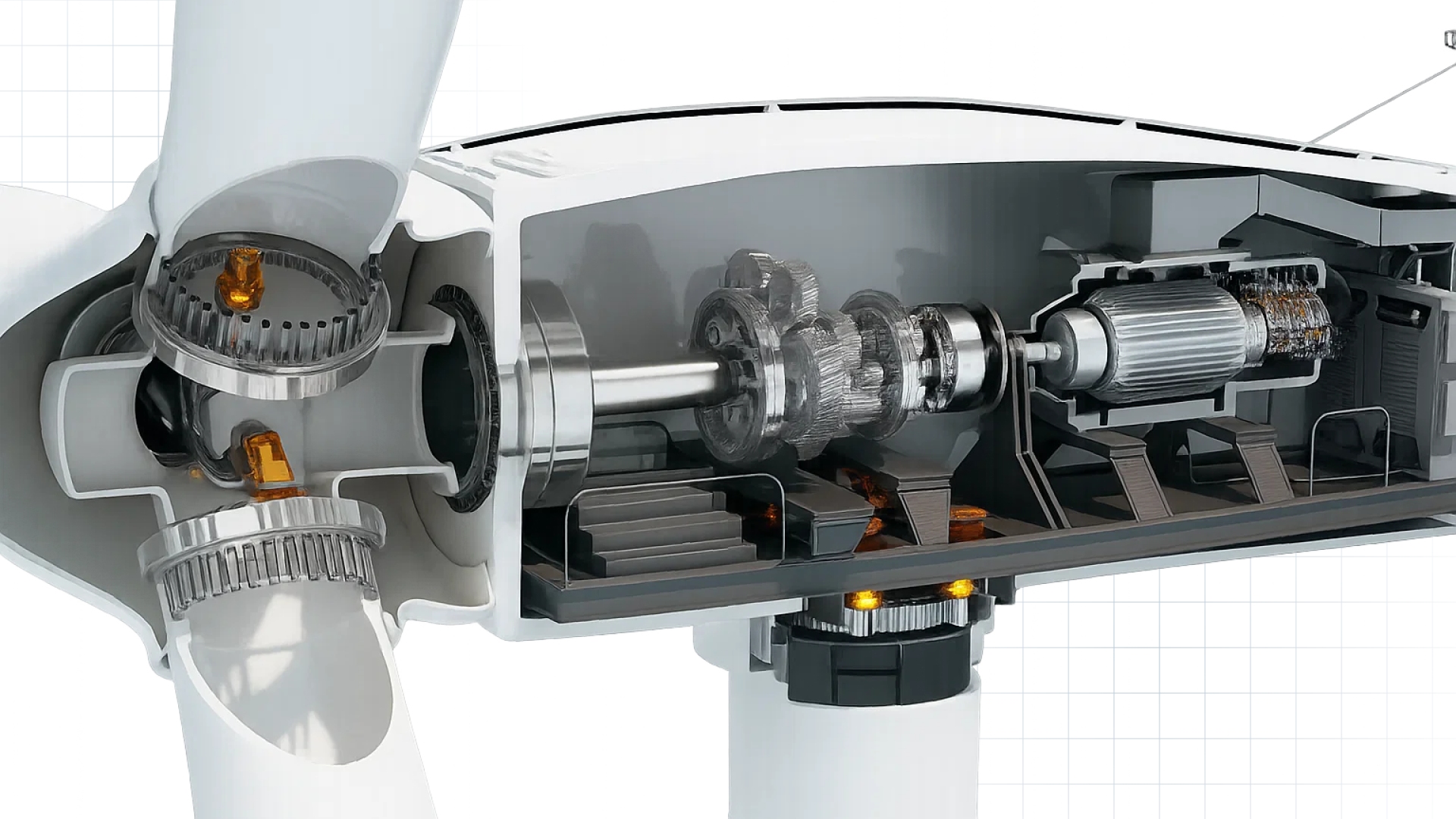
Planetary gearboxes distribute load across multiple planet gears, producing high torque density, very high efficiency, and strong shock tolerance. They serve heavy industrial lines as well as precision environments such as robotics and aerospace.
Here are the core assessment points for planetary gearboxes:
Applications
Mixers and agitators with high starting torque
Crushers and steep-incline conveyors
Mobile equipment needing compact high-torque drives
Robotics requiring low-backlash variants
Aerospace systems with strict size and weight limits
Operational Outcomes
Very high efficiency
High torque density
Low backlash options available
Excellent shock tolerance
Suited for heavy-duty and precision applications
Procurement and Maintenance Notes
Spares are often model-specific
Monitoring vibration and noise helps detect early issues
Backlash drift should be tracked in precision systems
Service may require trained technicians
Trusted choice for critical-duty work
Cycloidal Gearbox
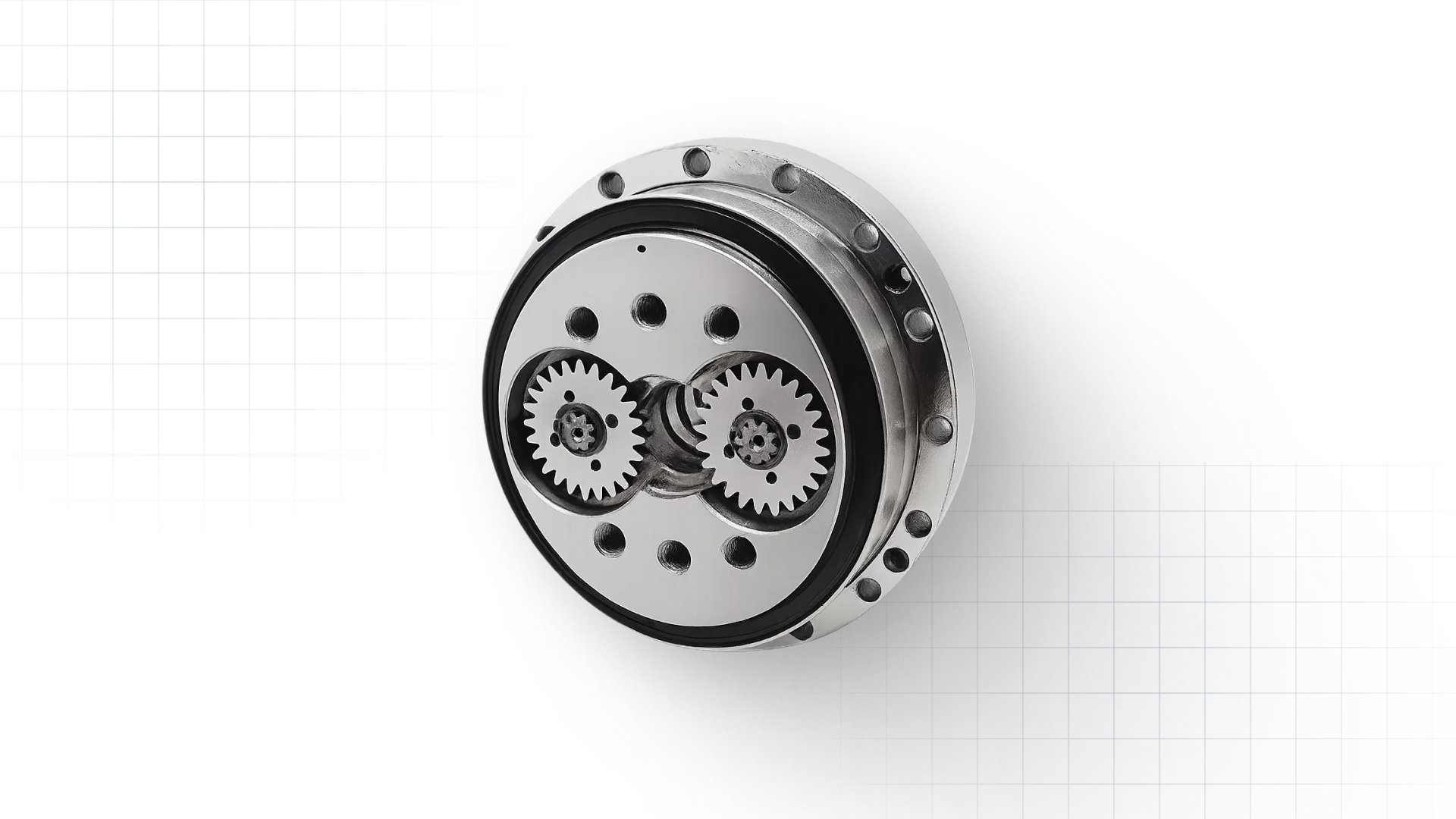
Cycloidal gearboxes use rolling pins or discs to produce near-zero backlash and reliable repetitive motion. They offer high reduction ratios and excellent shock absorption, making them effective for robotics, indexing, and high-repeatability work.
Here are the main review factors for cycloidal gearboxes:
Applications
Robotics with precise positioning
Indexing tables and pick-and-place systems
High-repeatability packaging operations
Machinery exposed to impact or vibration
Compact drives requiring minimal backlash
Operational Outcomes
Near-zero backlash
High shock tolerance
Smooth repetitive cycles
High-ratio reduction in tight spaces
Suitable for precision and high-cycle tasks
Procurement and Maintenance Notes
Spares may be tied to specific models
Lubrication cleanliness is key to pin/disc life
Effective retrofit option for low-backlash needs
Often paired with torque limiters in shock environments
Custom / Modular Gearbox Variants
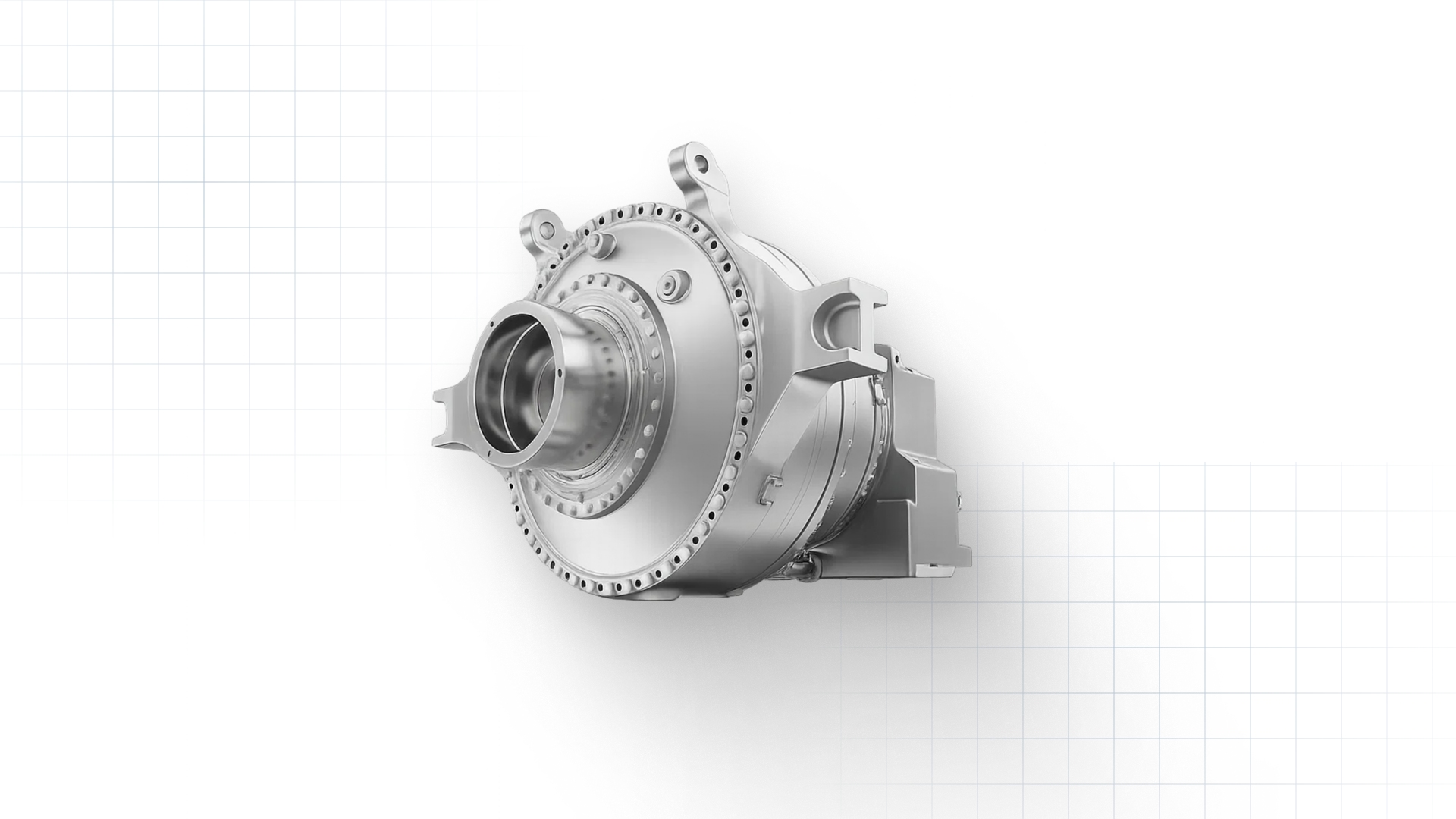
Custom or modular gearboxes support layouts that fall outside standard configurations. They are built for specific torque curves, space limits, or mounting needs and often serve OEM machinery or high-volume lines.
Here are the factors that shape selection for custom and modular gearboxes:
Applications
OEM machines with special geometries
Non-standard conveyors or drives
Equipment needing unique torque characteristics
High-volume systems requiring predictable long-term service
Operational Outcomes
Tailored fit for unique constraints
Reliable performance for special duty cycles
Configurable for torque, ratio, or mounting needs
Useful where standard units are not suitable
Procurement and Maintenance Notes
Spare planning should begin early
Vendor documentation matters for service and part replacement
Review thermal limits, service factors, and lubrication specs in detail
Check compatibility with belts, pulleys, and clutches
Now that you’ve reviewed the core gearbox types, the next step is evaluating how they differ across performance, space, and service expectations.
Also Read: Gear Reducer Use Cases & Applications
Side-by-Side Comparison of Industrial Gearbox Types
Different gearbox types respond to load, speed, shock, and space conditions in their own ways. A clear comparison helps teams shortlist the right option before moving into vendor reviews or detailed sizing.
Here is a quick reference table that highlights how each type behaves under common selection factors.
Gearbox Type | Torque Density | Efficiency | Backlash | Noise | Best-Fit Cues |
Helical | High | High | Low – moderate | Low | Continuous duty, steady motion, lower noise needs |
Bevel / Bevel-Helical | High | High | Low – moderate | Low – moderate | Right-angle layouts, higher performance than basic bevel |
Spur | Moderate | High | Moderate – high | High | Simple drives, low–moderate speeds, relaxed noise limits |
Low – moderate | Low – moderate | Moderate | Low | Compact high-ratio needs, quiet setups, often resist backdriving | |
Hypoid | Moderate –high | Moderate – high | Moderate | Low | Compact right-angle, quieter operation than bevel |
Planetary | Very high | Very high | Low | Low – moderate | High torque in tight spaces, shock-tolerant, precision variants available |
Cycloidal | High | High | Very low | Low – moderate | Near-zero backlash, precision indexing, strong shock handling |
Custom / Modular | Varies | Varies | Varies | Varies | Non-standard layouts, OEM machinery, special torque/mounting needs |
Choosing the right gearbox becomes far easier when you can review options side by side, but if you still need clarity on fit, load demands, or replacement paths, our team can help. Midwest Power Products replaces, repairs, and sources every major gearbox brand with emergency and same-day service available. Contact us to review your application and get fast support tailored to your equipment needs.
Once you’ve compared the main designs, the next focus is applying those insights to selection, day-to-day use, and procurement planning.
What to Review Before Buying and Operating an Industrial Gearbox
Selecting a gearbox requires technical checks, service planning, and sourcing awareness that help teams reduce downtime and avoid unexpected failures. This combined playbook provides practical guidance for engineers, maintenance teams, and procurement groups.
Here are the checks that support effective selection and long-term performance:
Duty cycle and load review: Confirm running hours, load shifts, starting loads, and peak loads to ensure the unit can handle expected operating conditions.
Mounting and layout check: Verify installation space, access points, and service paths for safe and practical placement.
Motor and drive pairing: Match the reducer to the motor by assessing speed, connection type, and inertia behavior.
Environmental and thermal conditions: Review heat exposure, dust, moisture, and washdown demands, and confirm lubricant grade, contamination risks, and temperature limits.
Backlash, alignment, and drivetrain fit: Check couplings, pulleys, torque limiters, and alignment to avoid uneven loading or shaft stress.
Routine inspection planning: Set clear intervals for noise checks, vibration trending, and oil condition reviews to detect early wear.
Condition monitoring readiness: Confirm the feasibility of adding sensors or trending tools for predictive maintenance.
Spare-part planning: Identify critical and long-lead components to reduce downtime during repairs.
Supplier capability: Verify service coverage, parts availability, and lead times.
Documentation readiness: Ensure lubrication notes, thermal limits, and service instructions are accessible for maintenance teams.
Past performance review: Check references or previous installations to confirm reliability in similar operating environments.
After setting your selection and service approach, the next step is recognizing the indicators that show when a gearbox needs attention.
Also Read: Why Choose Electra Gear Aluminum Gear Reducers?
How to Spot Gearbox Problems Before Shutdowns
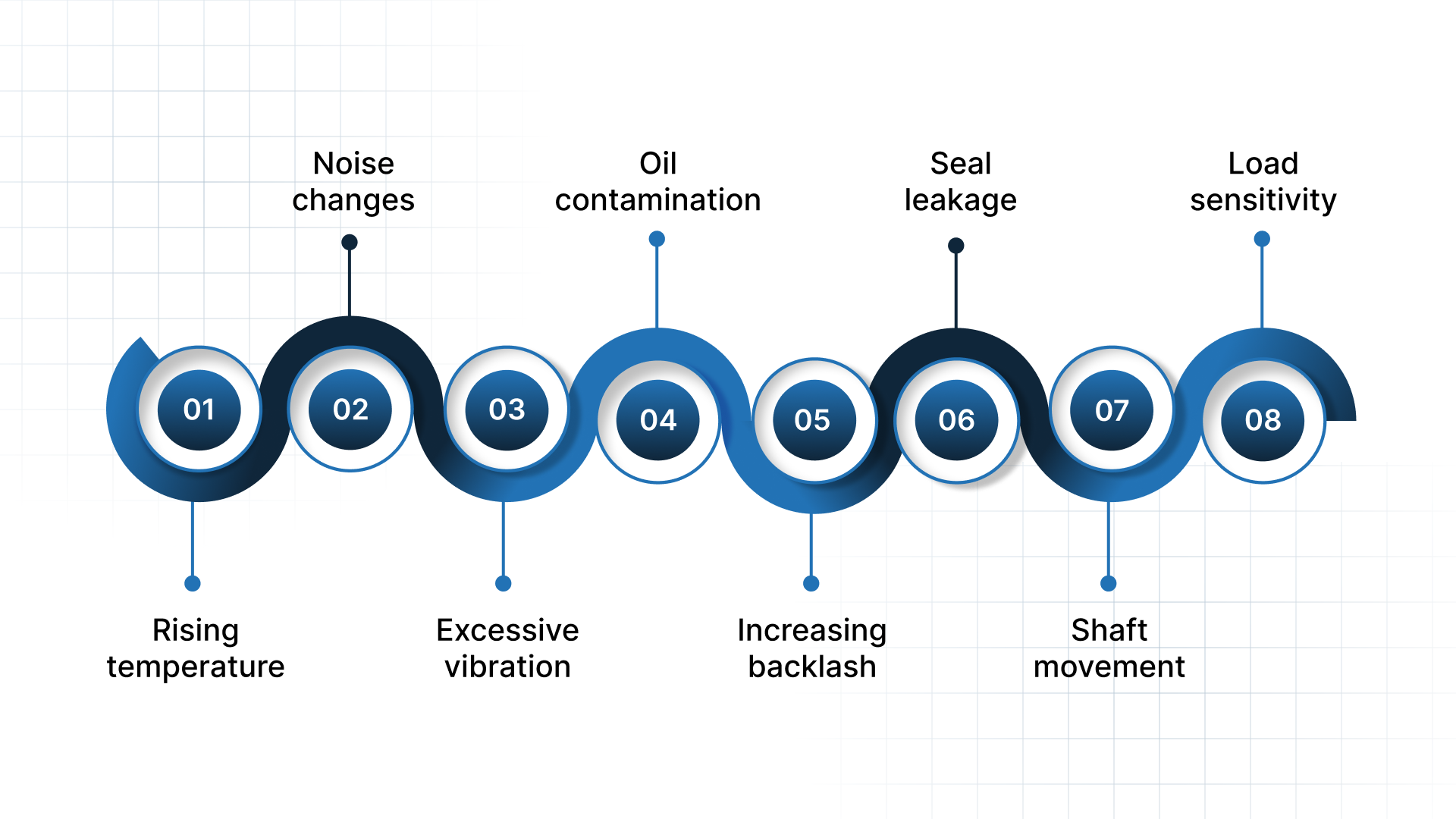
Gearbox failures usually provide early signals that can help maintenance teams intervene before the issue becomes a full shutdown event. Understanding these signs helps reduce unexpected downtime and improve reliability. Here are the common failure indicators and what they usually suggest:
Rising temperature: Unusual temperature increases often point to poor lubrication, excess friction, or advancing internal wear that demands attention.
Noise changes: New grinding, clicking, or whirring sounds may reflect gear tooth damage, bearing distress, or debris carried through the oil.
Excessive vibration: Sharp changes in vibration patterns often indicate misalignment, unbalanced loading, or deteriorating bearings needing service.
Oil contamination: Discoloration, foam, or particulate matter typically signals internal wear, seal damage, or lubricant breakdown.
Increasing backlash: Growing backlash can indicate tooth wear or mounting issues that require corrective action to prevent further deterioration.
Seal leakage: Oil seepage often points to worn seals, internal pressure changes, or incorrect lubricant selection.
Shaft movement: Any unexpected shaft motion usually reflects bearing degradation or internal looseness that must be addressed.
Load sensitivity: If the gearbox struggles at normal loads, internal wear or misalignment may be present.
When repeated issues start affecting performance, the next question becomes whether repair is still practical or replacement offers more stability.
When to Upgrade or Replace an Installed Gearbox
Plants routinely reach points where an installed gearbox no longer meets service expectations or load demands. Identifying these situations early helps reduce downtime and supports safer long-term operation.
Here are common triggers that prompt retrofits or replacements:
Repeated failures: Frequent breakdowns indicate structural wear or thermal stress.
Rising maintenance hours: Increasing technician time on the unit signals internal deterioration.
Load growth or mismatch: Applications that exceed original design assumptions require stronger gearbox types.
Space or layout constraints: Older, bulky models may give way to compact units that fit improved designs.
Motor updates: New motor types or technologies may require a compatible gearbox.
Noise or vibration limits: Updated acoustic or performance standards may require modernized designs.
Parts scarcity: Limited or costly spares justify switching to a widely supported model.
Thermal instability: Persistent overheating during normal operation indicates the need for better thermal performance.
If you’re weighing repair against full replacement, Midwest Power Products can help you review the options and keep production moving. Contact our team for emergency support, same-day builds, or quick guidance on your application.
Conclusion
Choosing the right gearbox helps plants maintain stable production, reduce maintenance interruptions, and prevent unexpected failures that disrupt throughput. When teams understand how gearbox types differ in behavior, service needs, and load capacity, decisions become clearer and more aligned with operational expectations.
If your team needs help selecting gearboxes, sourcing components, or planning repairs, Midwest Power Products can support your review process.
Contact us to discuss your application and get support tailored to your equipment needs.
FAQs
How long does an industrial gearbox typically run before replacement?
Service life depends on load consistency, lubrication quality, and alignment. Many units operate for 8–10 years or longer when used within design limits and supported with routine checks.
Can a gearbox be stored before installation?
Yes, provided it’s kept in a dry, covered area with humidity control and protection from vibration. Seal the openings, rotate the shaft every few weeks to prevent bearing flat spots, and follow the manufacturer’s rust-prevention guidelines.
Are refurbished gearboxes a safe option for plant use?
They can be, but only when supplied by a vendor with documented certification, rebuild records, and measured tolerances. Units should include new seals, verified wear readings, and test reports before being installed.
What should be checked before restarting a gearbox after long downtime?
Inspect and clean the exterior, confirm oil condition and level, check seals for seepage, review coupling alignment, and run the unit at no load. Increase load in stages while watching for noise, vibration, or temperature rise.
Does changing lubricant type improve performance or service life?
Any switch should be confirmed with the OEM to avoid chemical conflicts. If moving to a new product, flush the previous oil completely instead of mixing, since residue can cause foaming, heat rise, or early wear.