Gear reducers play a central role in energy systems by managing speed, torque, and load demands across heavy-duty equipment. In applications such as wind power, solar tracking, hydro turbines, and oil and gas machinery, consistent power transmission depends on the right gearbox design.
These units help convert high-speed input into controlled, usable output that supports safe and reliable energy production. Their performance directly influences system uptime, equipment lifespan, and overall power delivery across the industry.
This blog outlines key applications, requirements, and selection factors for gear reducers used across the energy sector.
Key Takeaways
Gear reducers are essential in energy systems for torque control, speed regulation, and reliable power transmission across turbines, pumps, and drives.
Applications span wind turbines, solar trackers, hydropower, oil & gas, biomass, and geothermal systems, each with specific load and environmental demands.
Key performance requirements include high torque capacity, shock-load resistance, temperature tolerance, continuous-duty operation, and corrosion protection.
Technical characteristics such as gear type, ratio, materials, seals, lubrication, and mounting must align with system demands and environmental conditions.
Selecting the right reducer improves efficiency, uptime, and equipment longevity; professional sourcing, rebuilds, and fast service from specialists like Midwest Power Products ensure optimal results.
Applications of Gear Reducers Across Energy Segments
Gear reducers for the energy industry support torque control, speed regulation, and load handling across multiple energy systems. However, their design and configuration vary based on duty cycles, environmental demands, and power requirements in each segment.
Energy Segment | Gear Reducer Applications | Key Considerations |
Wind Turbines - Main Gearboxes and Yaw Drives | Convert low-speed rotor motion to high-speed generator input while yaw drives position the nacelle | Handle variable loads, vibrations, and long service intervals |
Solar Trackers - Slew Drivers and Gear Motors | Move panels smoothly and hold against wind loads, enabling precise tracking | Accurate motion control, wind-load resistance, and continuous operation |
Hydropower Turbines | Manage torque from water-driven shafts, balancing turbine and generator speeds | Moisture resistance, fluctuating loads, and continuous operations |
Oil and Gas Processing Systems | Support pumping, mixing, conveying, and drilling equipment | High torque handling, pressure, and temperature tolerance |
Biomass and Waste-to-Energy Equipment | Feeders, shredders, conveyors, combustion systems | Shock-load tolerance, abrasion resistance, and continuous cycling |
Geothermal Pumps and Drilling Systems | Control pump speeds and assist drilling equipment | High-temperature tolerance, robust sealing, and durable materials |
Beyond their specific applications, gear reducers serve fundamental functions that determine the efficiency, stability, and reliability of energy systems.
Role of Gear Reducers in the Energy Industry
Gear reducers support stable and dependable power transmission across energy applications. Their function influences overall equipment behavior, mechanical safety, and long-term performance.
Efficiency Optimization: Gear reducers help equipment maintain the output levels required for continuous energy production. Proper gear design reduces mechanical losses and supports consistent power flow between motors, turbines, and generators.
Torque Multiplication: Energy systems often need higher torque than motors or turbine shafts can provide on their own. Gear reducers increase torque to match the demands of pumps, drives, and heavy rotating machinery.
Speed Control: Reducers adjust high motor speeds to the lower speeds required for controlled mechanical movement. This ensures equipment such as trackers, pumps, or turbine components operate within safe and stable ranges.
Load Distribution: Well-designed gear reducers evenly distribute loads across gear sets, reducing stress on shafts, bearings, and connected equipment. This helps prevent premature wear under fluctuating or heavy loads.
System Reliability: A properly matched gear reducer supports stable operation, predictable performance, and reduced downtime. In energy applications where interruptions are costly, reliable gear transmission helps maintain continuous output.
To deliver these results, gear reducers must meet specific performance requirements tailored to the demanding conditions of energy applications.
Performance Requirements for Energy-Industry Gear Reducers
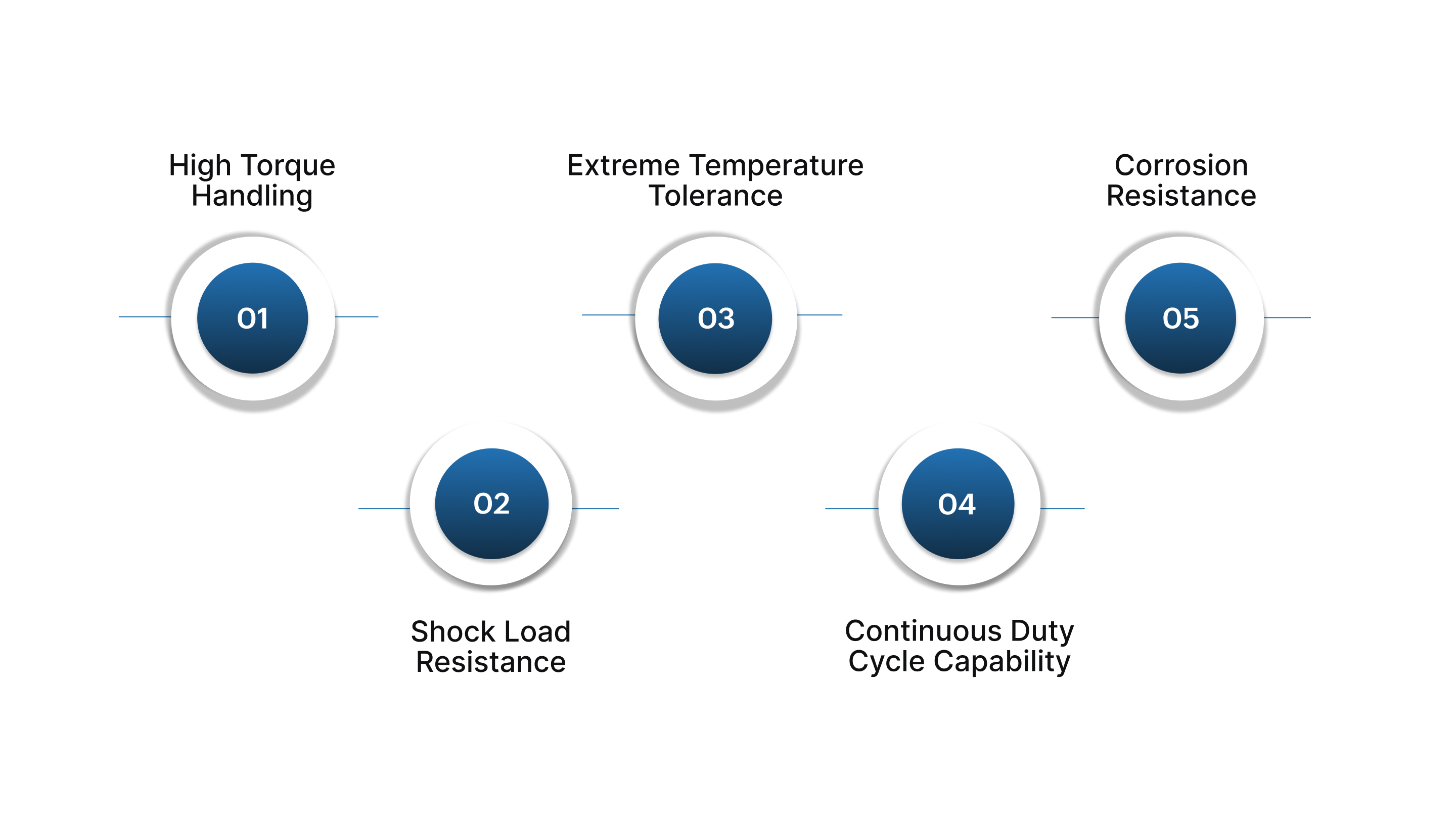
Gear reducers used in energy applications must handle demanding mechanical and environmental conditions. Their design directly influences long-term stability, safety, and output.
High Torque Handling: Energy systems often generate significant torque, especially in wind, hydro, and drilling equipment. Gear reducers must manage this load without deformation, overheating, or excessive wear.
Shock Load Resistance: Turbines, feeders, drilling units, and combustion systems face sudden load changes. Reducers must absorb these impacts without gear tooth damage or alignment issues.
Extreme Temperature Tolerance: Solar fields, geothermal plants, and oil and gas operations expose equipment to high heat, while offshore and hydro sites may involve lower temperatures. Gear reducers require materials, seals, and lubrication systems that function reliably across these ranges.
Continuous Duty Cycle Capability: Many energy systems run for long intervals without shutdown. Reducers must maintain stable output under sustained loads and support long service intervals with minimal performance decline.
Corrosion Resistance: Offshore wind farms, hydro facilities, biomass plants, and outdoor solar installations expose reducers to moisture, salt, and chemicals. Protective coatings, sealed housings, and corrosion-resistant materials help maintain durability under these conditions.
The ability of a gear reducer to handle torque, temperature, and continuous operation relies on its core technical characteristics and design features specific to energy applications.
Technical Characteristics Essential for Energy Applications
Gear reducers used in energy systems must be engineered to match the mechanical demands, environmental conditions, and performance expectations of each application. The characteristics below guide proper selection and long-term reliability.
Gear Type Selection: Helical, Bevel, Planetary, Worm: Helical and bevel gears support higher loads and smooth power transfer in turbines and pumps. Planetary gear sets provide compact, high-torque performance suited for wind systems and drilling equipment. Worm gears are used where compact motion control and holding ability are needed, such as in solar tracking drives.
Gear Ratio Considerations: The ratio determines speed reduction and torque output. Energy equipment requires ratios that support stable operation, manage variable loads, and match generator or pump input requirements without introducing excess stress on shafts or bearings.
Materials & Coatings: Housing and gear materials influence durability under heat, moisture, and abrasive forces. Hardened steels, alloy components, and specialized coatings help maintain wear resistance and extend service life in demanding environments.
Sealing Systems: Effective sealing protects the internal components from dust, water, chemicals, and temperature changes. Energy installations, especially offshore, hydro, and biomass, rely on seals that prevent contamination and maintain lubrication integrity.
Lubrication Requirements: Proper lubrication reduces friction, manages heat, and minimizes wear. Energy-industry gear reducers often require long-life lubricants or application-specific formulations suited for continuous operation and variable loads.
Mounting Configurations: Mounting affects load distribution, alignment, and service access. Horizontal, vertical, or shaft-mounted designs are chosen based on available space, maintenance needs, and the type of connected equipment.
Evaluating these technical characteristics helps guide the selection of gear reducers that meet the specific demands of energy systems.
How to Choose the Right Gear Reducers for the Energy Industry
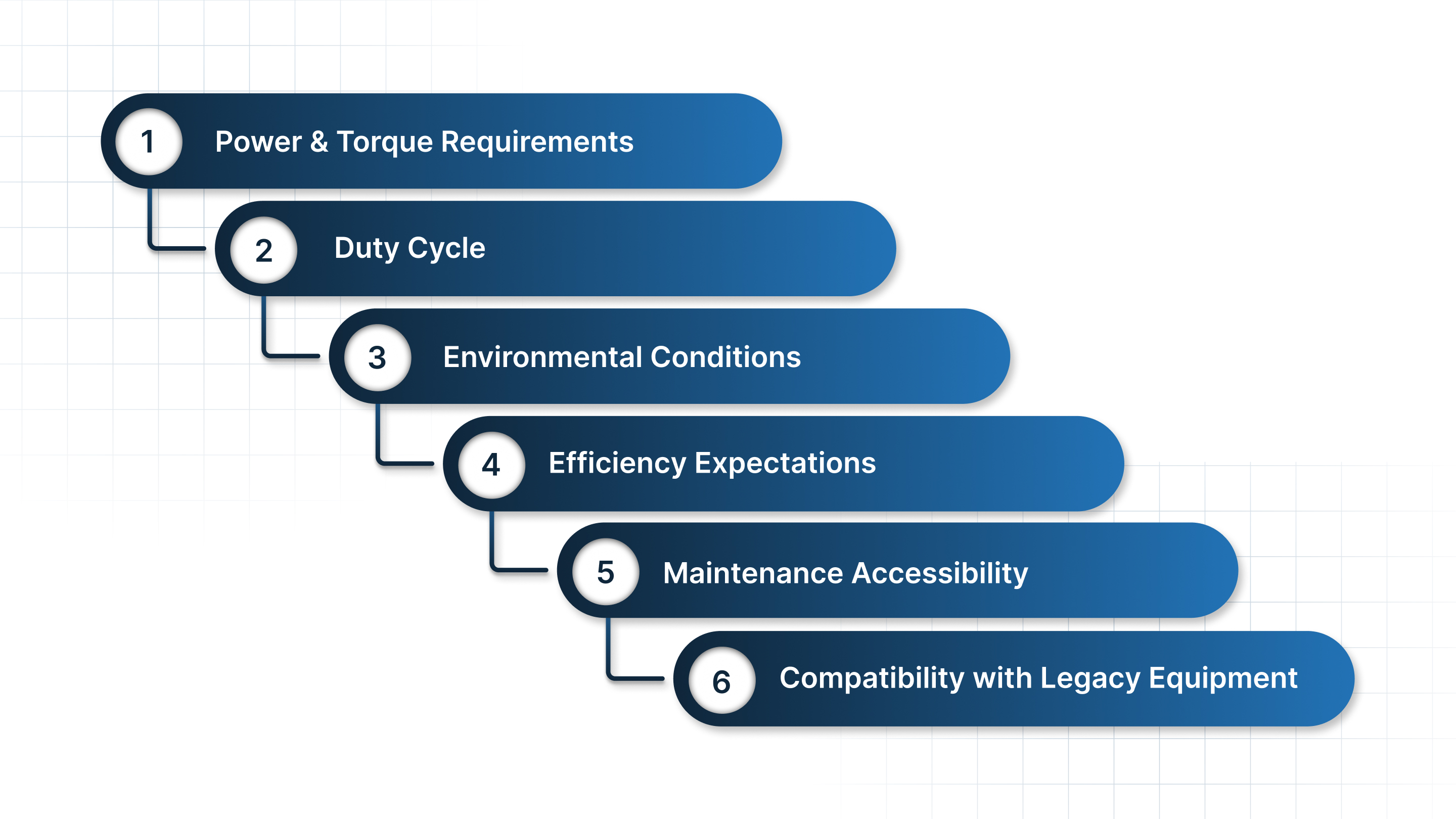
Selecting the right gear reducer requires evaluating mechanical demands, application-specific conditions, and long-term service expectations. The points below help guide decision-making for energy environments.
Power & Torque Requirements: The reducer must match the input power and deliver the torque needed for pumps, turbines, drives, or positioning systems. Proper sizing protects against overload, heat buildup, and premature wear.
Duty Cycle: Many energy systems operate for long intervals without shutdown. The chosen reducer should support continuous operation, predictable performance, and stable output under constant or variable loads.
Environmental Conditions: Temperature swings, moisture, salt exposure, dust, and contaminants influence material selection, sealing systems, and lubrication. Offshore, geothermal, biomass, and hydro installations require durable construction that withstands these conditions.
Efficiency Expectations: High-efficiency gear designs help maintain steady power delivery and reduce mechanical losses. Matching the reducer to the application helps minimize energy waste and support stable system performance.
Maintenance Accessibility: Gear reducers should allow straightforward inspection, lubrication, and part replacement. Easy service access helps reduce downtime, especially in remote or difficult-to-reach locations such as wind towers or offshore platforms.
Compatibility with Legacy Equipment: Many energy sites operate long-life machinery. The reducer should fit existing shafts, mounting layouts, and speed requirements. In some cases, custom builds or rebuild services help maintain compatibility with older systems.
If you need support selecting or sourcing the right gearbox for your energy application, Midwest Power Products provides engineering guidance and access to a wide range of industrial-grade reducers.
Key Challenges and Engineering Considerations
Energy equipment exposes gear reducers to conditions that require careful evaluation during selection and maintenance.
Torque Spikes in Wind and Hydro Systems: Sudden load changes can stress gears and bearings, requiring robust designs that manage fluctuations without damage.
Heat Buildup in Solar Tracking Systems: Tracking drives operate in high temperatures, making thermal stability and proper lubrication essential.
Vibration Issues: Turbines, pumps, and drilling units generate vibration that can affect alignment, noise levels, and component wear.
Gearbox Failure Modes: Common issues include tooth wear, lubrication breakdown, seal leakage, and bearing fatigue. Early detection helps prevent unplanned downtime.
Supply Chain and Replacement Part Availability: Long lead times can delay repairs, making reliable sourcing partners important for keeping energy systems in service.
Addressing these challenges ensures gear reducers maintain reliable performance and longevity in demanding energy applications.
Conclusion
Gear reducers support stable torque, controlled speed, and dependable power transfer across every major energy segment. Their performance affects uptime, equipment life, and the overall reliability of power-generation systems.
Selecting the right unit requires attention to load demands, environmental conditions, and long-term service needs. Midwest Power Products supplies and rebuilds gear drives from leading brands, supports legacy equipment, and provides fast turnaround for urgent requirements. As specialists with access to a broad inventory and same-day repair capabilities, they help energy operations maintain consistent performance.
Connect with our team for sourcing, replacement, or repair of gear reducers for energy industries and applications!
FAQs
1. What type of gear reducer is most commonly used in wind turbines?
Wind turbines typically use large planetary gearboxes for the main drive due to their high torque capacity, compact size, and ability to handle fluctuating loads. Yaw and pitch systems may use helical or worm gear drives for controlled positioning.
2. How often should gear reducers in energy applications be serviced?
Service intervals vary by application, but many energy systems follow scheduled inspections every 6–12 months. Continuous-duty units may require more frequent lubrication checks, vibration monitoring, and seal inspections.
3. Can gear reducers be customized for specific environmental conditions?
Yes. Units can be built with corrosion-resistant materials, advanced sealing, high-temperature lubricants, or reinforced designs for offshore, geothermal, or biomass environments.
4. What factors most influence gear reducer lifespan in energy systems?
Load stability, lubrication quality, temperature exposure, alignment accuracy, and material durability have the greatest effect on long-term performance.
5. Are gear reducer rebuilds a reliable option for older energy equipment?
A professional rebuild can restore performance, extend lifespan, and maintain compatibility with legacy machinery. This option is often faster and more cost-effective than acquiring a new custom unit.