Maintenance teams know that a gearbox rarely gives much warning before it causes trouble. One hour of downtime can disrupt an entire shift, and a single failure can trigger delays that affect every part of the plant. A steady industrial gearbox maintenance routine helps prevent those moments and gives technicians the confidence that each unit will hold up under daily demands.
This guide brings together the practices that support dependable performance and reduce the chances of avoidable breakdowns. Use these steps to strengthen your maintenance program and keep production running without unnecessary interruptions.
Quick Overview
Follow a Regular Inspection Schedule: Routine checks detect early wear, leaks, and abnormal vibration before they escalate.
Use Proper Lubrication: Select the right lubricant, maintain levels, and monitor oil quality to protect gears and bearings.
Monitor Temperature and Vibration: Track heat and vibration trends to detect issues such as misalignment, overload, or bearing wear.
Maintain Seals, Breathers, and Clean Environment: Prevent contamination, moisture, and debris from entering gearboxes.
Document and Partner for Maintenance: Keep detailed service logs and work with experts like Midwest Power Products for repairs, replacements, and emergency support.
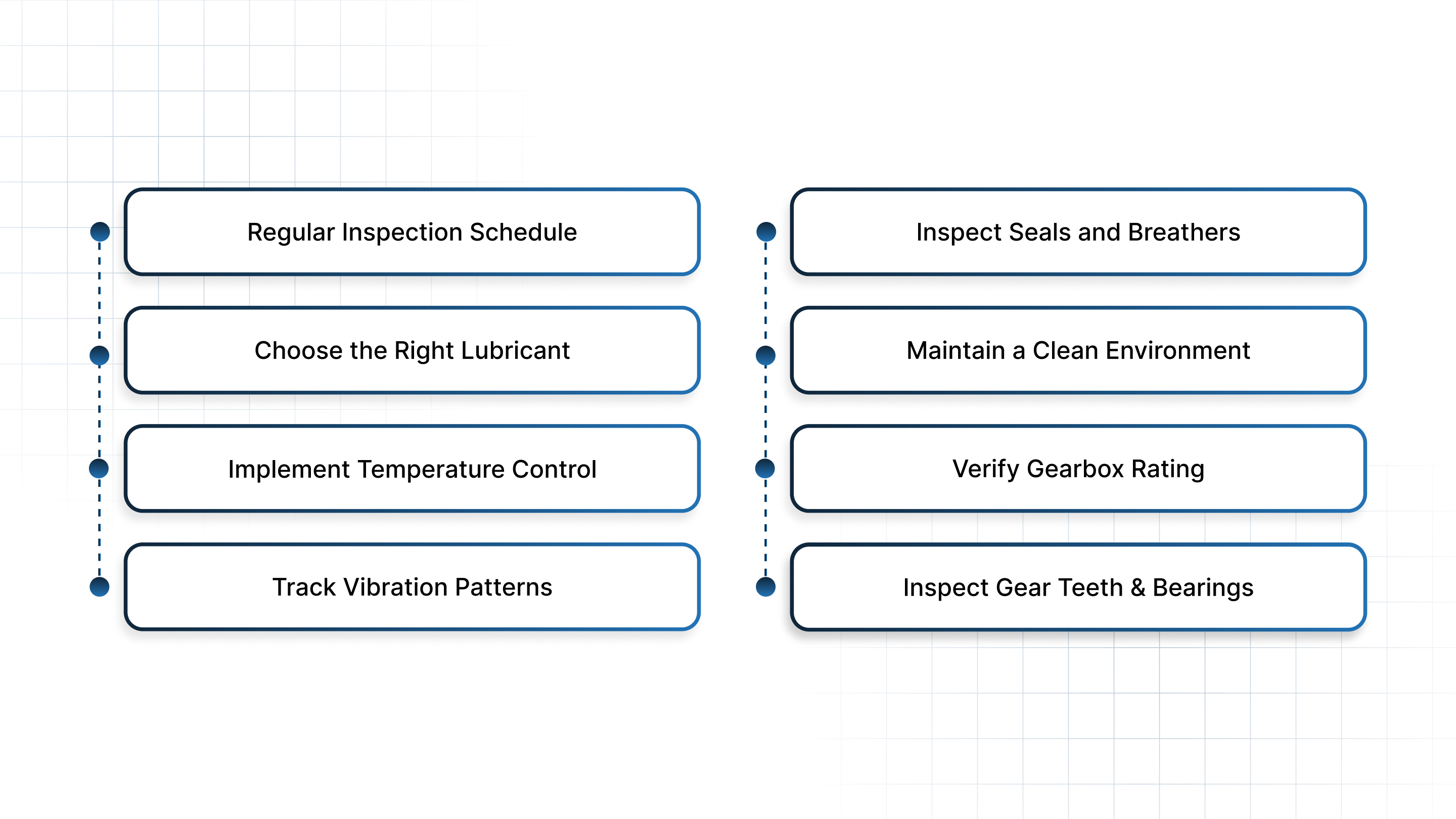
Tip 1: Establish and Follow a Regular Inspection Schedule
Regular inspections are the foundation of effective gear reducer maintenance. They catch early wear, prevent unexpected failures, and keep equipment running reliably in demanding industrial environments.
Define Inspection Intervals Based on Operating Condition: Harsh conditions, such as high loads, temperature extremes, and continuous operation, require more frequent checks. Tailor inspection frequency to the reducer’s duty cycle, environment, and criticality within the system.
Monitor for Abnormal Noise, Vibration, and Heat: Changes in sound patterns, unexpected vibration, or rising temperatures often signal internal issues like misalignment, bearing wear, or lubrication breakdown.
Check Lubrication Levels and Quality: Contaminated or degraded lubricant accelerates component wear. Regularly examine oil clarity, viscosity, and the presence of particles to ensure proper protection of gears and bearings.
Inspect Seals, Housing, and Fasteners: Damaged seals or loose fasteners can lead to leaks, contamination, and misalignment. Routine visual checks help maintain structural integrity and prevent avoidable failures.
Keep Clear Records of Inspection Findings: Document every inspection with notes on issues found, parts replaced, and trends over time.
Once inspections are in place, the next priority is ensuring the gearbox is lubricated correctly.
Tip 2: Choose the Right Lubricant and Maintain Proper Lubrication Levels
Proper lubrication is one of the most critical factors in extending the service life of gear reducers.
Select Lubricants Based on Gear Type and Operating Environment: Different gear configurations, such as helical, bevel, or worm gears, have unique lubrication needs. Consider viscosity, base oil type, and additives suited to temperature ranges, load conditions, and contamination risks present in your application.
Maintain Optimal Lubrication Levels at All Times: Too little lubricant causes excessive wear, while overfilling can lead to overheating and foaming. Regularly verify levels according to manufacturer guidelines to keep the system balanced and protected.
Monitor Lubricant Condition for Signs of Degradation: Over time, oil can oxidize, thicken, or become contaminated with metal particles, moisture, or debris. Routine oil sampling and visual checks help identify when it’s time for replacement before damage occurs.
Use High-Quality, Energy-Industry-Approved Lubricants: In demanding environments like wind turbines, hydropower stations, and oil & gas equipment, premium lubricants with anti-wear, extreme-pressure, or corrosion-resistant additives ensure better reliability and longer component life.
Establish a Consistent Lubrication Replacement Schedule: Follow recommended change intervals based on operating hours, temperature, and load severity. A disciplined replacement routine prevents unexpected failures and supports efficient long-term performance.
Even with correct lubrication, heat buildup can signal deeper issues, making temperature control the next area to focus on.
Tip 3: Implement Temperature Control and Monitoring Systems
Gear reducers naturally generate heat, but rising temperatures often signal lubrication issues, misalignment, or internal wear. Monitoring these levels helps teams act early and prevent damage from spreading.
Track Operating Temperature Trends: Establish normal temperature ranges for each gearbox and watch for gradual increases that may indicate rising load, inadequate lubrication, or component fatigue.
Install Sensors for Real-Time Alerts: Temperature sensors or thermal monitoring systems provide immediate warnings when levels rise beyond safe limits, reducing the risk of sudden failures.
Evaluate Cooling System Performance: If gear reducers rely on external cooling, ensure that fans, heat exchangers, and airflow paths remain unobstructed and effective.
Prevent Lubricant Breakdown from Overheating: Controlling temperature preserves oil viscosity and additive strength, helping the lubricant maintain its protective film.
Along with temperature trends, vibration patterns reveal early signs of mechanical stress.
Tip 4: Track Vibration Patterns and Establish Baseline Performance
Vibration changes often signal early-stage issues inside a gearbox. Establishing baseline vibration data makes it easier to detect deviations and prevent component failures.
Record Baseline Vibration Levels: Capture readings when the gearbox is operating normally. These baseline values will help identify unusual shifts over time.
Use Routine Vibration Monitoring: Regular checks help detect imbalance, misalignment, loose fasteners, or bearing wear before they escalate.
Prioritize High-Load or High-Speed Units: Gearboxes exposed to heavier loads typically show vibration changes earlier and should be monitored more frequently.
Respond Quickly to Abnormal Patterns: Sudden spikes or irregular frequencies often indicate internal wear, lubrication problems, or alignment issues that require immediate attention.
Need support keeping your gearboxes running reliably? Experts at Midwest Power Products can help you identify seal and breather issues early and supply the right replacement components, fast, including same-day delivery when needed.
Tip 5: Inspect and Maintain Seals and Breathers
In industrial gearbox maintenance, seals and breathers play a key role in keeping contaminants out and preventing oil loss. When they fail, problems like gear wear, bearing damage, and overheating develop quickly. Here’s what you need to check:
Check Seals for Weeping or Fine Mist Leakage: Even a light oil film around a shaft seal indicates early degradation. This is often caused by shaft runout, misalignment, or hardened seal material. Addressing it early prevents oil starvation and contamination.
Look for Hardening or Cracked Seal Lips: Temperature fluctuations and long service hours often dry out seal elastomers. When the lip hardens, it can no longer hold pressure or block contaminants. Replace seals proactively rather than waiting for significant leakage.
Clean and Inspect Breathers for Blockage: A clogged breather traps moisture and pressure inside the housing, forcing oil out through seals or creating condensation inside the gearbox. Breathers should be cleaned regularly or replaced with desiccant breathers in humid or dusty environments.
Upgrade Breather Type Based on Operating Conditions: For gearboxes near washdown areas, outdoors, or around fine particulates, consider replacing standard breathers with sealed, filtered, or desiccant-style options to keep moisture and debris out.
Check for Vacuum or Pressure Buildup: After the shutdown, a vacuum can form inside the gearbox. If the breather isn’t functioning correctly, this vacuum pulls in contaminated air through weak points. A properly functioning breather equalizes pressure and protects the lubricant.
Verify Alignment and Shaft Condition Around Seals: Repeated seal failures often indicate shaft misalignment or scoring. Inspect the shaft surface for wear grooves; even small imperfections can quickly destroy new seals.
Once seals and breathers are in good condition, the next step is maintaining a clean environment around the gearbox.
Tip 6: Maintain a Clean Operating Environment
A clean workspace is essential for effective industrial gearbox maintenance. Contaminants like dirt, moisture, and airborne particles can degrade lubricant quickly and accelerate internal wear.
Keep the Area Around the Gearbox Free of Dust and Debris: Routine sweeping or vacuuming prevents contaminants from settling on seals, breathers, and inspection points.
Protect Gearboxes in Harsh Environments: Use shields, covers, or enclosures if the gearbox is exposed to washdowns, outdoor weather, or airborne particulates.
Prevent Moisture Intrusion: Avoid directing water or steam toward the gearbox during cleaning, and ensure nearby processes aren’t creating excessive humidity.
Inspect Breathers and Access Points After Cleaning: Make sure no residue or moisture has entered through breathers, seals, or inspection covers.
With environmental risks under control, the next step is ensuring the gearbox itself isn’t pushed beyond what it was designed to handle.
Tip 7: Verify Gearbox Rating and Prevent Overloading
Gearboxes are designed to handle specific torque, speed, and load limits. When a unit is pushed beyond its rating, wear accelerates rapidly, often showing up as overheating, gear tooth damage, or premature bearing failure.
Confirm Load Requirements Against the Gearbox Nameplate: Compare actual operating loads with the manufacturer’s rated torque and service factor to ensure the unit isn't consistently working beyond its capacity.
Monitor for Signs of Overload Stress: Indicators include rising operating temperatures, abnormal noise, seal leaks, and faster lubricant breakdown.
Check for Changes in Upstream or Downstream Equipment: Adjustments in motor HP, conveyor load, pump pressure, or duty cycle can unknowingly increase the load on the gearbox.
Avoid Frequent Start-Stop Cycles: Repetitive acceleration creates high shock loads. If the application requires frequent starts, ensure the gearbox selection accounts for this duty.
Plan for Load Growth: If production output has increased over time, reassess whether the current gearbox size still meets application demands.
Keeping loads within design limits reduces stress, but identifying early wear on gears and bearings is just as critical for preventing unexpected failures.
Tip 8: Inspect Gear Teeth and Bearings for Wear Indicators
Internal wear develops gradually, but early signs are easy to catch when inspections are consistent. Quick visual checks and routine monitoring can prevent costly failures.
Look for Pitting, Scoring, or Uneven Wear on Gear Teeth: These patterns often point to misalignment, inadequate lubrication, or overload conditions.
Check Bearings for Noise or Excessive Play: Grinding, rumbling, or looseness signals bearing fatigue and should be addressed before it spreads damage to shafts and gears.
Monitor for Metal Particles in Lubricant: Fine metallic debris in oil samples frequently indicates early-stage gear or bearing wear.
Respond Immediately to Abnormal Findings: Even minor wear patterns can escalate quickly under load, so corrective action should not be delayed.
Beyond internal component checks, maintenance teams should also watch for operational symptoms that often appear before major failures.
Common Industrial Gearbox Failure Signs to Watch For
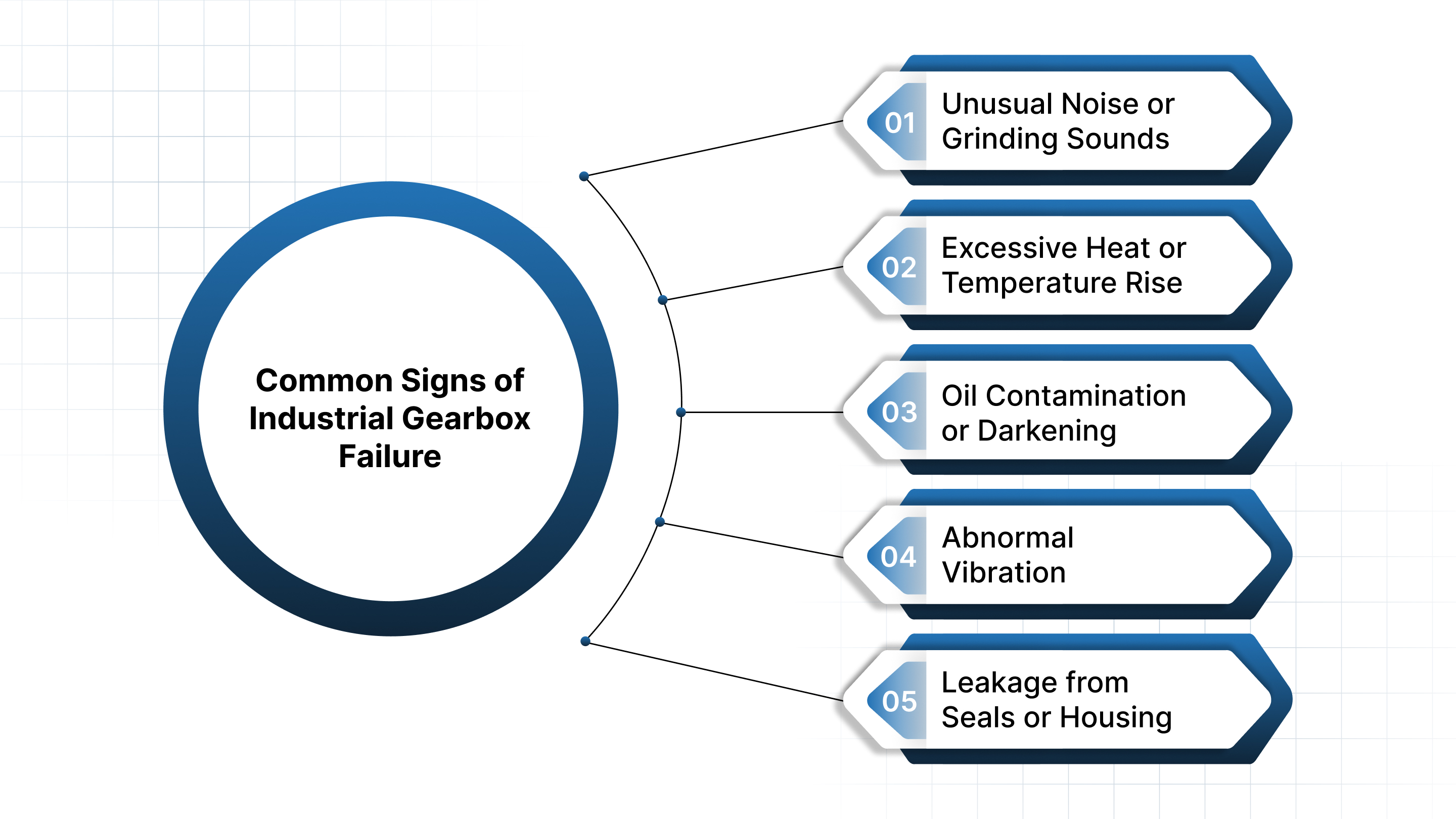
In industrial gearbox maintenance, failures almost always show early warning signs. Below are some signs you should look out for:
Unusual Noise or Grinding Sounds: Clanking, whining, or grinding often points to gear misalignment, worn teeth, or bearing issues. Address these sounds immediately to prevent further damage.
Excessive Heat or Rapid Temperature Rise: Overheating indicates friction from worn components, inadequate lubrication, or overloading. Continuous temperature monitoring helps detect this early.
Oil Contamination or Darkening: Metal particles, water, or debris in the lubricant signal internal wear or seal failure. Frequent oil analysis can detect these issues before failure occurs.
Vibration Beyond Normal Baseline: Sudden changes in vibration patterns can reveal imbalance, bearing fatigue, or loosened components. Compare readings against established baseline data.
Leakage from Seals or Housing: Oil leaks reduce lubrication efficiency and allow contaminants in. Small leaks can escalate into major failures if ignored.
If you need expert support, Midwest Power Products provides fast replacement gear reducers, emergency repairs, and technical guidance to help minimize downtime and keep your operations running smoothly.
Maintain Detailed Service Logs and Documentation
Keeping accurate records of maintenance activities provides a clear history of inspections, repairs, and part replacements, making it easier to identify recurring problems.
Record Inspection Findings and Actions Taken: Note wear patterns, lubrication checks, vibration readings, and any corrective measures applied during each inspection.
Track Lubricant Changes and Oil Analysis Results: Documenting oil quality trends helps detect early degradation and schedule timely replacements.
Log Load Changes or Operational Adjustments: Any modifications to speed, torque, or production processes should be recorded to understand their impact on gearbox performance.
Use Digital or Standardized Logs: Centralized, easily accessible records allow multiple team members to review history, compare trends, and make informed maintenance decisions.
Develop a Professional Maintenance Program and Partnership
A structured maintenance program ensures gearboxes receive consistent care, reduces unexpected failures, and extends service life. Partnering with experienced suppliers or service providers, such as Midwest Power Products, provides technical support and access to replacement parts when needed.
Establish Routine Maintenance Plans: Define inspection schedules, lubrication checks, oil analysis, and vibration monitoring to keep gearboxes operating reliably.
Leverage Expert Guidance: Work with trusted suppliers to select the right components, set baseline performance metrics, and address issues before they escalate.
Plan for Emergencies and Replacements: Having a reliable partner ensures fast access to replacement gear reducers or repair services, minimizing production downtime.
To help keep production running smoothly, connect with our team and get engineering support, rapid delivery of gear reducers, and customized maintenance programs to help teams maintain consistent performance.
Final Thoughts
Consistent industrial gearbox maintenance helps prevent unexpected failures, extend equipment life, and maintain reliable performance. Regular inspections, proper lubrication, vibration monitoring, and clear service records allow maintenance teams to detect issues early and act proactively.
Midwest Power Products specializes in gearboxes, gear reducers, and variable-speed drives, offering replacement, repair, and emergency services—including same-day builds. Their expertise supports OEMs and industrial operations across food processing, conveying, pumping, air handling, and material handling.
Contact our team today to ensure your gear reducers and motors stay in top working condition.
FAQ's
1. How do operating conditions affect gearbox lifespan?
Harsh conditions, such as high humidity, dust, corrosive environments, or constant high loads, significantly shorten gearbox life. Optimizing ventilation, protecting against contaminants, and maintaining stable loads can extend service life by years.
2. Do gearboxes need alignment checks during routine maintenance?
Yes. Misalignment between the gearbox, motor, and driven equipment increases heat, vibration, and wear. Periodic alignment verification ensures smoother operation and reduces stress on bearings and gear teeth.
3. When should a gearbox be rebuilt instead of replaced?
A rebuild is cost-effective when core components (housing, shafts) remain structurally sound. Replacement is recommended when damage is severe, recurring, or when efficiency upgrades justify a new unit.
4. Can upgrading seals, lubricants, or breathers improve gearbox performance?
Absolutely. Modern seals, synthetic lubricants, and high-efficiency breathers reduce contamination, enhance cooling, improve energy efficiency, and significantly extend maintenance intervals.
5. How can partnering with a gearbox specialist reduce downtime?
Experts provide faster diagnostics, access to OEM parts, emergency rebuilds, and optimized maintenance plans.