What happens when a single gearbox fails on a production line? For many facilities, it means everything stops: output, scheduling, and profitability.
Gearboxes play a critical role in industrial machinery by controlling speed, torque, and power transmission. When they’re neglected, issues like overheating, contamination, or misalignment quickly turn into downtime and costly repairs.
That downtime adds up fast. According to research, poor maintenance strategies can reduce a plant’s productive capacity by 5–20%, much of it tied to preventable mechanical issues such as poor lubrication and gearbox wear.
With equipment running harder and efficiency demands rising, preventive maintenance has become essential, not optional. This guide will show you how to maintain your gearboxes properly and avoid the failures that halt production.
Key Highlights
Gearbox failures cause immediate production stoppage, making proactive maintenance essential to prevent costly downtime.
Understanding gearbox types and components, gears, bearings, seals, lubrication systems, and housings helps identify wear early and avoid major failures.
Routine maintenance practices like visual inspections, proper lubrication, temperature checks, vibration monitoring, and alignment dramatically extend gearbox life.
Preventive vs. predictive maintenance both improve reliability, but predictive strategies offer deeper insights using sensors, vibration analysis, thermography, and oil analysis.
Midwest Power Products supports long-term gearbox reliability with quality gear reducers, motors, replacement parts, and professional repair/rebuild services for fast issue resolution.
What is a Gearbox?
A gearbox is a mechanical system designed to manage the relationship between speed and torque. It adapts the output of a motor to meet the specific demands of the equipment it powers. In industrial environments, motors typically operate at high RPMs, but machinery often requires slower speeds with much higher torque.
A gearbox performs three essential functions:
• Torque Conversion: Increases torque while reducing speed, allowing heavy loads, such as conveyors or mixers, to operate smoothly and efficiently.
• Speed Control: Adjusts motor speed to the precise level the application needs. A mismatch between speed and load is one of the most common causes of mechanical failure.
• Power Transmission: Transfers mechanical energy from the motor to the machine’s moving components in a controlled, reliable way. Proper gearbox selection ensures consistent power delivery, reduced vibration, and longer equipment life.
6 Types of Gearboxes Found in Industrial Applications
Different industrial processes require different gearbox designs. Here are the most commonly used types and what makes them unique:
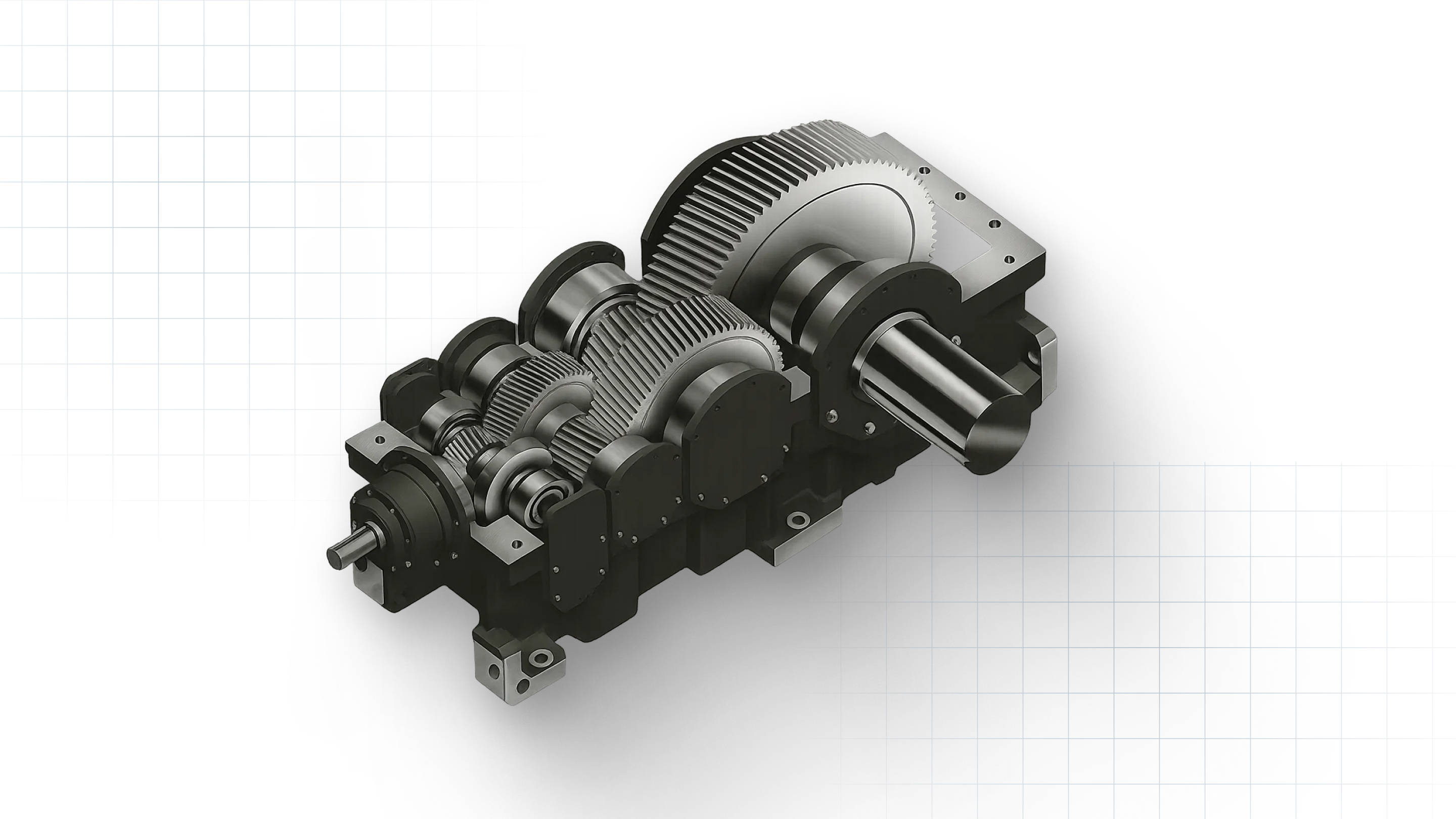
1. Helical Gearboxes: Helical gears mesh gradually, providing smooth, quiet, and highly efficient operation.
Best for: Conveyors, packaging lines, material handling systems.
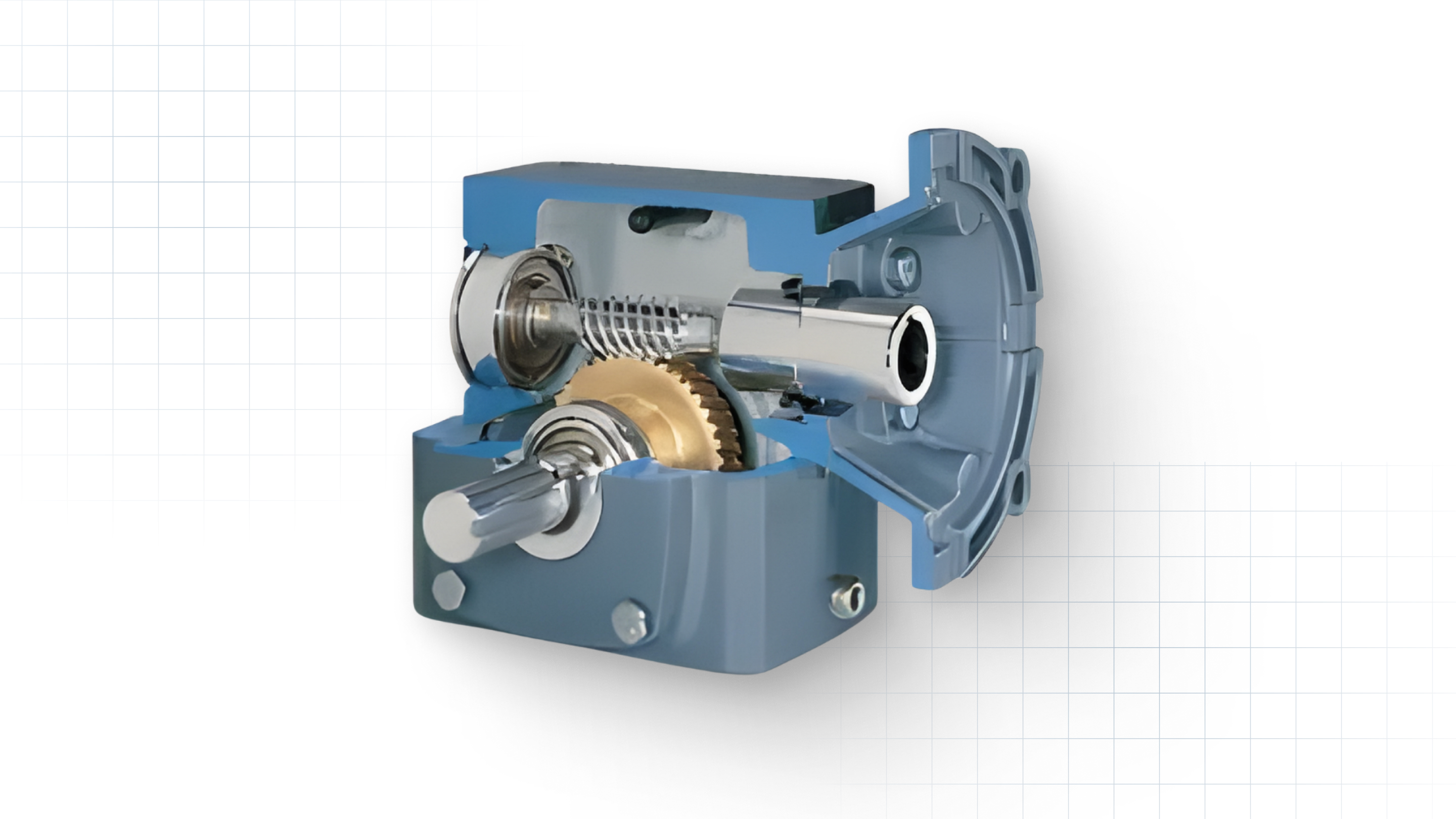
2. Worm Gearboxes: Characterized by a compact design and high reduction ratios, worm gearboxes provide excellent shock resistance and simple installation.
Best for: Lifts, gates, compact conveyors, and basic machines requiring moderate torque.
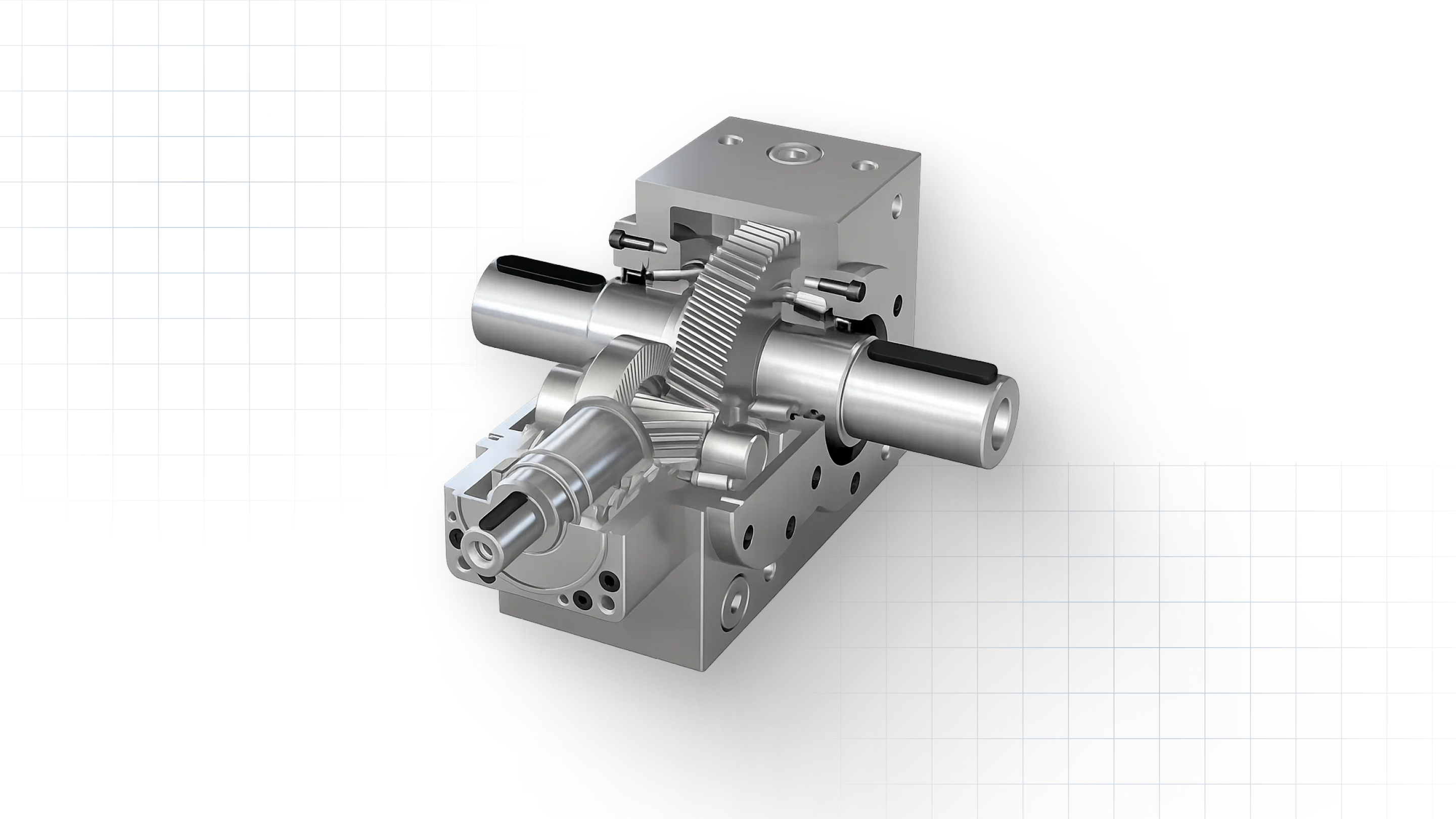
3. Bevel Gearboxes: Bevel gears transmit power at 90° angles and deliver high efficiency and torque capacity.
Best for: Mixers, crushers, heavy-duty equipment that requires angular motion.
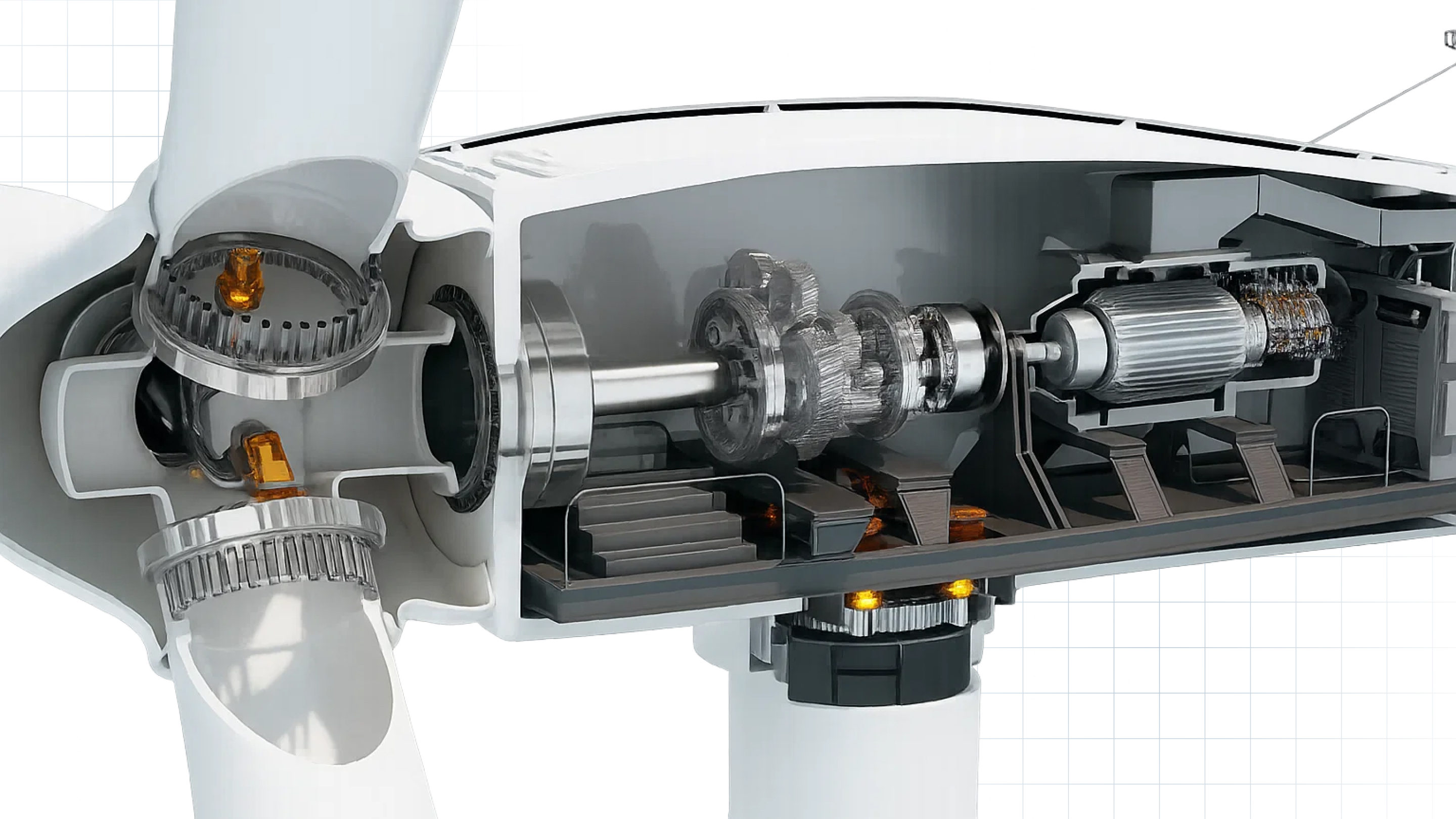
4. Planetary Gearboxes: Extremely high torque density and compact size. Planetary designs distribute load across multiple gears, making them durable and accurate.
Best for: Robotics, precision machinery, industrial drives with high torque-to-size requirements.
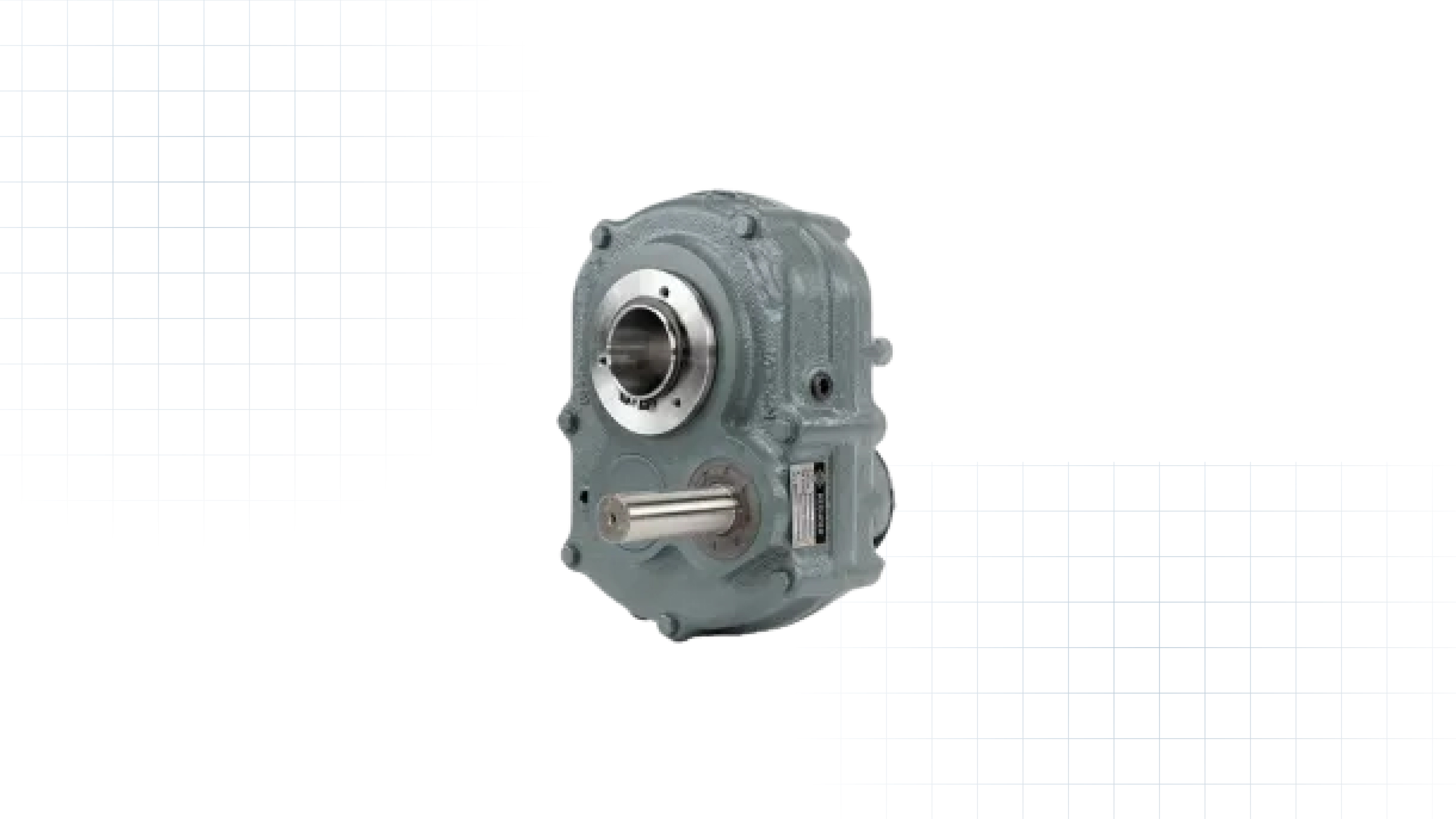
5. Shaft-Mount Gearboxes: Designed to mount directly on the driven shaft, these units are easy to install and are common in bulk handling applications.
Best for: Conveyors, bucket elevators, industrial fans.
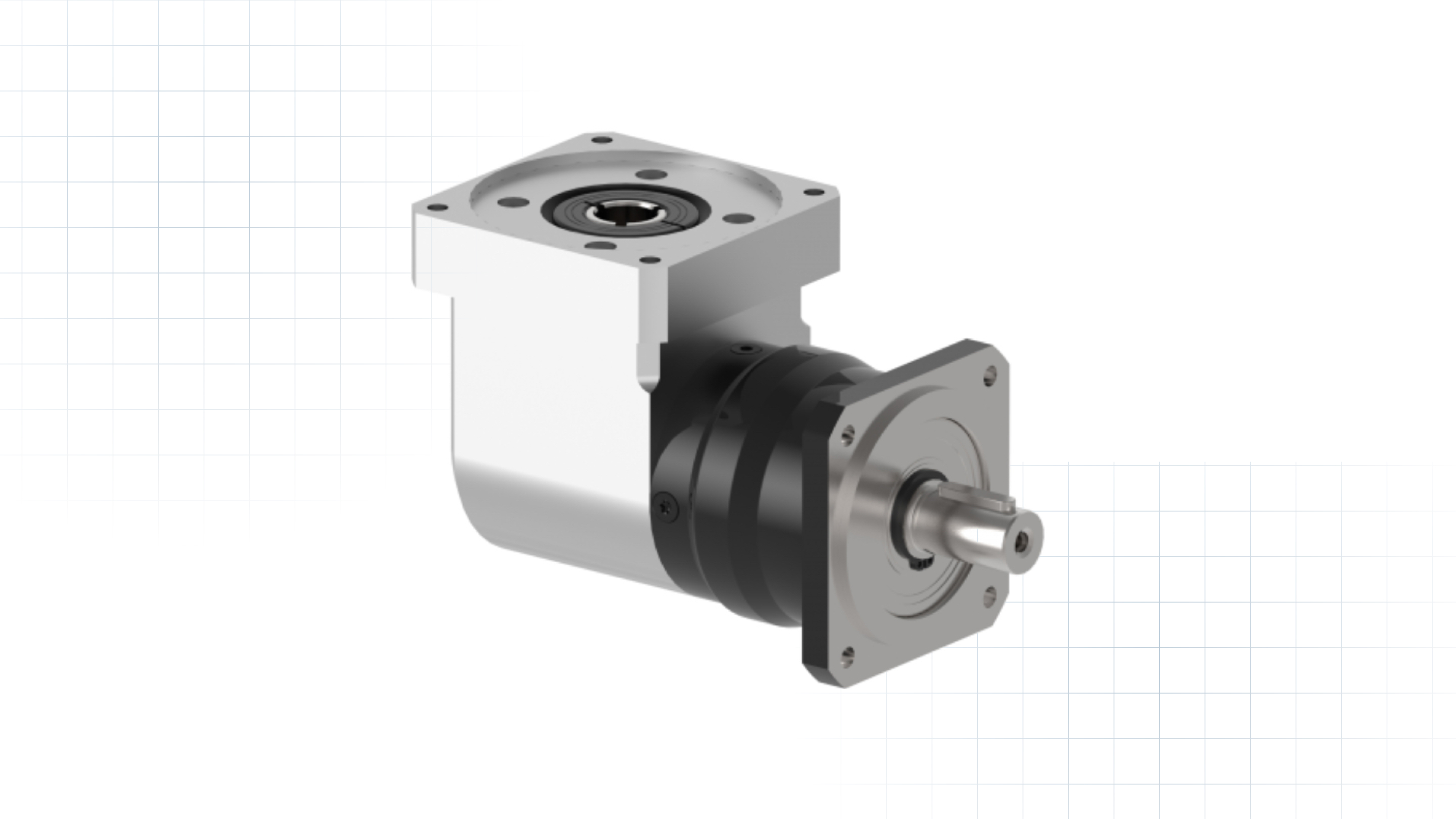
6. Right-Angle Gearboxes: These gearboxes change the direction of power flow by 90°, offering flexible installation and compact design.
Best for: Tight spaces, machinery with perpendicular drive requirements.
5 Key Components of a Gearbox and How They Wear Over Time
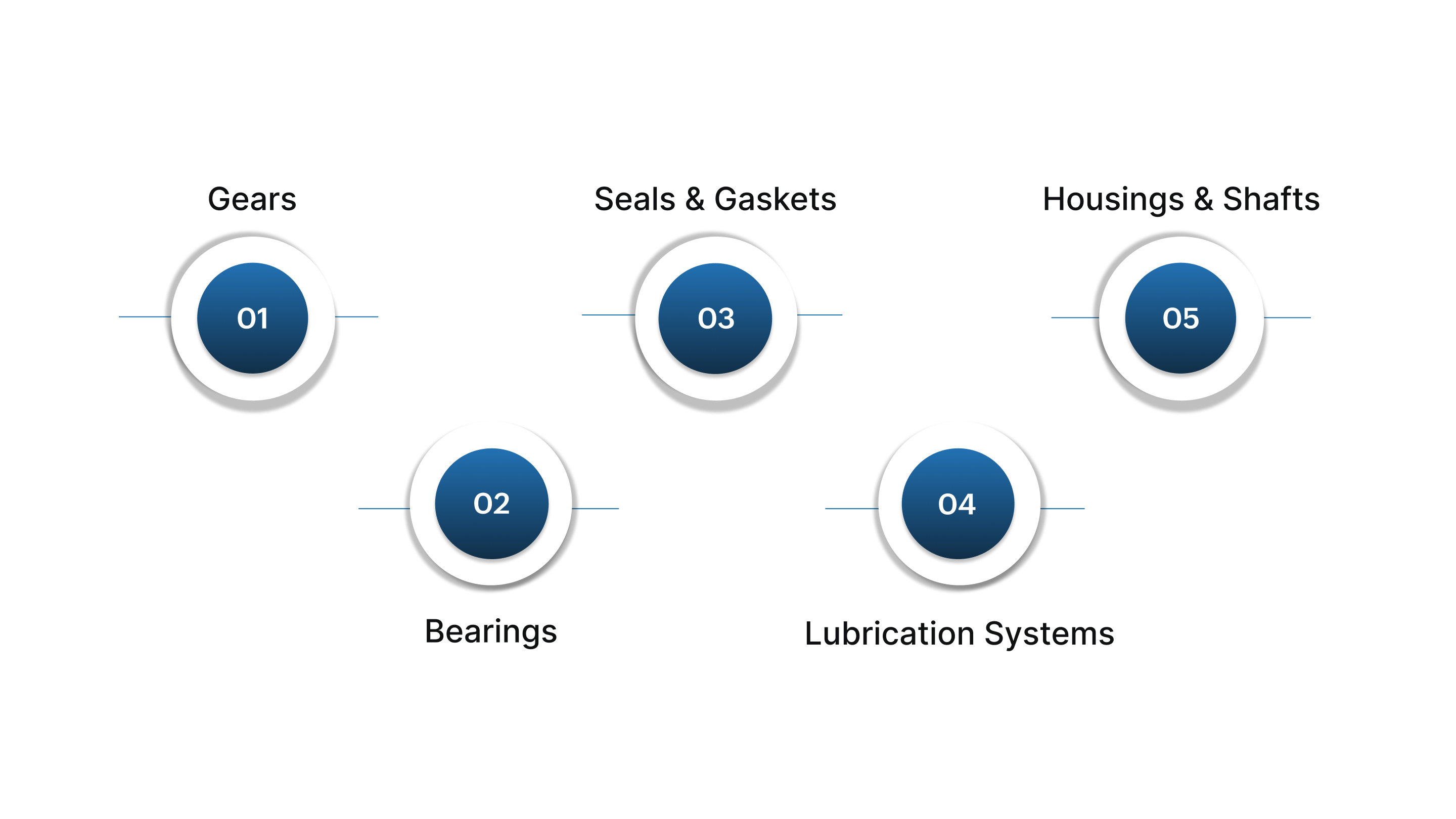
A gearbox is only as reliable as the components inside it. Understanding how each part works and how it fails helps prevent costly damage and allows maintenance teams to detect issues early.
1. Gears: Gears transmit power under heavy load and commonly develop wear patterns, pitting, or damage from misalignment. Uneven wear or pitting indicates lubrication issues, overload, or contamination.
2. Bearings: Bearings support rotating shafts and fail from heat damage, lubrication starvation, or contamination. Excess heat breaks down oil films, while lack of lubrication or debris causes scoring, noise, and eventual seizure.
3. Seals & Gaskets: Seals and gaskets prevent oil leakage and block contaminants. When worn, they allow lubrication loss, increased operating temperatures, and moisture or dirt ingress. Contamination from failed seals quickly accelerates internal wear.
4. Lubrication Systems: Correct lubrication prevents friction, heat buildup, and premature wear; poor lubrication causes up to 50% of gearbox failures. Using the right oil type and viscosity is essential for proper film strength.
5. Housings & Shafts: Housings and shafts maintain alignment and structural stability. Misalignment increases load on gears and bearings, causing vibration and fast wear. Cracks or shaft fatigue indicate stress, shock load, or long-term mechanical strain.
Essential Gearbox Maintenance Practices
Preventive maintenance is the most effective way to protect your gearbox investment. By consistently monitoring lubrication, temperature, vibration, and alignment, facilities can significantly reduce downtime and extend the operating life of critical machinery.
A. Routine Visual Inspections
Visual inspections are the first line of defense against gearbox failures. They are quick, low-cost, and incredibly effective at identifying early warning signs.
What to Look For:
• Leaks: Oil around seals, gaskets, inspection covers, or drain plugs indicates failing seals or over-pressurization. Even small leaks can lead to insufficient lubrication and accelerated wear.
• Cracks: Housing cracks or mounting damage show structural stress or overload. A cracked housing can distort internal alignment, leading to gear and bearing failures.
• Overheating: Discoloration, darkened paint, or a burnt smell suggests excessive operating temperature. Overheating signals lubrication failure, overload, or insufficient airflow.
• Abnormal Noise: Grinding, clicking, humming, or whining noises are clues of gear tooth damage, bearing wear, or misalignment. Noise patterns almost always worsen over time, never ignore them.
Regular inspections help catch problems long before they become catastrophic.
B. Proper Lubrication Practices
Lubrication quality directly determines gearbox lifespan. Poor lubrication is responsible for the majority of gearbox failures.
1. How Often to Change Oil
Oil change intervals vary by application, but general guidelines include:
Every 4,000–8,000 operating hours for standard industrial gearboxes
More frequently in hot, dusty, high-load, or continuous-duty environments
Earlier changes if oil becomes contaminated or shows signs of breakdown
Always consult OEM recommendations and adjust for real-world conditions.
2. Choosing the Right Lubricant
Selecting the correct lubricant improves efficiency and protects internal components.
Key considerations:
Viscosity grade: Must match operating speed and load
Additives: EP (Extreme Pressure) additives for high-load applications
Oil type:
Mineral oils for standard applications
Synthetic oils for high temperature or extended service life
Food-grade oils for sanitary environments
The wrong lubricant can accelerate gear tooth wear, reduce film strength, and overheat the system.
3. Signs of Lubricant Degradation
Inspect oil condition regularly. Replace immediately if you detect:
Milky or cloudy oil – water contamination
Burnt smell – heat degradation or oxidation
Metal shavings – internal wear from gears or bearings
Foaming or bubbles – air entrainment or overfilling
Thick sludge or varnish – old or oxidized oil
Healthy lubrication is the single most important factor in gearbox reliability.
C. Temperature Monitoring
A gearbox’s operating temperature is one of the clearest indicators of its health.
1. Acceptable Temperature Ranges
Most industrial gearboxes operate safely around:
140°F to 180°F (60°C to 82°C) under normal load
Temperatures above 200°F (93°C) indicate lubrication breakdown and potential internal damage
Synthetic oils may tolerate slightly higher temperatures, but consistent overheating always requires investigation.
2. Causes of Overheating
Common sources include:
Insufficient lubrication or wrong viscosity
Overloading the gearbox beyond its design rating
Misalignment causing friction
Bearing failure generates excess heat
Poor ventilation around the gearbox
Contaminated or degraded oil
Unmanaged heat leads to oxidation, lower oil viscosity, and accelerated wear of gears and bearings.
D. Vibration & Noise Monitoring
Vibration analysis is one of the most accurate ways to predict gearbox failures before they occur.
• Early Failure Indicators
Excess vibration or unusual noise often signals:
Bearing wear
Gear tooth damage
Misalignment
Imbalance in rotating components
Loose mounting hardware
These issues rarely fix themselves and typically worsen over time.
• How Vibration Analysis Helps Predict Breakdowns
Advanced monitoring systems measure vibration frequency and amplitude to identify patterns linked to:
Gear tooth meshing irregularities
Bearing defects (inner race, outer race, cage damage)
Shaft imbalance or wear
Structural looseness
This data allows teams to schedule repairs proactively, rather than responding to sudden failures.
E. Alignment Checks
Proper alignment is crucial to gearbox health. Even minor misalignment creates stress that multiplies under load.
1. Shaft Alignment Importance
Accurate alignment maintains:
Smooth gear meshing
Even load distribution
Longer bearing life
Reduced energy consumption
Even a small misalignment can dramatically increase wear rates.
2. How Misalignment Leads to Bearing and Gear Failure
Misalignment causes:
Edge loading on gear teeth
Premature bearing fatigue
Excess vibration
Heat buildup
Seal wear and lubricant leakage
Left uncorrected, misalignment can quickly lead to catastrophic gearbox damage.
Laser alignment tools and periodic checks help maintain optimal performance and prevent unnecessary downtime.
Also Read: Why Choose Electra Gear Aluminum Gear Reducers?
Preventive vs. Predictive Maintenance: What’s Best for Your Facility?
A strong maintenance program is essential for maximizing gearbox reliability. Two primary approaches, preventive and predictive maintenance, both help reduce downtime, but they operate in different ways. Understanding these strategies helps facilities choose the best fit for their equipment, budget, and operational goals.
Preventive Maintenance
Preventive maintenance (PM) is a time-based or usage-based approach that relies on scheduled tasks designed to keep gearboxes running smoothly.
Key Components of Preventive Maintenance:
• Scheduled Inspections: Routine checks help identify visible problems, oil leaks, unusual noise, temperature increases, or shaft misalignment, before they escalate.
• Lubrication Plans: Regular lubrication intervals help maintain oil quality, ensure proper viscosity, and prevent wear caused by contamination or inadequate film strength.
• Gear Wear Measurements: Periodically measuring gear tooth patterns, backlash, and pitting progression helps detect early damage. These checks prevent major failures by addressing issues at the first signs of wear.
Benefits of Preventive Maintenance:
Predictable maintenance schedules
Lower upfront cost compared to predictive systems
Reduced risk of surprise failure
Ideal for facilities without advanced monitoring tools
Preventive maintenance is effective for many facilities, but it cannot always detect internal issues before they become serious.
Predictive Maintenance
Predictive maintenance (PdM) uses real-time data, sensors, and performance analytics to identify issues before they cause failure. Instead of following a schedule, maintenance is performed only when condition indicators show degradation.
Tools and Techniques Used in Predictive Maintenance:
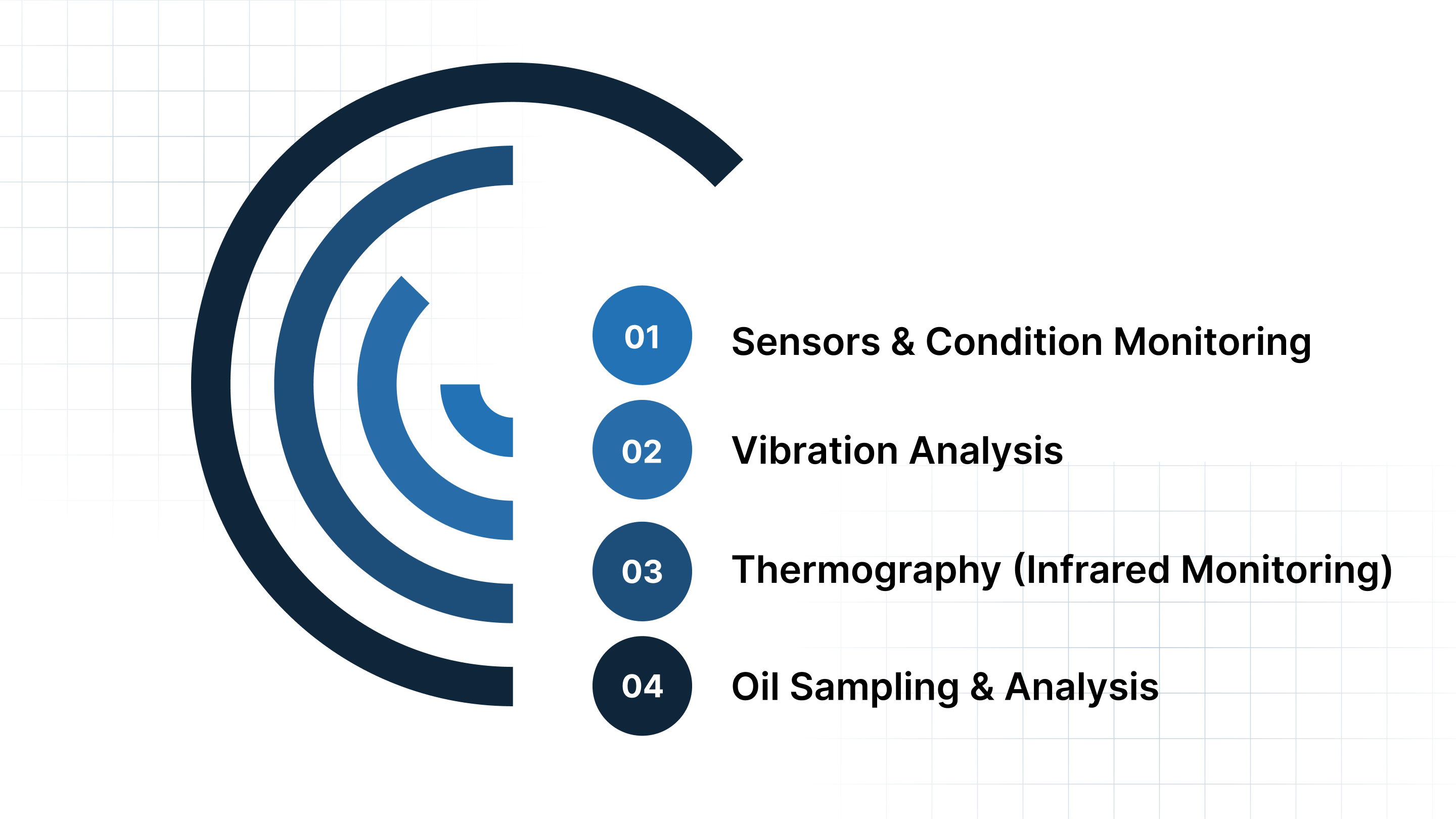
• Sensors & Condition Monitoring Systems: Sensors track vibration, temperature, and load changes continuously. Sudden changes in these values are often the first signs of mechanical damage.
• Vibration Analysis: Vibration patterns reveal bearing defects, misalignment, imbalance, or gear mesh abnormalities long before they become noticeable through sound or heat.
• Thermography (Infrared Monitoring): Thermal imaging detects unexpected heat signatures caused by lubrication failure, friction, or electrical issues affecting motor-gearbox performance.
• Oil Sampling & Analysis: Oil analysis identifies contamination, metal particles, oxidation, and viscosity breakdown, critical indicators of internal wear. A rise in metal content often indicates early gear or bearing deterioration.
Benefits of Predictive Maintenance:
Detects failures long before they become severe
Reduces unplanned downtime
Extends gearbox and motor lifespan
Optimizes maintenance intervals
Improves safety and reliability
Predictive maintenance requires more investment but delivers the highest level of operational insight.
Choosing the Right Strategy
There is no one-size-fits-all maintenance strategy. The best approach depends on operational conditions and the criticality of each gearbox.
Factor | When Preventive Maintenance Is Best | When Predictive Maintenance Is Best | When a Hybrid Strategy Is Best |
|---|---|---|---|
Equipment Criticality | When equipment is not production-critical and failure won’t cause major downtime | When a failure would stop production, impact safety, or cause major financial loss | When some equipment is critical and others are not |
Operating Environment | Clean, stable environments with moderate loads and predictable conditions | Harsh environments (dust, moisture, heat, chemical exposure) that accelerate wear | Mixed environments across a facility |
Load Type & Duty Cycle | Steady, consistent loads with low shock or variability | Variable loads, high torque, or 24/7 continuous operation | Environments with multiple workload types |
Budget & Resources | Limited budget for sensors or advanced monitoring tools | Ability to invest in monitoring technology and trained staff | Facilities looking to optimize cost while improving reliability |
Maintenance Culture | Teams accustomed to scheduled tasks and manual inspections | Teams focused on reliability engineering and data-driven decisions | Growing teams transitioning toward modern reliability programs |
Failure History | Equipment with low failure rates or predictable wear patterns | Equipment with unexpected failures or history of sudden breakdowns | Facilities improving reliability but still building historical data |
How Midwest Power Products Supports Reliable Gearbox Maintenance
Proper gearbox maintenance is only as strong as the products and support behind it. Industrial facilities depend on reliable gear reducers, motors, quality components, and responsive service to keep operations running. Midwest Power Products delivers all of this, backed by more than 30 years of expertise, a massive inventory, and fast turnaround for critical applications.
From emergency repairs to same-day replacement units, Midwest Power Products is a trusted partner for keeping gearboxes performing at their best.
Prevent Failures with the Right Products
Midwest Power Products supplies a wide range of gear reducers, motors, and replacement components that directly support effective gearbox maintenance and long-term reliability.
1. Gear Reducers & Gearboxes
A large inventory of industrial gear reducers ensures immediate access to the right replacement. Available in multiple configurations, including:
Sourced from reliable, industry-recognized brands such as:
These brands cover a broad range of applications, conveyors, mixers, packaging equipment, pumps, and OEM machinery.
2. Replacement Parts
To support fast, effective maintenance, Midwest Power Products provides:
Bearings
Seals & gaskets
Gear sets
Motor and gearbox components
These parts are OEM-compatible, ensuring proper fit and restoring equipment quickly with minimal downtime.
4. Industrial Motors
Gearbox performance depends heavily on the motor driving it. Midwest Power Products carries a full selection of AC and DC industrial motors, ensuring compatibility with most gearbox setups.
Whether you're replacing worn equipment or upgrading performance, the right motor-gearbox combination keeps systems running efficiently and safely.
Professional Repair & Rebuild Services
Beyond supplying new units and components, Midwest Power Products also specializes in comprehensive inspection, repair, and rebuild services for industrial gearboxes.
Services include:
Complete gearbox inspections to diagnose wear, contamination, or alignment issues
Repair or full rebuilds of gear units up to approximately 4000 lbs
Emergency repair services and quick turnaround, reducing costly downtime
Same-day service availability for urgent needs
Free repair/replacement estimates to help maintenance teams make informed decisions
This combination of expert service and fast availability makes Midwest Power Products a highly reliable partner for both planned maintenance and emergency breakdowns.
Conclusion
Effective gearbox maintenance is one of the simplest ways to safeguard your equipment and your bottom line. Routine inspections, proper lubrication, temperature checks, and early detection of wear all help prevent unexpected failures and extend the life of your machinery.
More than maintenance alone, long-term gearbox health comes from the right combination of care, expertise, and support.
Need Support with Gearbox Maintenance or Repairs?
Midwest Power Products provides reliable products, expert rebuild services, and rapid response when equipment is down.
FAQs
1. How often should an industrial gearbox be inspected?
Most facilities perform basic visual inspections weekly and full maintenance inspections every 3–6 months. However, high-duty or 24/7 systems may require more frequent checks.
2. What causes a gearbox to overheat?
Overheating is usually caused by poor lubrication, excessive load, misalignment, or restricted airflow around the gearbox. Using the correct lubricant and ensuring proper alignment significantly reduces heat buildup.
4. What are the most common signs of gearbox failure?
Common warning signs include abnormal noise, vibration, overheating, oil leaks, reduced torque output, or metal debris in the lubricant. Addressing these early prevents costly damage.
5. Why is vibration monitoring important for gearbox maintenance?
Vibration patterns reveal early signs of bearing wear, gear tooth damage, and misalignment before they become severe. Predictive maintenance programs rely on vibration data to prevent unexpected failures.