When teams compare a helical bevel gearbox vs a worm gear unit, the decision usually hinges on how the reducer will behave once it’s under real industrial load. Two gearboxes that appear similar in specs can deliver very different results once heat, duty cycle, mounting constraints, or torque fluctuations come into play.
Plants that rely on steady, uninterrupted movement, such as bulk-handling lines, mixers, or packaging systems, tend to feel these differences quickly. This blog explains the factors that matter most in day-to-day operation so engineers and technicians can match the gearbox to the demands of their equipment.
At A Glance
Helical bevel gearboxes deliver higher efficiency (90–97%+), better torque handling, and longer service life, making them ideal for long-running, heavy-load equipment.
Worm gearboxes work best in compact spaces and offer high single-stage reduction, with the added benefit of self-locking where load-holding is needed.
Worm units generate more heat and lose efficiency at higher ratios, while helical bevel units stay cooler and need less frequent maintenance.
Choose helical bevel for conveyors, mixers, crushers, extruders, and high-duty systems; choose worm for lifts, gates, indexing units, and low-speed compact machinery.
Final choice depends on torque, duty cycle, reduction ratio, space limits, and safety needs. The team at Midwest Power Products can guide the correct selection.
What Is a Helical Bevel Gearbox?
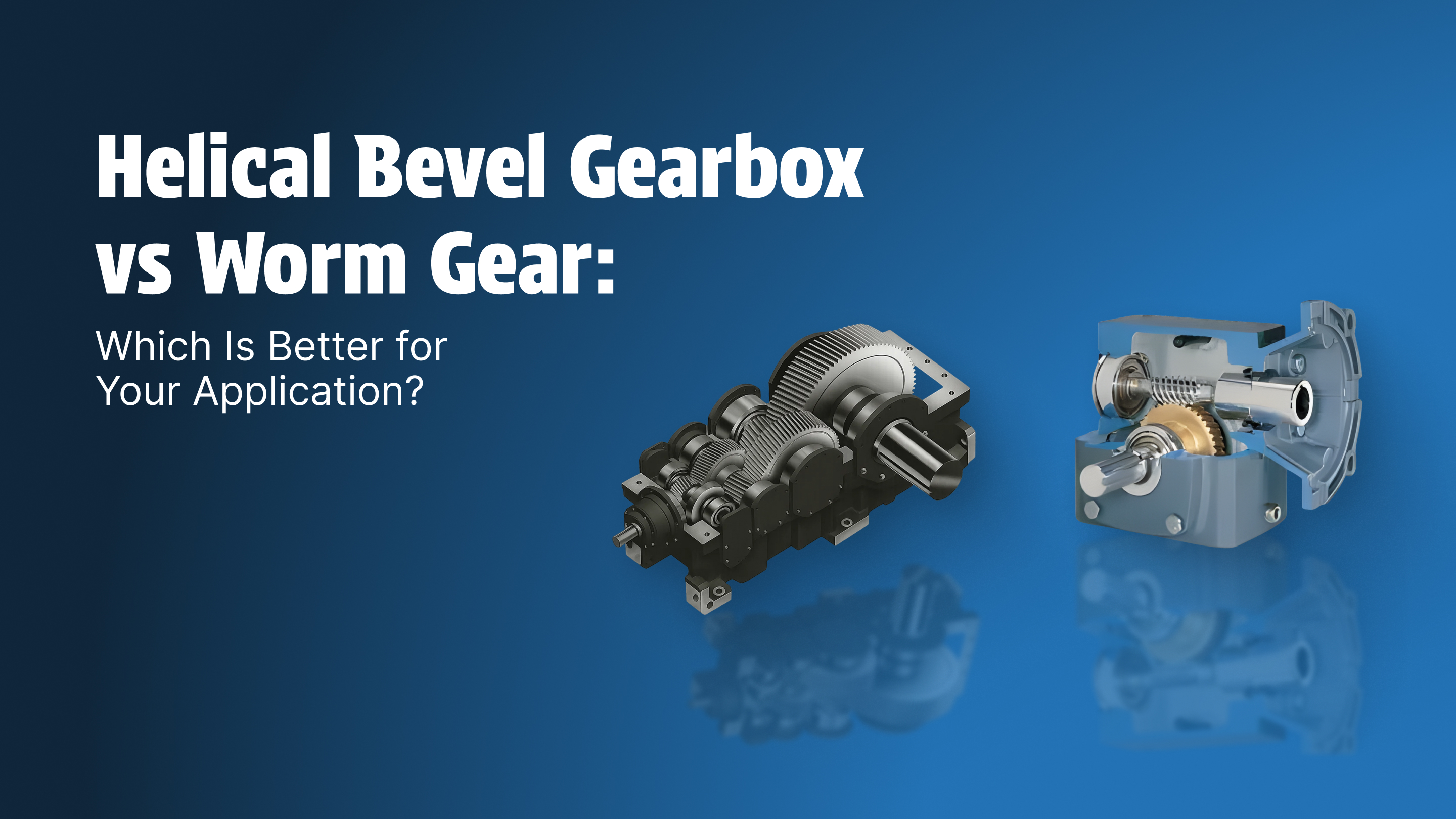
A helical bevel gearbox uses a helical input stage to deliver smooth torque and a bevel gear stage to redirect power at a right angle. This combination provides strong torque density, low noise, and high efficiency under continuous-duty conditions.
Typical reduction ratios range from 8:1 to about 160:1, with higher ratios available in multi-stage units.
Common Industrial Uses
Conveyors running long hours
Mixers and agitators that need steady torque
Extruders under continuous load
Packaging machinery requiring controlled motion
Material-handling equipment needing a durable right-angle drive
Plants often choose this design when they need efficient power transfer and long service life.
What Is a Worm Gearbox?
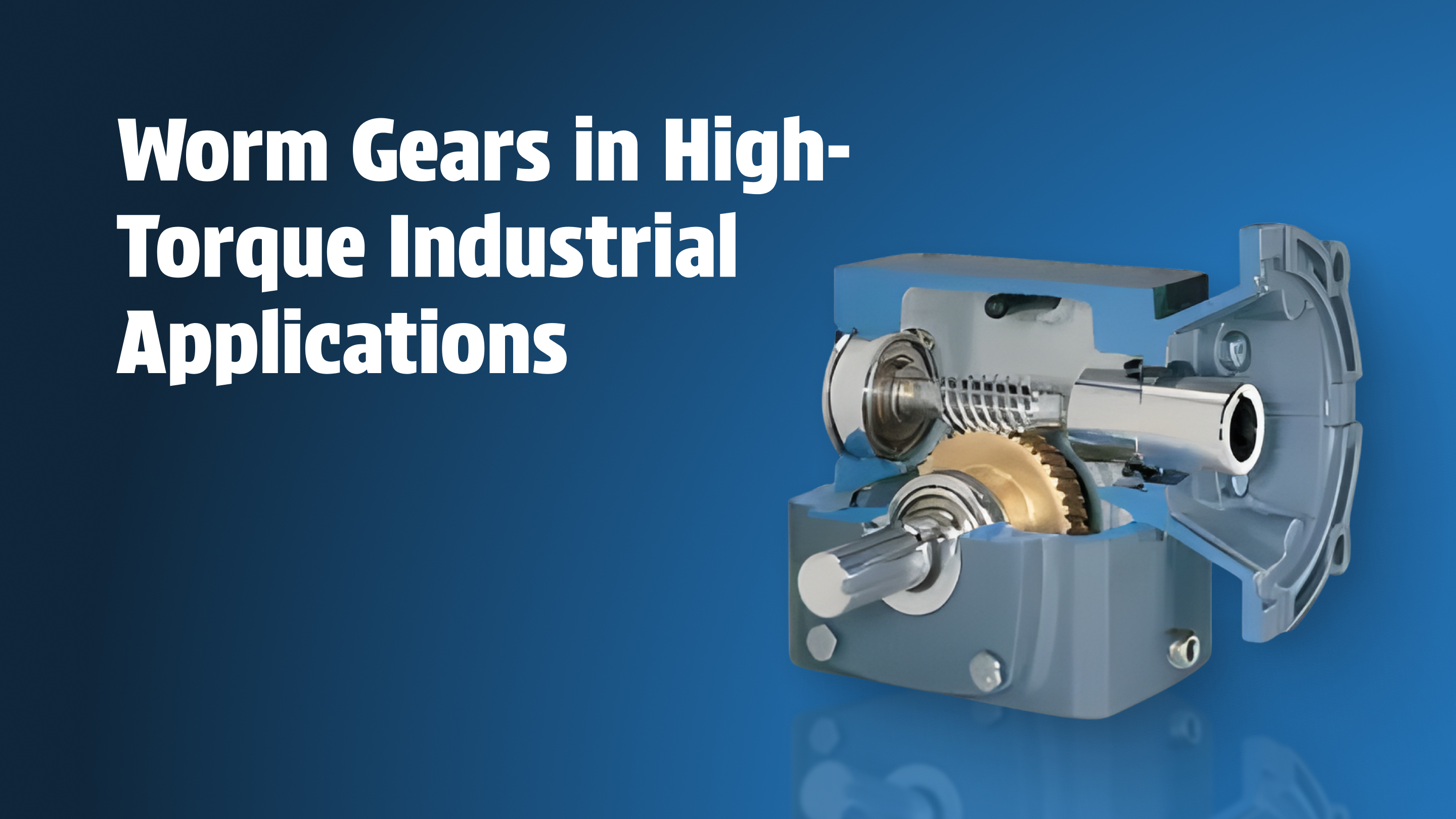
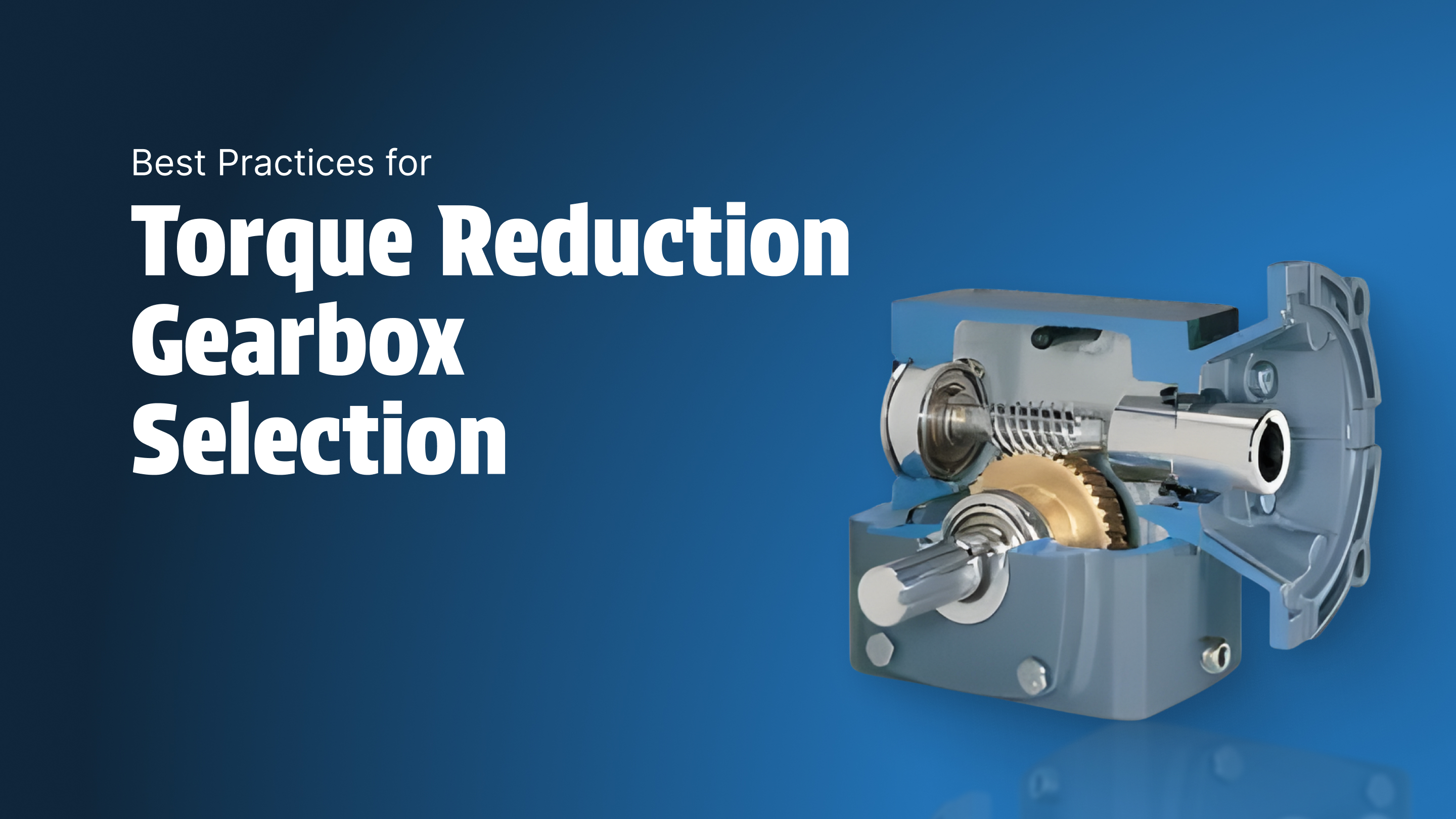
A worm gearbox uses a screw-like worm that drives a bronze gear wheel through a sliding motion. This design produces a high reduction in a compact footprint and provides quiet operation, though the sliding contact generates more heat compared to other gearbox types.
Single-stage worm units commonly reach 30:1, 50:1, and even 60:1 reduction ratios, with multi-stage options available when deeper reductions are needed.
Common Industrial Uses
Lifts and hoists needing controlled, low-speed motion
Gates and actuators requiring compact right-angle drives
Indexing mechanisms needing high reduction in tight spaces
Low-speed conveyors with moderate load demands
Food and light-duty machinery where quiet operation and compact size are important
This style is often selected when space savings or a high ratio in a single stage is the primary requirement.
Helical Bevel Gearbox vs Worm Gear: Detailed Comparison
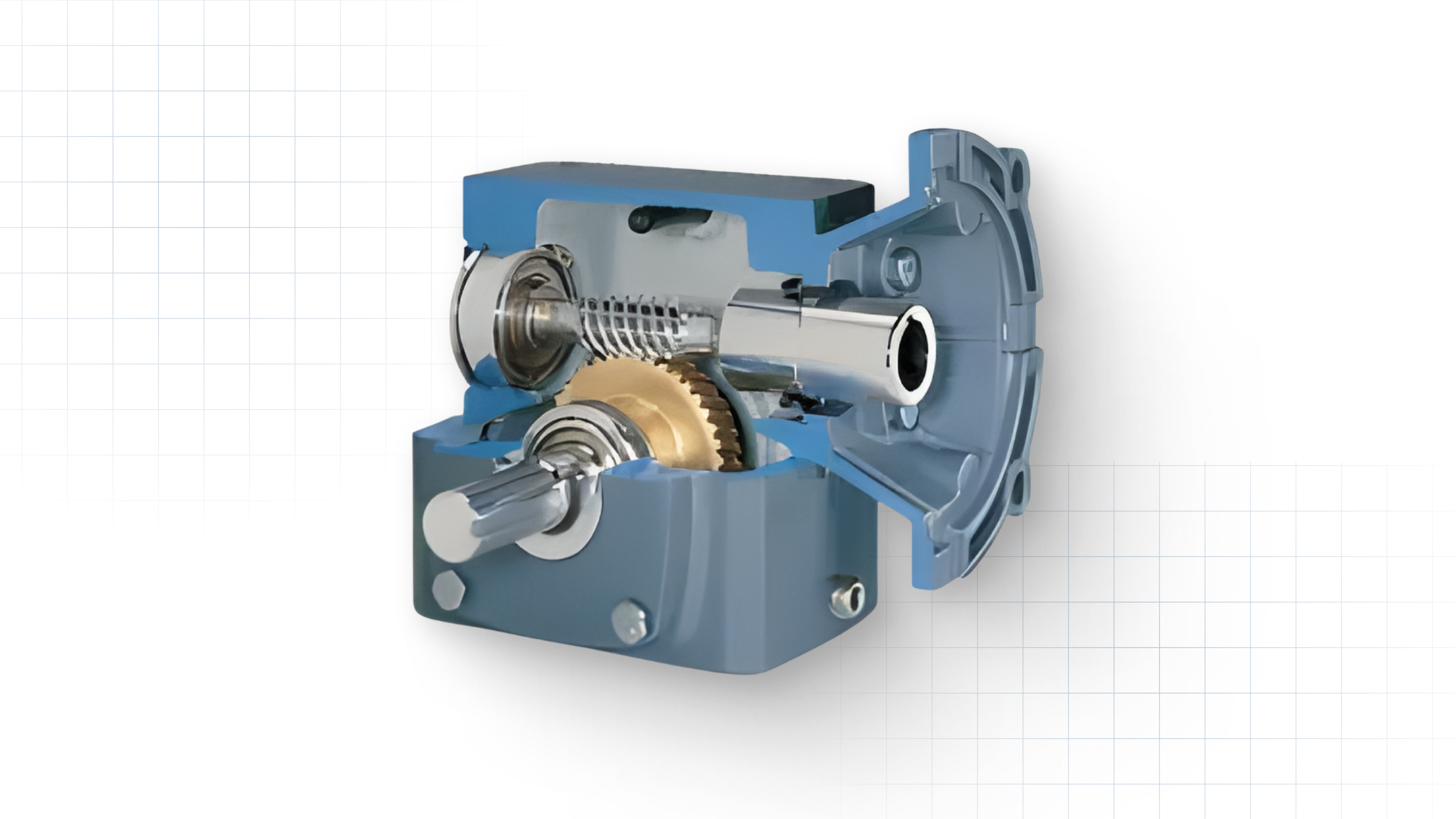
Selecting between a helical bevel gearbox vs a worm gear often comes down to how each design behaves once installed in real industrial conditions. The points below break down each difference with practical detail so engineers can judge suitability with accuracy.
Efficiency Levels (Rolling vs Sliding Contact)
Helical bevel gearboxes use rolling contact, which keeps friction low and efficiency high. Most units operate in the 90–97%+ range, even under long-duty cycles.
Worm gearboxes use sliding contact between the worm and the bronze wheel, which naturally increases losses.
Depending on the ratio, lead angle, lubrication, and load, efficiency can fall between 40% and 90%. This leads to higher friction in worm units, which increases heat and energy use, especially noticeable on equipment that runs continuously (e.g., 24/7 conveyor lines).
Key Points:
Helical bevel = stable efficiency for long-running equipment
Worm = efficiency drops as ratios climb or lubrication degrades
Torque Application Range & Load-Carrying Capacity
Helical bevel gearboxes handle higher continuous torque because several teeth share the load at any moment. This makes them reliable in systems that see steady, heavy forces or changing load conditions.
Worm gearboxes can deliver strong torque at low speeds, but heat limits their ability to sustain high torque for long durations.
Practical examples:
Helical bevel: conveyors carrying variable loads, crushers, mixers
Worm: compact drives needing torque at low speed, but not continuous heavy-duty
Key Points:
Helical bevel suits ongoing, high-demand torque
Worm suits controlled low-speed torque in compact spaces
Speed Reduction Capabilities
Helical bevel gearboxes reach moderate ratios per stage, so deeper reductions require multiple stages.
On the other hand, worm gearboxes can achieve 30:1, 50:1, or even 60:1 in one stage, which is a major advantage in compact assemblies. If the equipment needs a very high reduction without increasing the footprint, a worm gearbox can offer a simpler layout.
Key Points:
Helical bevel = multi-stage for high ratios
Worm = high ratios in one stage
Heat Generation, Efficiency Loss & Operating Temperature
Sliding friction in worm gearboxes generates heat, impacting lubricant life and, over time, gear wear. These units require close monitoring of oil condition and temperature in demanding environments.
Helical bevel gearboxes run cooler due to rolling motion, allowing longer intervals between service checks.
Key Points:
Worm = higher temperature rise, shorter oil life
Helical bevel = cooler operation, longer stability under load
Self-Locking & Backdriving Behavior
At low lead angles, many worm gearboxes naturally resist backdriving, allowing them to hold a load without external braking.
Helical bevel gearboxes do not have this characteristic and need a brake when load holding is required.
Examples where self-locking is helpful:
Lifts
Gates
Position-holding actuators
Noise Levels & Vibration
Helical bevel units generally run quieter due to their smooth tooth engagement and consistent load distribution. Meanwhile, worm gearboxes may produce more noise under heavy load or as the bronze wheel wears over time.
Key Points:
Helical bevel = quieter long-term
Worm = may increase noise with wear
Load-Carrying Capacity & Shock Resistance
Helical bevel gearboxes tolerate shock, uneven loads, and repeated impacts better because of their tooth geometry and material strength. Worm units are more vulnerable to wear at the bronze wheel when subjected to impact or inconsistent forces.
Best matches:
Helical bevel: crushing, milling, heavy conveying, bulk handling
Worm: low-impact drives with predictable torque
Space, Footprint & Mounting Flexibility
Worm gearboxes offer a very compact size relative to their reduction ratio, making them ideal for equipment with tight mounting space. Helical bevel gearboxes are slightly larger but still offer compact right-angle configurations.
Key Points:
Worm = best for tight cabinetry, small machines
Helical bevel = compact enough for most systems, but not ultra-compact like worm
Maintenance, Lubrication & Component Wear
Helical bevel gearboxes have slower wear rates and typically longer service intervals because rolling contact reduces material loss.
Worm gearboxes use a bronze gear wheel that wears faster, especially under higher loads or insufficient lubrication. Typical oil change intervals range from 6–12 months, depending on temperature and duty cycle.
Key Points:
Helical bevel = fewer oil changes, longer component life
Worm = more frequent lubrication changes and wheel monitoring
Alignment Requirements & Installation
Helical bevel gearboxes benefit from accurate alignment to ensure full efficiency and long gear life. Worm gearboxes are often easier to install in compact systems and can tolerate slightly simpler mounting arrangements.
Key Points:
Helical bevel = precise alignment recommended
Worm = straightforward integration in tight spaces
Now that each performance difference has been broken down individually, the summary table below shows how a helical bevel gearbox and a worm gearbox compare side-by-side for quick technical reference.
Helical Bevel Gearbox vs Worm Gear Side-by-Side Technical Comparison
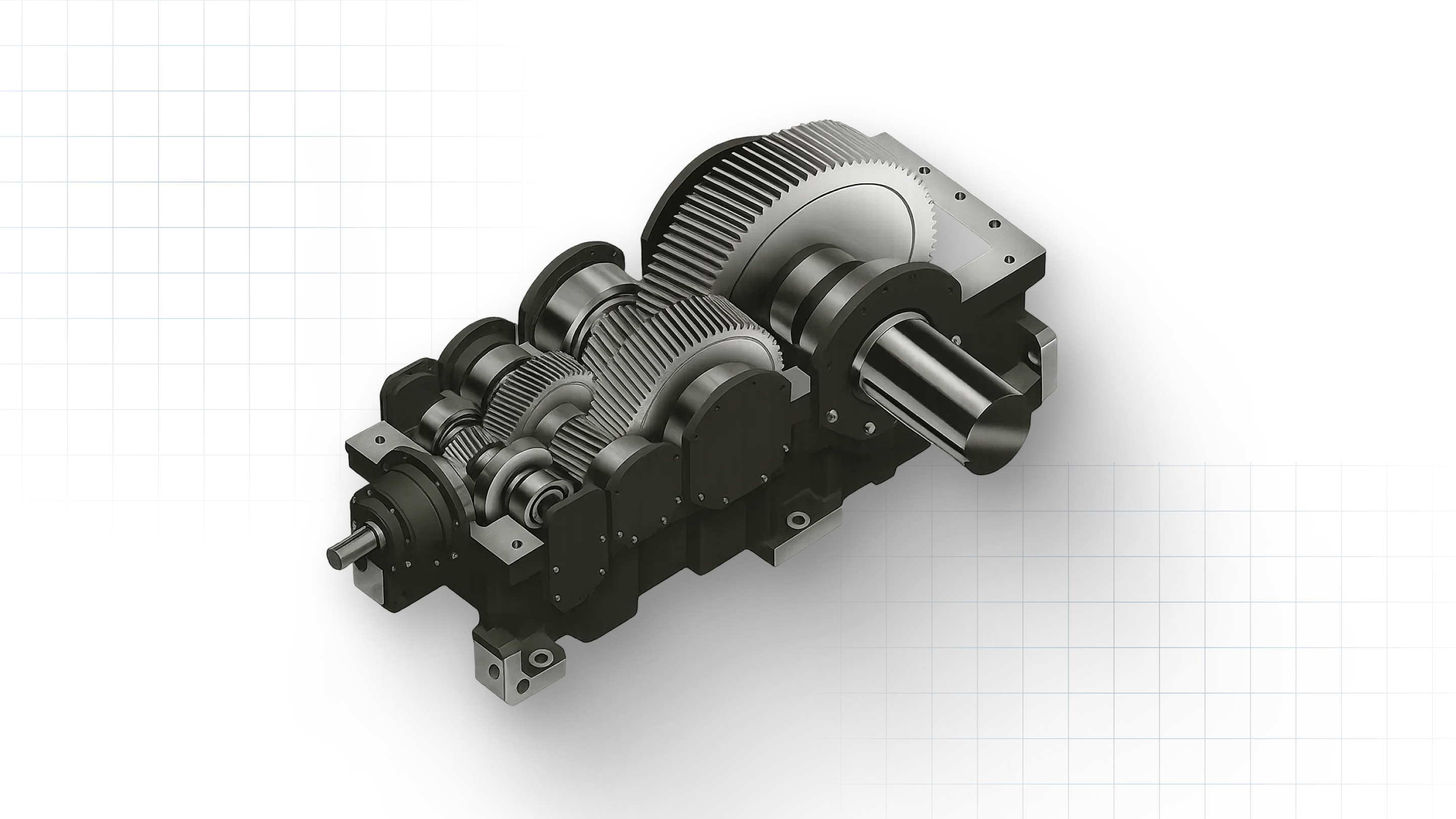
Here’s a fast, data-backed reference to help engineers compare helical gearbox vs worm gearbox options and decide which unit fits their operating needs and constraints.
Aspect | Heclical Bevel Gearbox | Worm Gearbox |
Efficiency | 92-97% per stage, which remains high across the load range | 50-90% depending on ratio, lubrication, and load (drops at higher ratios) |
Typical Reduction Ratios | 8:1 to 40:1 (two-stage); up to ~100:1 with additional stages | 30:1, 50:1, 60:1+ easily in a single stage |
Continuous Torque Capability | High due to strong power density; handles shock loads well | Moderate and better suited for lighter or intermittent loads |
Heat Generation | Low to moderate; rolling contact reduces friction | High at higher ratios due to sliding contact |
Footprint | Medium; efficient torque in a compact but not minimal form | Small; excellent for tight mounting spaces |
Self-Locking | No (not self-locking) | Yes, at higher ratios, can hold position without a brake (application-dependent) |
Typical Maintenance Interval | 5,000–10,000 hours (oil changes; longer bearing life) | 2,000–6,000 hours (oil changes more frequent due to heat + bronze wear) |
Typical Applications | Heavy conveyors, extruders, mixers, packaging lines, and crushers | Lifts, gates, small conveyors, indexing devices, food equipment, compact machines |
Noise | Low (smooth helical mesh) | Very low at low loads; can rise with wear or high ratios |
Service Life Expectation | Long (highly durable gearing and bearings) | Moderate; worm gear wear typically wears faster due to the bronze wheel |
The comparison table highlights where each gearbox excels. To apply those distinctions to your specific application, use the selection checklist below as a practical decision guide.
How to Select the Correct Gearbox for Your Load, Ratio, and Duty Cycle
Choosing between a helical bevel and a worm gearbox becomes much easier when you evaluate the specific needs of your machine and operating environment. Use the checklist below as a simple framework for decisions.
Required reduction ratio: Determine whether your application needs an extremely high reduction in a single stage; if so, a worm gearbox is often the better fit, while moderate ratios with higher efficiency generally favor a helical bevel gearbox.
Required torque & duty cycle: Assess whether the machine must handle continuous torque or shock loads, which helical bevel units support more reliably, whereas worm gearboxes are better suited for intermittent or low-speed operation.
Energy efficiency priority: Identify how important long-term energy savings are; continuous-duty and 24/7 systems typically benefit from the higher efficiency of helical bevel designs, while worm units may suffice when efficiency is not a key factor.
Need for self-locking: Consider whether the mechanism must hold its position without an external brake; in such cases, a worm gearbox may be necessary because of its inherent self-locking characteristics at low lead angles.
Space constraints: Evaluate the available installation footprint; worm gearboxes fit extremely tight spaces more easily, whereas helical bevel units require slightly more room but deliver stronger overall performance.
Operating temperature constraints: Review the thermal limits of your system; helical bevel gearboxes are preferable in high-temperature or continuous-run environments because they generate less heat, while worm gearboxes require closer lubrication and temperature management.
Cost of downtime vs cost of efficiency loss: Determine whether minimizing long-term operating costs or reducing upfront investment is more critical; helical bevel units offer superior lifecycle value, while worm units can be cost-effective for simpler, low-duty applications.
Reviewing these criteria upfront prevents misalignment, premature wear, and costly downtime later.
Conclusion
A helical bevel gearbox is the better fit for high torque, long run hours, and applications where efficiency and service life matter. A worm gearbox works well when space is tight, high single-stage reduction is needed, or self-locking adds safety or control. Most plants use both; each solves a different problem.
Midwest Power Products supports OEMs and end users across food processing, air handling, conveying, pumping, and material handling. As the best Electra-Gear distributor worldwide, with access to 50+ manufacturers and same-day repair/delivery, we can match the right reducer to your load and duty cycle.
Still confused between worm gearbox vs helical gearbox? Contact us today, and our team will recommend the correct gearbox for your application.
FAQ’s
1. Can a worm gearbox be replaced by a helical bevel gearbox without modifying the machine?
Not always. Mounting style, shaft position, torque ratings, and input configuration often differ between the two. Some replacements work with adapter plates or custom shafts, but most require verifying the footprint, alignment, and load requirements first.
2. Do helical bevel and worm gearboxes use the same lubrication?
No. Helical bevel units typically run on standard gear oils, while worm gearboxes often require oils compatible with bronze gear wheels. Using the wrong lubricant can increase wear or raise operating temperature.
3. Why does worm gearbox efficiency drop at higher ratios?
High ratios increase sliding between the worm and the bronze wheel, which produces more heat and friction. This is why worm units lose efficiency as the reduction ratio climbs, especially in continuous-duty applications.
4. Are helical bevel gearboxes suitable for food or washdown environments?
Yes, many manufacturers offer stainless or coated housings, sealed designs, and food-grade lubricants. Suitability depends on the level of washdown pressure, chemical exposure, and hygiene requirements.
5. What signs indicate a gearbox is undersized or oversized?
Undersized reducers show overheating, accelerated wear, noise, or inconsistent output torque. Oversized units waste energy and cost more upfront. Monitoring temperature, noise, and oil condition helps identify sizing issues early.